Origins of the Easter Egg

Children love trying to find things. They look for hours through Eye Spy or Where’s Waldo books or play scavenger hunt or treasure hunt in the backyard collecting random objects just for the fun of finding them. But perhaps the greatest finding game of all is the age-old egg hunt on Easter.

The egg hunt is done using decorated eggs or the colorful plastic kind which may be filled with chocolates, coins, or even dollar bills for the spendthrift family. These eggs are then placed about the yard in obscure and well-hidden places, all the more hidden and obscure the more value that’s nestled inside. But why eggs on Easter exactly? The answer to that question may never be answered this side of the grave, but historians speculate that the Easter egg is of both pre-Christian and Christian origin.

Decorating eggs goes back thousands of years and eggs have always been associated with rebirth by many cultures. So it wasn’t a leap of meaning to make eggs a principle symbol of the Christian holiday of Easter. As sociologist Kenneth Thompson says in his book, Culture & Progress: Early Sociology of Culture, the Easter egg developed in the east.

“The use of eggs at Easter seems to have come from Persia into the Greek Christian Churches of Mesopotamia, thence to Russia and Siberia through the medium of Orthodox Christianity,” Thompson said. “From the Greek Church the custom was adopted by either the Roman Catholics or the Protestants and then spread through Europe.”

In his work, Easter and Paganism, Peter Gainsford believes that eggs became associated with Easter not in the east but in the west, predominately through the penitential practices of Lent during which Catholics of the Middle Ages would give up delectable food stuffs like dairy, meat, and, yes, eggs. When Easter Sunday arrived, the lenten fast would be broken along with a lot of eggs.

In The Catholic Weekly, Fr. John Flader suggests that the Easter egg is indeed from the east but settled in the west.

“It seems that as far back as the fourth century in the East eggs were blessed at Easter time,” writes Flader. “The Benedictio Ovorum, blessing of eggs, came to the West in the twelfth century, perhaps brought from the East by the Crusaders. In the East the eggs were stained red in memory of the blood Christ shed on the Cross.”

In one popular Orthodox legend, Saint Mary Magdalene, who was the first to discover the empty tomb on Sunday morning, was of patrician rank and so could seek an audience with the Roman Emperor Caesar. As the story goes, upon entering the halls of the emperor, she took up an egg from the royal table to argue a point about the resurrection of Christ but Caesar rebuked her, saying it were easier for the egg in her hand to turn red than for Christ to have risen from the dead. The egg turned red, and most likely Caesar’s face did, too.

Wherever the Easter egg came from, one thing seems to be certain, it isn’t going anywhere anytime soon. And if the egg hunt isn’t quite enough egg fun, there is always egg rolling which, for over a century now, children have been doing on the White House lawn.

If rolling eggs down the lawn with a long-handled spoon isn’t your shtick, you can do as the Cajuns in Louisiana and pock (from French, paques, or Easter) your eggs with friends and family, which means going around cracking your egg (preferably stained beautiful) against your opponent’s egg. The winner (the one who doesn’t crack) eats all.

Whether you hide and hunt for them, roll them down a hill, knock them against a friend’s, or just eat them, eggs are an essential part of Easter celebrations, but why that is may not be fully understood until the day of the Resurrection.

The Politics of God

Tomorrow is Super Tuesday, or the day on which the majority of the United States holds its primary elections. Here in Illinois, where I live and work and vote, there are several races at the local and state level which are of interest. As a reporter, it is my job to be informed and to report on political movements within the territory I reside, and to have a sense of the issues, the people, the egos, the platforms, in a word, the politics of the place. But I can tell you with complete honesty, that after several months of being on the local political beat, even having a chance to sit down and talk to an incumbent U.S. Representative and his challenger, I go to the polls tomorrow with a sinking feeling in my gut, because I really haven’t a clue who it is I should vote for.

Cause of Voter Ignorance

The democratic system doesn’t work, at least not as it is practiced today. That is a shame to say, but it is true. In order for a democratic system to work today, there must be an informed voting body. Otherwise, the outcome to any election in which the man elected is unknown is a sham election, because the man voted for does not actually represent the people who voted for him. How does this happen? Simply put, this happens because newspapers are dying, and there aren’t enough reporters to talk about all the candidates.

Of course, I am not talking about Trump or Biden. Every news agency in the country talks about those two. But does your local newspaper talk about those running in your state senatorial race? What about your county commissioner race? Thought not. I know first hand, because of the handful of news publications in southern Illinois, I am one of two reporters in the newsroom, and I am the only one who has written a handful of political pieces in the recent past leading up to the primaries.

If voters are not getting their information about local politicians at the local level, where are they getting it? The answer is they are not. So the typical voter probably doesn’t even look down-ballot after the president and U.S. races. Maybe they know something of those who are running for state offices, but I seriously doubt it, because the Big Media isn’t really covering state news. Regional news outlets are, and those media outlets at the state level are stretched thin, and as you get down to the regional level, even more so, until you get to the town level, where there is usually an empty lot, and old sign, in other words, a mere memory of a paper long since dead.

Rendering Unto Caesar

I am currently reading a very fascinating account of Cicero’s life written by Plutarch, a Greek political biographer. In the book, you get a sense of just how corrupt men are, how back-biting, benighted by self-serving interests over and against the state, and how every man, including Cicero, were in the end either cowards or wicked villains. Cicero died within a few decade of the birth of Christ.

The point is, men are still like that. Politicians are still like that. Nothing new under the sun. If we are truly to render the just fruits unto Caesar, it should probably be with a sharpened sword. But the one among us without sin may thrust his dagger into Caesar first.

I know there are probably those reading this who think we should not vote. Presently, I think I am making the case we may have a good reason not to vote, at least not until we have educated ourselves about who it is we are going to vote for, since newspapers can’t do that for us anymore. Here I would like to offer a few practical moral considerations to answer the question how are we suppose to vote.

Who Should Receive Your Vote

The candidate who should receive your vote, in my own opinion–this is opining on the Apocalypse, not pontificating on the Apocalypse–is the candidate, be it at the county, state, or federal level, who you have researched to the degree that you can, which means you should be able to answer a few fundamental questions about that politician’s platform. For instance:

  • Does the candidate believe in the sanctity of life?
  • Does the candidate believe in the sanctity of marriage?
  • Does the candidate believe in the sanctity of the sexes, “Male and female He created them.”
  • Is the candidate reasonable, i.e., just, equitable, consistent in policies?
  • Does the candidate seem to support foreign interest more than national?
  • What is a basic recap of the politician’s voting record?
  • Is the candidate divorced? (Could the candidate govern a state or country well without looking after his own house?)

You will note that I do not ask you to consider the candidate’s political party. Democrats and Republicans, as they have been given to recently, are both morally bankrupt. Consider the scramble from the Right to quickly assure their American conservative constituency that they will work as hard as they can to ensure Americans can still have their cake and eat it, too, by having children through IVF while they let their unwanted children die in the refrigerator.

Nor am I saying one could ever really vote Democrat in good conscience. Is there even one Democratic candidate at any level of government who doesn’t support the sin that cries to heaven or the murder of babies? I don’t think so.

But vote we must as Americans. It is our civic duty to do so. Those who think it is not or will not vote because the 2020 election was a charade of democracy, you have my sympathy, because I agree it was. The evidence of widespread election fraud is undeniable to anyone who has watched the hearings actually airing out the evidence of physical voter manipulation or the data dump analysis and statistically impossible anomalies. But, still, to the best of our ability, we must vote in the primary and in the general elections.

We must, not because I think so, not because the constitution empowers and encourages us to do so, but because God Himself told us to.

Render therefore to Caesar the things that are Caesar’s, and to God the things that are God’s

Mark 12:17

The Vote

The vote is a piece, as it were, of the commonwealth. It is a share in the decision making power of a community. Imagine, then, members of a prodigiously large household having to take a vacation to one of three different but all very enticing resort destinations, say, one to the Bahamas, another to Alaska, and a third to Ireland, were each given a vote. Each then has a share in the good of the family, but only if exercised. If a member abstains, then they forfeit their share in determining the good of the family.

But, whereas we might be indifferent as to whether we go to Ireland or the Bahamas, we cannot be indifferent as to whether we allow open borders. We have to get off the fence and decide if fences or walls and borders make good neighbors or not. I am a member of that ever-dwindling body of believers who reason that if there weren’t borders, then there jolly-well needn’t be a country.

But, if you want a country, you need to have a border. Perhaps that is too subtle for the Left. If human zygotes are left in the freezer, that’s murder. Perhaps that’s too subtle for the Right. But Left or Right, we have to make a decision between the lesser evil. Since borders are man’s and babies are God’s, I know which side of the fence I stand on.

Act of Spiritual Communion

Prayer and Mysticism

HOW A HOLY DESIRE FOR THE EUCHARIST SANCTIFIES

An act of love which God preserves in silver vessels.
By Robert Robbins

Communion with God Outside Mass

In these times of uncertainty, one is unsure how to satisfy their Sunday obligation while at the same time not compromising their Catholic conscience, because there are so many groups now which seemingly splinter the Body of Christ into a multiplicity of sectarian factions, none of which appear to have any claim on being Catholic.

From the mainstream Catholic church which celebrates the sacrilegious new mass, to indult Latin mass chapels which recognize but resist the one they pray in communion with and call pope, to the Society of Saint Pius X chapels who take resisting the See of Peter to another level, to Sedevacantist chapels which deny the pope is the pope, to pray-at-home Catholics, which are seemingly so rare and odd as to be axiomatically incredible if not crazy, one is at a loss where to turn to be with God and adore Him in spirit and truth.

God is a spirit; and they that adore him, must adore him in spirit and in truth.

John 4:24

The crisis in the Church is real, and there are many different ways good people, Catholic people, try to solve the problem. Leaving aside that quandary for another day, what follows here is how to have communion with God even if you cannot make it to mass.

Faith and Charity Required

Catholics who cannot attend mass are encouraged to perform an act of spiritual communion, which holy practice has been taught by the Church for centuries as a way to communicate with Christ.

Saint Thomas Aquinas (1225-1274), writing in the Summa Theologica, a book of instruction in theology for seminarians and literate laity, teaches that spiritual communion is not only a way to communicate with Christ, but is actually the very end or effect of the sacrament of the Eucharist.

Aquinas says, “The effect of the sacrament can be secured by every man if he receive it in desire, though not in reality.” That is to say, the man who desires to receive the Holy Eucharist receives the effects of the sacrament itself without ever actually receiving the sacrament.

Further, Aquinas teaches that it is through faith and charity that we communicate spiritually with Christ and receive the effect of the sacrament.

“Therefore, as the perfect is divided against the imperfect, so sacramental eating, whereby the sacrament only is received without its effect, is divided against spiritual eating, by which one receives the effect of this sacrament, whereby a man is spiritually united with Christ through faith and charity.”

The Roman Catechism (1566), which was commissioned by the Council of Trent as the official catechism or compendium of Catholic doctrine designed for the clergy, echoes the Angelic Doctor’s teaching on spiritual communion when it teaches about the three-fold way of communicating: sacramental only, spiritual only, and sacramental and spiritual, the second of which concerns us here.

“Others are said to receive the Eucharist in spirit only. They are those who, inflamed with a lively ‘faith which worketh by charity,’ partake in wish and desire of that celestial bread offered to them, from which they receive, if not the entire, at least very great fruits.”

Again, spiritual communion is defined as a desire for the Bread of Angels, urged on by faith and charity, without which such desire for communion is vain. This is because the Holy Eucharist presupposes both faith in God and love of God.

Silver and Gold

Gold is the most precious metal but silver is a close second best. As recounted by St. Alphonsus de Ligouri (1696-1787), bishop and Doctor of the Church, in his work, Visits to the Most Holy Sacrament and the Blessed Virgin Mary, our Blessed Lord Himself keeps our spiritual communions in vessels of silver.

“How pleasing these spiritual communions are to God, and the many graces which He bestows through their means, was manifested by our Lord Himself to Sister Paula Maresca, the foundress of the convent of St. Catherine of Sienna in Naples, when (as it is related in her life) He showed her two precious vessels, the one of gold, the other of silver; He then told her that in the gold vessel He preserved her sacramental communions, and in the silver one her spiritual communions.”

In the same work, St. Alphonsus says, “He also told Blessed Jane of the Cross, that each time that she communicated spiritually, she received a grace of the same kind as the one which she received when she really communicated. Above all, it will suffice us to know that the holy Council of Trent greatly praises spiritual communions, and encourages the faithful to their practice.”

Spiritual Acts

An act of spiritual communion presupposes other acts which are prior to it and which should be performed just before a spiritual communion to ensure the greatest possible salutary effect in our soul.

Act of Faith 

O MY GOD, I firmly believe that Thou art one God in Three Divine Persons, Father, Son and Holy Ghost. I believe that Thy Divine Son became Man, and died for our sins, and that He will come to judge the living and the dead. I believe these and all the truths which the Holy Catholic Church teaches, because Thou hast revealed them, Who canst neither deceive nor be deceived. 

This act is necessary for salvation, as without faith it is impossible to please God.

But without faith it is impossible to please God. For he that cometh to God, must believe that he is, and is a rewarder to them that seek him. 

Hebrews 11:6

It is very sad that there are so many people, so many, who do not seem to have faith. No one can judge another’s heart except God, but there seems to be very little faith in the world today. But that was to be expected.

But yet the Son of man, when he cometh, shall he find, think you, faith on earth? 

Luke 18:8

Act of Charity

O MY GOD, I love Thee above all things, with my whole heart and soul, because Thou art all-good and worthy of all love. I love my neighbor as myself for the love of Thee. I forgive all who have injured me, and ask pardon of all whom I have injured.

Love is the life of a Christian. Communion is, in simple terms, entering into the life of Christ, dwelling with Christ and allowing Christ to dwell within us. Without love, then, of God, spiritual communion is impossible. Further, without love of our neighbor, which means anyone other than ourselves, the door to spiritual communion with God is shut in our face.

If any man say, I love God, and hateth his brother; he is a liar. For he that loveth not his brother, whom he seeth, how can he love God, whom he seeth not?

1 John 4:20

Act of Contrition

O MY GOD,  I am heartily sorry for having offended Thee, and I detest all my sins because I dread the loss of Heaven and the pains of Hell; but most of all because they offend Thee, my God, Who art all-good and deserving of all my love. I firmly resolve, with the help of Thy grace, to confess my sins, to do penance, and to amend my life. Amen.

We can believe in and have a profound love for God, but we are imperfect lovers when we sin against Him. That is why, prior to saying an act of spiritual communion, we should say an act of contrition. Doing so, we dust off our hearts which become little silver tabernacles God fashions for Himself for our spiritual communions.

Act of Spiritual Communion

MY JESUS, I believe that Thou are truly present in the Most Blessed Sacrament. I love Thee above all things, and I desire to possess Thee within my soul. Since I am unable to now to receive Thee sacramentally, come at least spiritually into my heart. I embrace Thee as being already there, and unite myself wholly to Thee; never permit me to be separated from Thee. 

The act of spiritual communion can be said whenever and wherever we please, as many times as we wish, and without having to fast or drive hours to a mass center or chapel run by clergy we cannot be sure are licit anyway. The mass is vital to the life of the Church, and the Holy Eucharist is an indispensable part of the faith of every Catholic. But if fact or conscience keeps us from being able to attend mass and receive the Most Blessed Sacrament, a spiritual communion is always available without having to compromise our Catholic faith.

All We Must Believe and Do

Catechesis

CATECHETICAL INSTRUCTION AS THE WORD OF GOD

Why we need to memorize the catechism.
By Laura Robbins

Introduction 

The Greek word katechesis means “instruction by word of mouth, especially by questioning and answering.” This was a prominent way to teach all things secular and religious in the ancient world, used by Socrates and the Hebrews. It is the way Christ taught his disciples. It is the way the Church teaches her initiates, otherwise known as catechumens. 

This whole article can be summed up by this quote from Pope Pius X’s encyclical, Acerbo Nimis.

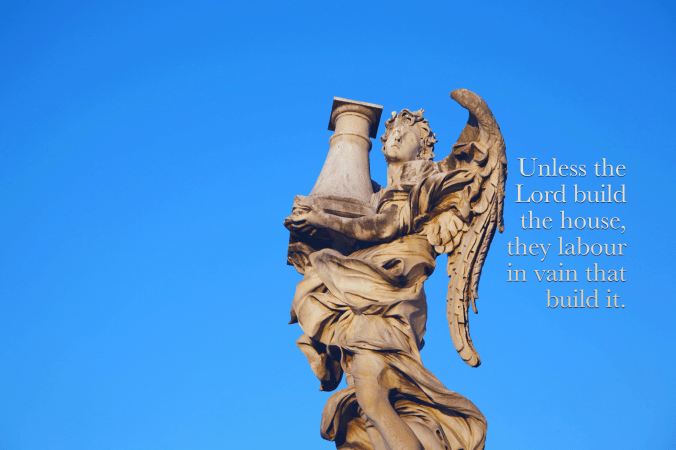
“We are indeed aware that the work of teaching the Catechism is unpopular with many because as a rule it is deemed of little account and for the reason that it does not lend itself easily to the winning of public praise. But this in Our opinion is a judgment based on vanity and devoid of truth. We do not disapprove of those pulpit orators who, out of genuine zeal for the glory of God, devote themselves to defense of the faith and to its spread, or who eulogize the saints of God. But their labor presupposes labor of another kind, that of the catechist. And so if this be lacking, then the foundation is wanting; and they labor in vain who build the house. Too often it happens that ornate sermons which receive the applause of crowded congregations serve but to tickle the ears and fail utterly to touch the hearts of the hearers. Catechetical instruction, on the other hand, plain and simple though it be, is the word of which God Himself speaks through the lips of the prophet Isaias: “And as the rain and the snow come down from heaven, and return no more thither, but soak the earth and water it, and make it to spring and give seed to the sower and bread to the eater: so shall my word be, which shall go forth from my mouth. It shall not return to me void, but it shall do whatsoever I please and shall prosper in the things for which I sent it.” We believe the same may be said of those priests who work hard to produce books which explain the truths of religion. They are surely to be commended for their zeal, but how many are there who read these works and take from them a fruit commensurate with the labor and intention of the writers? The teaching of the Catechism, on the other hand, when rightly done, never fails to profit those who listen to it.”

If that is enough, then go memorize your catechism. If not, continue reading. 

Necessity 

Written catechisms have been used by the Church to teach the faith since the invention of the printing press. Therefore, those wishing to learn the faith should start with any of the abundance of catechisms approved by the Church down through the ages. But Catechisms are important for more than just the initiates; they are immensely important today for the Catholic laity in general in this age of rampant error, heresy, and apostasy. 

Pope Pius X states elsewhere in Acerbo Nimis, “It follows, too, that if faith languishes in our days, if among large numbers it has almost vanished, the reason is that the duty of catechetical teaching is either fulfilled very superficially or altogether neglected.” The pope makes a bold statement very relevant to our day: If faith is lacking, it is not due to people not reading enough encyclicals or canon law, or not doing bible studies, it is due to the lack of catechetical knowledge of the adults.  I would comment that it follows if people were not properly catechized in his day, people must be entirely devoid of catechetical knowledge in our day! The pope later on reiterates his point, “Since it is a fact that in these days adults need instruction no less than the young, all pastors and those having the care of souls shall explain the Catechism to the people in a plain and simple style adapted to the intelligence of their hearers.” 

The Explanation of the Baltimore Catechism, also known as Baltimore Catechism 4, which received approbations by twenty-seven bishops, states, “It is a little compendium of the truths of our religion, of all we must believe and do. It contains, in simplest form, all that a priest learns during his many years of study. The theology he learns is only a deeper and fuller explanation of the Catechism.”

Memorize

Some people have a gift for memory, like G.K. Chesterton, who thumbed through a few books from a library and went on to write a whole biography on St. Thomas Aquinas! Most of us have to work at memorizing things. The catechism is perfect for that. In fact, it was purposely made to be memorized. 

The necessity of learning the catechism should not be a stumbling block, yet, as the Catholic Encyclopedia cautions, once people have been admitted to the sacraments, they may imagine themselves fully instructed in the faith. This echos what St. Pius X said above. No one seems to like the catechism, especially if it requires memorization. 

In a religion text, Chief Truths of the Faith, Fr. John Laux states, “The catechetical form of presentation has been abandoned, because, in the opinion of prominent educators, ‘it is conducive to memory work rather than to reasoning, encourages inefficient teaching, and makes almost no appeal to the interest of the pupil.’” 

Most modern educators abandoned the ideal of memorization following the progressive ideal, but progressive theories in education are seemingly there not to help students, but rather to hurt them. To know something is to be able to call it to mind, to analyze it, to argue it, to teach it to others. In order to really know something, it must be memorized. It is the only way.

If we knew our catechism, not only could we evangelize better, but we would not unwittingly fall into error ourselves. Almost every single error (or heresy) can be corrected with just the Catechism. This is intentional as a catechism is supposed to contain all the truths necessary to salvation. The problem is most Catholics are not properly catechized, and this problem was evident back during the pontificate of Pius X and is egregiously evident today. 

“It is a common complaint, unfortunately too well founded, that there are large numbers of Christians in our own time who are entirely ignorant of those truths necessary for salvation. And when we mention Christians, We refer not only to the masses or to those in the lower walks of life — for these find some excuse for their ignorance in the fact that the demands of their harsh employers hardly leave them time to take care of themselves or of their dear ones — but We refer to those especially who do not lack culture or talents and, indeed, are possessed of abundant knowledge regarding things of the world but live rashly and imprudently with regard to religion,” (Acerbo Nimis).

Well-known Catechisms

Now that we know we must learn our catechism, which one do we choose? It is important to note that not all catechisms are the same in wording and content because, as the Catholic Encyclopedia says, “At the same time it must be recognized that the conditions of the Church vary considerably in the different countries. In a Catholic country, for instance, it is not necessary to touch upon controversial questions, whereas in non-Catholic countries these must be thoroughly gone into.” 

Numerous catechisms have been written down through the ages, but a few Catechisms have been well-favored, even translated into multiple languages to be distributed outside of their original country. The most important Catechisms are the following:

St. Peter Canisius

St. Peter Canisius is the author of the first complete set of catechisms. A catechism set is one that is graded (usually in three-parts, like that of Canisius) from easier material for young children to moderate material for older children, and then more difficult material for young adults and old adults alike. The Catholic Encyclopedia states that Canisius’ catechisms were translated into all European languages and were so successful “that the name Canisius came to be synonymous with Catechism.”

St. Robert Bellermine

“Bellarmine’s Catechism, which was written by command of Pope Clement VIII in 1597, has been copied in almost every other country in the world. At an early date it was translated into Arabic, Latin, Modern Greek, French, Spanish, German, English, and Polish. It had the warm approbation of Clement VIII, who prescribed it for use in the Papal States; of Urban VIII, who directed it to be adopted in all the Eastern missions; of Innocent XIII and Benedict XIV; particularly of the very important Council of all Italy, held at Rome, in 1725, which made it obligatory in all the dioceses of the peninsula; and finally of the Vatican Council which indicated it as the model for a proposed universal Catechism,” (Monsignor John Hagan, A Compendium of Catechetical Instruction).

Roman Catechism

This catechism, also known as the Catechism of the Council of Trent, is primarily intended for priests with the care of souls to be an aid for their sermons on religious instruction. It is also the only Catechism to be ordered and approved by a plenary Council, although a universal catechism for the laity was intended to be made by the Vatican Council but was interrupted. 

Baltimore Catechism 

Important for Americans, but good for everyone, it was order by the American bishops in the Third Plenary Council of Baltimore, and written in 1885. 

The original four hundred twenty-one questions in Baltimore Catechism 2 are episcopally approved by the plenary council of Baltimore. Baltimore Catechism 1 contains half of these questions, making it easier for little children to learn before their first communion.

Rev. Thomas Kinkead authored the Baltimore Catechism 3 which contains almost one thousand supplemental questions. He also authored Baltimore Catechism 4, which repeats much of the supplemental questions in paragraph form. For this work, he received commendations from many of the American bishops.  

Many versions of the Baltimore Catechism have been published, and most of the newer versions have reordered and reworded the questions so as to be incompatible “as a set” with the original catechisms and the original questions. Some of them are even named Baltimore Catechism 3 while still only containing the 421 original questions. The best catechisms for adults are the original Baltimore Catechism 3 or 4.

St. Pius X Catechism

Also called Catechism of Christine Doctrine, this catechism was written for the Diocese of Rome and was intended to be used throughout Italy. It was also translated into English, French, Spanish, and German to circulate it throughout Europe and America. 

Catechism first, but not only

Does this mean we should never learn anything of our religion after we master the catechism? Absolutely not! 

“Perhaps there are some who, wishing to lessen their labors, would believe that the homily on the Gospel can take the place of catechetical instruction. But for one who reflects a moment, such is obviously impossible. The sermon on the holy Gospel is addressed to those who should have already received knowledge of the elements of faith. It is, so to speak, bread broken for adults. Catechetical instruction, on the other hand, is that milk which the Apostle Peter wished the faithful to desire in all simplicity like newborn babes,” (Acerbo Nimis).

If you know your catechism, you know the truths necessary for salvation. God demands we both know our faith and live our faith. In order to live our faith, according to our state and our intellectual abilities, almost all are responsible to continue studying the faith. This will give a deeper understanding and a better ability to defend our Faith to others.  

One of the best ways to learn more about the faith beyond the catechism is to read the sermons of the saints. Priests were required to ensure that their flock understood the faith and to do this, they were required to preach often on the basic tenets of the faith. There are many great books for this purpose, like the sermons of St. Alphonsus Liguori, St. John Chysostom, or those of St. John Vianney, among many others.

Do not end your education with the Catechism, but we all must start there!