The Church is an Aircraft Carrier

We who keep the Faith, who keep to the laws of the Church and believe everything that the popes have taught, the councils have promulgated, we who do not solicit sacraments from dubitable priests, labor under a terrible burden. We do not have holy orders. We are not members of the hierarchy. We are not teachers and preachers with authority or jurisdiction. What are we, then? What is our place in the Church? How do we exist as members of the Church at all, if, by all accounts and reasoning, the hierarchy is no more? To answer these questions, I propose an ancient metaphor, which at a certain space in the intervals of time was much more than a metaphor. 

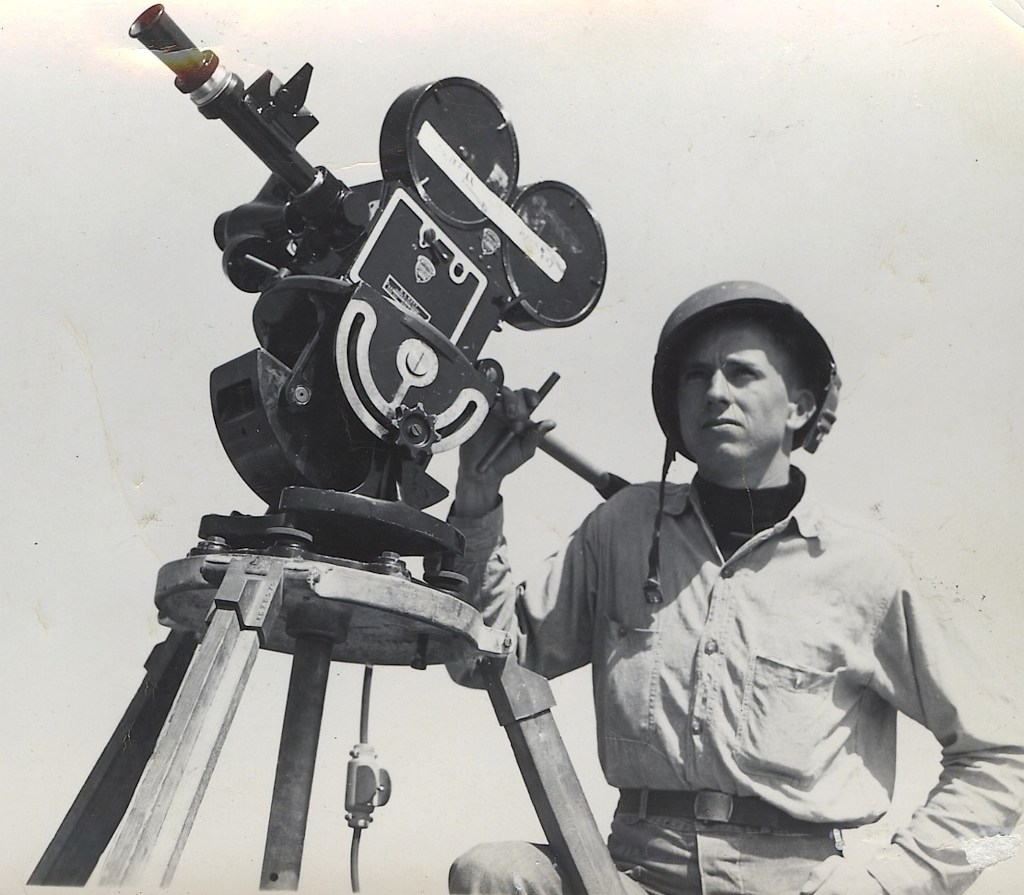
As you all may know, I am a veteran of the United States Navy. I served aboard the aircraft carrier USS Abraham Lincoln as a photographer and journalist. An aircraft carrier is a floating city. There is a post office, chapel, library, gas station, grocery and convenient store, coffee shop, gyms, even an airport (of course!), a police station and jail, and a newspaper office—which yours truly worked at. Now these places of business are all manned by enlisted sailors, and overseen by commissioned officers—let me say that again, commissioned officers! The metaphor is becoming apparent, no? Okay, well let’s continue. 

The head of the ship is the captain. His word is law, and his command is the natural forces directing the energies and activities aboard ship. All the wills of the crew and officers are directed by the captain’s will. From the flight-deck officer directing a helicopter landing to a lowly deck-swabbing petty officer like myself, our wills were that of the captain’s. True, the captain’s will is directed by higher forces still, but that only emphasizes the parallel and metaphor. What metaphor? Oh, yes. I haven’t quite stated it, have I? Well, here we go. 

The captain is the pope. The officers are the hierarchy. The enlisted are the laity. What happens, you think, if there were no captain, or, better yet, if the officers mutinied and the captain was killed? What would happen to all the activity aboard ship? What would the enlisted do? Follow the orders of mutineers? Go along to get along? I cannot answer for the moral compass of a boatload of sailors, but I can tell you what I would do. I would do what I am doing now: cry “Mutiny!” and patiently await my execution. 

All metaphors limp. I’d say mine hobbles in one important respect. The officers who mutinied would not be on the ship anymore. They would be deep-sixed by their apostasy. Were I to perfect the metaphor, I would have you imagine that all the officers on board were thrown in the brig by the faithful crew who wanted to uphold their oath. Without officers, the operations of the ship would come to a stand still, and the only thing to do would be to cast anchor and await rescue, all the while conducting life-preserving operations, such as cooking, cleaning, and writing newspaper articles.


What you wouldn’t do, if you were a good sailor, is pretend that you could direct flight operations, or pilot jets, or navigate the vessel to safer waters. These are activities proper to officers. Likewise, if you were a good Catholic, you wouldn’t get yourself consecrated, open seminaries, ordain priests, or offer sacraments. These are the proper activities of the hierarchical Church militant, or the commissioned officers. These operations are vital to the mission of the aircraft carrier as well as the Church, but they are not vital to the survival of either! It is not necessary for an enlisted man to pilot a jet, just as it isn’t required of a layman to pretend to be a priest. 

So, what exactly is required of us enlisted laymen? Though militaristic operations utilizing the weapons of the sacraments is altogether out of the question, I think God would have us bring aboard the aircraft carrier as many as may be floating about in the waters who are willing to be saved. The warship that is the Church has become a lifeboat as in the time of Noah, and no one needs a commission to throw a life-saver into the sea.             

Out of the Mouth of Babes

Children are the most mysterious creatures in existence. Walking, talking monuments of morality, children at once can teach us everything we could possibly need to know and yet not be able to tie their own shoes. They have within themselves that perfect balance of wisdom and humility which is so characteristic of the holy, which shakes the very foundations of the Earth with a simple question…

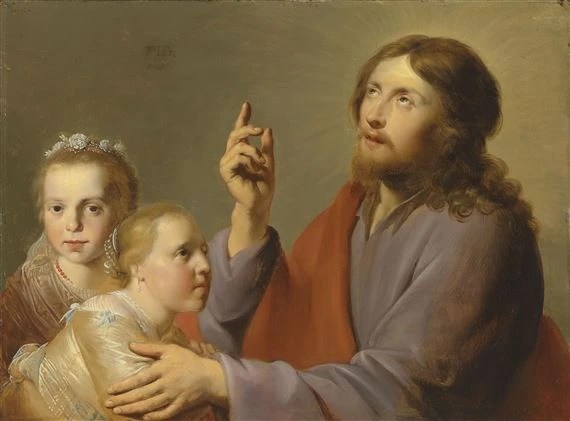
Is it any wonder, then, that our Lord tells us, “Amen I say to you, unless you be converted, and become as little children, you shall not enter into the kingdom of heaven. Whosoever therefore shall humble himself as this little child, he is the greater in the kingdom of heaven”? The humility of a child is essential to faith, to that disposition of the soul to trust in God alone as Father, and to wait with palms up to receive His blessing. 

But, if this is the image of the Christian soul faithful to Christ and His Church, what would the image be of one who did not have the faith of a child? The quickest and most reasonable image that comes to my mind is the image of a grownup, which is characterized by the very opposite qualities than that of a child. 

For starters, the grownup doesn’t ask “why”—ever. He knows why. He lectures and lectures until the child, or anyone else in earshot, falls asleep or dies from boredom. He does not have wisdom so much as knowledge. He knows the rubrics, the laws, the teachings, the feast days and abstinence days, and so much and many other things that bewilder the brain just pondering them. But he doesn’t have wisdom. That is the gift only given to the child of the Faith. 

Whereas the child waits upon his Father to receive, the grownup is impatient. He doesn’t wait for anything, but insists upon his own time-table and priorities. He’s a go-getter, and so he goes and gets himself ordained a priest and consecrated a bishop. He’s grownup, and the salvation of souls is his top priority—as if that weren’t the top priority of God when he wrote the Divine law in the stars. He’ll feed the sheepfold with the Eucharist. He’ll heal the sickly lamb with Penance. “God, just sit back in the folds of eternity. I got this,” he seems to say. “No need to rush the culmination of the world. There’s still some soul-saving to do here. Speaking of which, is my flight to Phoenix booked?”

Catholic Twitter and the Sedevacantist blogosphere has been buzzing with the recent episcopal consecration of Charles McGuire, which took place in Cincinnati, at the Saint Gertrude the Great mass center. This just followed Daniel Dolan’s unexpected passing (requiescat in pace). The principle consecrator—actually, the only consecrator—Rodrigo da Silva, was just recently consecrated himself by Dolan. All this consecrating got me thinking, though, and, when I start thinking, I usually start tweeting. I tweeted a few quotes from Church authorities on the matter of mission. 

“…Let all who, being prohibited or not sent, without having received authority from the Apostolic See, or from the Catholic bishop of the place, shall presume publically or privately to usurp the duty of preaching be marked by the bond of excommunication…” (Denzinger, 434). 

Needless to say, that tweet didn’t get much love. So I set to work on the woodworm itself which has been eating away at the Barque of Peter for several decades now. I am speaking, of course, of epikeia, which apparently like a magic word enchants anything it touches with divine powers. Well, I was having nothing of that hocus-pocus. I found some sources which stated that epikeia cannot be invoked in matters of divine law, because the Divine Lawgiver foresaw all contingencies and accordingly provided for them. And, since canonical mission is a matter of divine law, which no one disputes, epikeia cannot be invoked. 

Then someone posted a wonderfully clear excerpt on mission from Abbot Dom Guéranger, an imminent theologian of his day (1800s) which I quote in full:

“We, then, both priests and people, have a right to know whence our pastors have received their power. From whose hand have they received the keys? If their mission come from the apostolic see, let us honour and obey them, for they are sent to us by Jesus Christ, who has invested them, through Peter, with His own authority. If they claim our obedience without having been sent by the bishop of Rome, we must refuse to receive them, for they are not acknowledged by Christ as His ministers. The holy anointing may have conferred on the the sacred character of the episcopate: it matters not; they must be as aliens to us, for they have not been sent, they are not pastors.” 

Well, apparently, it wasn’t clear enough for the grownup Sedevacantists. Not one received the Abbot’s teaching (which is the teaching of the Catholic Church!) with a child-like faith and trust. What they did, those who actually engaged in the discussion, was try to turn the conversation to validity of Holy Orders and supplied jurisdiction, instead of simply accepting the Church’s teaching on the matter, and letting themselves be guided and governed by it. 

You see, God did not leave us abandoned. He gave us simple rules to follow and to trust, that we might not be led astray, even during the Apocalypse and reign of the Antichrist. One does not need to know anything about supplied jurisdiction, colored titles, conditions for consecration validity, sacramental theology, etc. These things are important in their way, but for the simple, obedient and humble child of the Faith, all that is required is to know and to ask that man in black with the white collar standing at your door, “Did Papa send you?”    

Catholic™

“I’m Catholic.” This simple sentence a hundred million people say every day. Those who worship Satan say it. Those who bash the one they believe to be the Vicar of Christ say it. Now there is a group of “Catholics” who also say it, but these are somewhat different than the obviously non-Catholic members of the Novus Ordo sect or the Recognize and Resist sect. Sedevacantist say it, too. 

What is a “sedevacantist”? Well, to answer that question as simply as I can, at the basic level a sedevacantist is one who believes the Holy See to be empty. But the term is more charged than that. Associations are tied up with what it means to be a sedevacantist. Thus, you have the Congregation of the Immaculate Queen (CMRI), who have their own bishop. You have folks in the Most Holy Trinity Seminary (MHT), and then there’s the Saint Gertrude the Great mass center (SGG). And who could forget the Saint Pope Pius V society (SPPV)? 

Now, what binds all these groups together under the name of sedevacantist is that each group believes that the Chair of Peter is vacant. This would seem to be a prerequisite to what it means to be a Catholic, but it could hardly be considered a sufficient condition. Let me explain. 

Francis the Heresiarch

If Francis is a heretic (and he is; so manifestly so that it actually physically hurts to look at him for more than a minute; the phrase “Offensive to pious eyes” comes to mind), then one who claims to be Catholic cannot submit to him, or have any communion with him. This Catholic truth is so obvious, and yet many “Catholics” don’t even grasp it. Thankfully, though, sedevacantists understand this much. 

But denying that a particular person in Rome is the pope is not what defines a Catholic. So what is the sufficient condition of being a Catholic? To be a member of Christ’s Body, of course, to be a member of the Catholic Church. To belong to something presupposes that I know what that thing is to which I belong. So the next logical question to ask is, what is the Catholic Church? Put another way, how do we know that this group or that is the Catholic Church? 

Happily, the Baltimore Catechism tells us how the Catholic Church is to be known. The four marks of One, Holy, Catholic, and Apostolic, tells us that this entity, if it has these marks, is the Catholic Church. A mark here means, “a given and known sign by which a thing can be distinguished from all others of its kind. Thus a trademark is used to distinguish the article bearing it from all imitations of the same article,” (A.518).  

So, where’s the trademark “Catholic” to be found on the sedevacantist clergy, laity, buildings, or books? I’ve never located it. Have you? I very much doubt it. Why? Because, as the Baltimore Catechism also teaches us children of the Faith, “The Church cannot have the four marks without the three attributes, because the three attributes necessarily come with the marks and without them the marks could not exist,” (A.520). The three attributes are, wait for it, 1. Authority; 2 Infallibility; and 3. Indefectibility. I’m going to let that sit on your mind and simmer for a few. 

These attributes are not merely suggestive of being Catholic, or, worse, a mere idealized form of Catholicism, which cannot be realized today because of the Apocalypse. The attributes are those by which the Catholic Church exists, and without which we do not know where the Catholic Church is. 

Now you cease to wonder why the sedevacantist groups say different things (no mark of unity); or how one group believes Francis has an election in hand, though he cannot exercise it, while another group says he cannot; or all the highly questionable episcopal consecrations, or the fact that these “bishops” do not act like apostolic delegates of God, insofar as they claim no authority. The sedevacantist groups all lack the three necessary and sufficient conditions to be Catholic: they all lack the three attributes of authority, infallibility, and indefectibility. 

So what’s the takeaway here, that there is no Catholic Church today, that She has disappeared? In a very real sense, this is true. This is the consequence of an extended interregnum. “I shall strike the shepherd, etc.” We are the “scattered flock” as one friend put it. We are not a sheepfold. To act like it, to be corralled into this group or that calling itself Catholic is not only doctrinally unsound, it is also spiritually dangerous! Without the attributes that safeguard us, we are not unlike little sheep who happily bleat our belonging to a sedevacantist fold, when all the while the shepherds of these could be wild wolves in miters.      

“But what about you, CatholicEclipsed! You’re a Home-Aloner! You have your group, too! Why can’t we?” Well, for starters, because this isn’t about groups, it is about desiring to be a Catholic, and belonging to the mystical body of Christ. And there is not a “Home-Alone” group. We who have chosen, through painful sacrifice and research and prayer, not to solicit sacraments from these sedevacantist groups, are individual and not a collective body at all. We are scattered sheep! I’m down here in the swamps of southern Illinois with my family, praying at home. There are those up near Chicago or in the westward landscapes of South Dakota. There are those who live in Arizona, New York, California, Canada, England, Germany, and any number of places. 

Just as I cannot say that the sedevacantist groups and their members are Catholic, so I cannot say that those who stay at home to pray are Catholic. I don’t know about you, but I don’t claim any authority or infallibility or indefectibility. I cling only to those teachings and disciplines which have come from such, namely from Pius XII and before, but that just proves the point! I do so imperfectly and am liable to err. Thus there are even pray-at-homers who don’t believe Pius XII was pope or that there aren’t hundred-year-old bishops somewhere in hiding, because carrying on the “visibility” of the Church is a dogmatic must, you know! 

In brief, pray-at-homers are just as multifarious in their opinions and how they live out what they think is Catholic as any other sedevacantist group. Though not a collective body or group themselves, each household is a kind of off-brand Catholic, I won’t say counterfeit, because that implies deceit, but an honest albeit imperfect attempt at being the real McCoy. So, the next time you say, “I’m Catholic,” mean it like the sky is falling, but don’t believe it too much; because your brand of Catholic might just be a knock-off. 

Suspected of Heresy: MHFM, VaticanCatholic

Speaking of flaming heretics, oh, yes, the VaticanCatholic website of the Most Holy Family Monastery. If you didn’t know better, you’d think you’d loaded the webpage for the Catholic version of the National Enquirer instead of a publication supposedly dedicated to disseminating true doctrine. With tabloid-like thumbnails everywhere, sensational news stories utterly devoid of religious content, you would be forgiven for thinking so, since the veneer of Catholicism is so thin as to be completely transparent. In other words, you’d see through it, and you should, too.   

Most Holy Family Monastery does have an air of legitimacy, though I confess my ignorance as to how to establish a monastery legally, take public monastic vows, and carry on the work of a such a community in good faith and standing with the Church. For all I know, Most Holy Family Monastery may be legitimate as a Benedictine monastery. The scope of this post does not question whether Michael Dimond is a monk or not; only whether he and his website are heretical. I would answer that in the affirmative. 

The issue which MHFM raises hell over, and for which it has become notorious is the issue of baptism of desire. Now I am not going to sit here and recapitulate all the tedious (and I must say, stupid) arguments the website proffers in defense of its position, namely, that baptism of desire is not taught by the Church. To do so would be to give too much ground to the enemy. There is a certain point at which one is obliged by Catholic teaching and discipline, to submit to clearly defined dogmatic teaching, and not engage in argumentation to its contrary. I am not obliged by duty or honor to argue with a supposed Catholic whether transubstantiation is a dogmatically sound teaching of the Holy Eucharist. If you don’t believe that, you ain’t Catholic, man! Likewise, if you don’t believe that a man may be saved from his sins through the desire of being saved from his sins by Christ, you ain’t Catholic, man. 

We have a duty as Catholics to believe all that the Church teaches. We neither have a duty or a right to even entertain what non-Catholics (even those who call themselves Catholic) believe and teach which is contrary to what the Church teaches. We must submit our minds and wills to the magisterium and discipline of the Catholic Church. Not to give our assent and submission to such constitutes either an act of heresy or schism, or, ultimately, if the denial is based upon foundational teachings (like the divinity of Christ), apostasy.  

What I am obliged by duty to do, however, is to point out where the Catholic Church definitively teaches, clearly and without qualification, that baptism of desire is a means by which we are born again. Once done, you the reader may rest assured that whatever MHFM may argue to the contrary, their position against BOD is erroneous, false, backward, and simply heretical, and their institution (be it even legitimately erected as a monastery) must be avoided as being heretical. 

In session six, recorded in the fourth chapter of the Council of Trent—an organ of the infallible magisterium of the Catholic Church—we read the following:

By which words, a description of the Justification of the impious is indicated,-as being a translation, from that state wherein man is born a child of the first Adam, to the state of grace, and of the adoption of the sons of God, through the second Adam, Jesus Christ, our Saviour. And this translation, since the promulgation of the Gospel, cannot be effected, without the laver of regeneration, or the desire thereof, as it is written; unless a man be born again of water and the Holy Ghost, he cannot enter into the Kingdom of God.

Though the wording is archaic and somewhat dense, I think any reader of any normal intelligence can understand the meaning here. Without baptism (the laver of regeneration), or without desiring baptism, you remain an impious and unjustified son of Adam, and are not adopted as a son of God—because you have not been born again! 

Thus clearly does the Catholic Church teach that BOD is a legitimate means by which one becomes a member of the Church. But just in case the above is a little tentatively held in our minds, let us consider what the preeminent Doctor of the Church, St. Thomas Aquinas, had say, to whom the Council Fathers of Trent looked for guidance during the sessions of the council. 

In the Summa Theologica, third part, question sixty six, article eleven, “Whether three kinds of Baptism are fittingly described—viz. Baptism of Water, of Blood, and of the Spirit?” St. Thomas writes the following: 

I answer that, As stated above (III:62:5), Baptism of Water has its efficacy from Christ’s Passion, to which a man is conformed by Baptism, and also from the Holy Ghost, as first cause. Now although the effect depends on the first cause, the cause far surpasses the effect, nor does it depend on it. Consequently, a man may, without Baptism of Water, receive the sacramental effect from Christ’s Passion, in so far as he is conformed to Christ by suffering for Him. Hence it is written (Apocalypse 7:14): “These are they who are come out of great tribulation, and have washed their robes and have made them white in the blood of the Lamb.” In like manner a man receives the effect of Baptism by the power of the Holy Ghost, not only without Baptism of Water, but also without Baptism of Blood: forasmuch as his heart is moved by the Holy Ghost to believe in and love God and to repent of his sins: wherefore this is also called Baptism of Repentance. Of this it is written (Isaiah 4:4): “If the Lord shall wash away the filth of the daughters of Zion, and shall wash away the blood of Jerusalem out of the midst thereof, by the spirit of judgment, and by the spirit of burning.” Thus, therefore, each of these other Baptisms is called Baptism, forasmuch as it takes the place of Baptism. Wherefore Augustine says (De Unico Baptismo Parvulorum iv): “The Blessed Cyprian argues with considerable reason from the thief to whom, though not baptized, it was said: ‘Today shalt thou be with Me in Paradise’ that suffering can take the place of Baptism. Having weighed this in my mind again and again, I perceive that not only can suffering for the name of Christ supply for what was lacking in Baptism, but even faith and conversion of heart, if perchance on account of the stress of the times the celebration of the mystery of Baptism is not practicable.”      

There you have it, folks. The clear teaching and theological reasoning for why BOD, here called Baptism of the Spirit, also called, Baptism of Repentance, is the teaching of the Catholic Church, the contradictory view being heretical. As Aquinas teaches, the effect is dependent on the cause, but the cause is not dependent on the effect. MHFM wants to reverse this teaching and say that, unless you are baptized by water you are not baptized at all. But this is reducing the cause to the effect, and making the cause, indeed, depend on the effect. The cause of the laver of rejuvenation is not water, H2O, but the Passion of Christ, as Aquinas teaches above. This cause “far surpasses the effect, nor does it depend on it.” Hence, if one conforms his life to that of Christ’s suffering, and suffers with Him and for Him, the neophyte yet unbaptized by water becomes baptized by blood, and is rejuvenated, made young, born again. Again, a man may receive the effect of the baptism without water, if he be “moved by the Holy Ghost to believe in and love God and to repent of his sins…” 

As if that wasn’t enough to convince the reasonable man that the Church teaches BOD, in both the Catechism of the Council of Trent and in the next article of the ST, the Church teaches that charity and repentance are necessary conditions for the sacrament of baptism to even have an effect! In a topsy-turvy conclusion, the MHFM actually have it all donkey-backwards (if you catch my meaning). BOD is more important than the sacrament of baptism, because without it, one is not actually baptized, provided they are of the age of reason. This condition doesn’t apply to those who do not have the use of reason.  

In the Tridentine Catechism, we read that, in order for baptism to have an effect, the one to receive baptism must have the three necessary conditions of the soul in order for the sacrament to have any effect: The first is the intention to receive baptism:

The faithful are also to be instructed in the necessary dispositions for Baptism. In the first place they must desire and intend to receive it; for as in Baptism we all die to sin and resolve to live a new life, it is fit that it be administered to those only who receive it of their own free will and accord; it is to be forced upon none. Hence we learn from holy tradition that it has been the invariable practice to administer Baptism to no individual without previously asking him if he be willing to receive it. This disposition even infants are presumed to have, since the will of the Church, which promises for them, cannot be mistaken.

Next, one must have faith: 

Besides a wish to be baptised, in order to obtain the grace of the Sacrament, faith is also necessary. Our Lord and Saviour has said: He that believes and is baptised shall be saved.

And, finally, one must have repentance for past sins and a firm resolve not to sin: 

Another necessary condition is repentance for past sins, and a fixed determination to avoid all sin in the future. Should anyone desire Baptism and be unwilling to correct the habit of sinner, he should be altogether rejected. For nothing is so opposed to the grace and power of Baptism as the intention and purpose of those who resolve never to abandon sin.  

Hence, the Church clearly teaches that the sacrament of baptism is preconditioned on what is fittingly called as baptism of desire, or baptism of the Sprit, or baptism of repentance, which corresponds to the three necessary conditions for water baptism: desire or intention, faith, and repentance. 

Finally, St. Thomas teaches in the Article 12: “Whether the Baptism of Blood is the most excellent of these,” that water baptism and baptism of blood are dependent on baptism of desire or charity or the spirit:

The shedding of blood is not in the nature of Baptism if it be without charity. Hence it is clear that the Baptism of Blood includes the Baptism of the Spirit… 

From what has been cited as evidence, it is evident to any reasonable person that the Catholic Church teaches baptism of desire. To argue to the contrary is to be a heretic, plain and simple. Why MHFM has decided to die on this particular heretical hill is beyond my comprehension. Why they couldn’t just be a Benedictine monastery (legitimate or no, I cannot say), confine themselves to what the Church teaches, and not engage in disputations of the obvious, is beyond my comprehension. If I may idly speculate however, it could have something to do with that tabloid-mentality which centers on and indeed revolves around the sensational and controversial. Perhaps it is a marketing strategy, a way to separate themselves from the rest of the sedevacantist market out there. 

Case in point: one of the latest videos on the website (which I did not click on and I discourage you from doing so!) is entitled: “Bishop Daniel Dolan Dies Suddenly—Six Months After He Said This.” The flowers of the man’s funeral are still fresh, and the Dimond sect have the vitriolic gall to release a video with a title like that. One should expect more (and get more) common decency even among the heathen. But, then again, the heathen in many respects is better than the heretic.       

On the Omnipresence of God (and the Self)

It is almost a truism anymore to say God is everywhere. And so He is. Amen. But if we, after hearing the true statement, can get away from sentimentalizing it for a moment in order to understand its meaning, we might just die of shock. 

Let me begin by wishing everyone out there a most blessed Holy Week. May this year’s commemoration of the Passion, Death, and Resurrection of our Lord and Savior, Jesus Christ, sow the seeds of profound love for Him in each of our hearts, and enable us to be more spiritual. Amen.

As a personal note and explanation as to why I haven’t written an article recently: I have been quite busy trying to get our fine art painting business up off the ground, RobertRobbinsArt.com. Time spent at the easel with brush in hand is only a quarter of the work. The other three-quarters is spent marketing, finances, and networking with other artists. As a kind of miracle of providence, I was able to get my first exhibition at the local art center written up as a news story, which should be in print today. The exhibition is of the landscape in spring, and all that entails. I try to glorify God through my landscapes, and approach a contemplative aesthetic through them—if that is even possible! Anyway, that is why I have not written this “column” for some time. Now, back to the article.     

I am no teacher of Catholic doctrine. As I think we have hashed that idea out here before, I need not relive it here. But I am a Catholic, which means that I have a certain sense of the spiritual, and I have a certain (oh, what to call it?) right to talk about spiritual matters. These are how we live out our Catholic faith, and not the content of that faith. Hence, any suggested practice in spiritual matters I may offer is my mere opinion, and is perfectly ignorable. (Here ends disclaimer paragraph.) 

I walk by faith, and not by sight—at least I try to anyway. But what does this practically mean, having a sense of the spiritual? To read Catholic Twitter and the Catholic Blogosphere, one might get the impression that spirituality were taboo, or, if not that, at least relegated to those who don’t shave or eat and live in hovels in desert places. All that is talked about, so far as my monitor shows, is correct doctrine and disciplinary law. Don’t get me wrong: these are indispensable and necessary to be a good and faithful Catholic, but they are not sufficient in themselves to bring about our conversion and salvation. 

Ultimately, teachings must be put into practice, to have any worth. You know, the whole works versus faith thing, which tripped up half of Europe five hundred years ago? Today, we Catholics tend toward Protestantism, not in the theory of faith, but in consequence of our actions, or inactions. And lest anyone think I am pointing fingers, let him or her be assured: I am pointing fingers—I am pointing my finger directly at myself! Mea culpa, mea culpa…

In neglecting that one seed of the true faith I worked so hard to sift from all the rotten falsehoods, I forgot to plant it. I have it. It is here in my pocket, as it were, next to my rosary. But that’s just the problem. It isn’t in the earth, transforming the dirt of my daily life into a fruitful flower and odor of sweetness ascending to Heaven. Were I as spiritual as I work to be doctrinally correct, St. John might have a rival to contend with his visions of the Celestial Palace found in Revelation. 

So why were all the saints so spiritual? The better question is, why were all the spiritual persons so saintly? I answer that, it is because of one reason, and one alone, which accounts for all the varied mystics and contemplatives in the history of our holy religion: they loved God more than themselves. St. John was given his visions of paradise precisely because he loved God more than anyone else, save the Mother of God. Who was at the elbow of Christ at the Last Supper? John. Who was at the Cross when Christ breathed His last? John. Who was at the tomb on Easter morning? Oh, well you get the idea. As an aside, have you ever wondered why St. John was spared martyrdom when all the other Apostles were not? The answer is simple: He wasn’t spared martyrdom. St. John died to himself every day he denied himself and followed Christ, and desired to be ever in His presence. That’s the essence or form of martyrdom. Physical death is only accidental to it. 

So how to be more spiritual you ask? Well, I am no mystic or contemplative, but I know the answer to that question: love God more than oneself. “Okay,” you say, “but then what?” Then I’d say, buckle up, because it’s going to be one rollercoaster of a ride! When we stop loving ourselves more than God, and make Him the object of our every desire and action, then a spiritual adventure is just bound to be around the corner. Sin is boring. Sanctity is fun. Unless ye be converted, and become as little children, ye shall not enter into the kingdom of heaven. 

So how do we live out this spiritual dimension of our faith? How do we love God more than ourselves? It is the hardest thing to do, I know. God is everywhere, as we have said, but the Self is everywhere, too. The Self is a kind of demigod which is ever vying for worship against the true God. But if we allow the truth of the truism to shine in our brains a little longer, we will see that God’s presence illuminates every detail of our existence. You are brushing your teeth in front of the mirror in the bathroom: God is there. You are eating a burrito in the parking lot of a Walmart: God is there. You are kneeling, reciting your rosary with your family: God is there. He doesn’t distinguish between persons, nor places. 

To really put into practice the presence of God is a truly startling experience. It wakes us up to the omnipotence, not so much of Him, but of ourselves. The feeling is not unlike that of Adam and Eve hiding themselves behind leaves. To become aware of God is to become aware of ourselves, and to become aware of how shamefully we love ourselves more than God. Heretofore, it was only you. Now there’s this Presence that is not you, at first like a kind of imagined and feared ominous mist (the Self unconsciously knows its doom is nigh!), but then, if the spiritual practice of the presence of God is kept up, that vaporous notion evaporates into something more like an ever enveloping bearhug for the soul, or like a firelight and warmth of a winter hearth after laboring in the cold outside, or a sweet and tantalizing waft of wild flowers in a nearby field, perceived but unseen, or, as St. John of the Cross puts it: All ceased and I abandoned myself, Leaving my cares forgotten among the lilies.   

The Legend of Lu: Armageddon

Epilogue

It was Sunday morning in Metro City valley, but the sun had not risen. The railcars didn’t seem to notice or mind, as they were busy about their business running to and fro like so many streaks of lightning in the dark dawn. The sky was clear as crystal, yet no star shone. It was as if someone turned the Stars off at bedtime, and never switched them back on. No one seemed to notice this either. If it was because the vast majority were still asleep in their beds, sleeping off a long night of festive revelry in the desert, or if because this was the people’s normal disposition––to never consider the heavens–-or if it was because the artificial lighting of Metro City so effectively obscured the natural lights, one was not likely to ever determine for sure. But the morning sky was black all the same whether Metro City saw it or not, and this blackness extended itself throughout the valley, covering mountain ranges, and the desert floor up to the point of what must have looked from the outside as a great dome of artificial light over the city, illuminating the water vapors overhead just so as to look rounded like the arching sides of a dome.

From Mt. Olé an onlooker would have perhaps died of fright at the sight of what followed. The blackness of the sky started to part or one might even say rip apart as like a black veil is torn or cut through by a stabbing knife, which revealed a mass ever growing brighter and more saturated in color, a thing like an ember glowing red and orange and pulsating between these colors in veins or fractured lines of black throughout; only, this ember of molten metal and rock was growing in size and was soon so massive the sky could not contain it. The blackness of the sunless sky was giving way to this falling rock––the figure or form of which reminded one of an old flint arrowhead dug up from the ground. The unfortunate onlooker would have thought the sky was not so much falling as being eaten. 

And indeed that was what was happening. Soon the air was all flame from the friction of the massive body entering into the atmosphere. The sky was on fire! But no one in Metro City noticed even this much. What finally got their attention were the seismic disturbances. The great speed of the massive body–-were one to put a quantity to it, probably the magnitude of half a lunar body––was such that the earth only now was feeling its effects on the great sea of magma beneath its crust. The Rock had the effect of squeezing and pulling at this great body of molten rock and metal like the Moon pulls on the seas, and was presently bringing the springs of lava to the surface where none had existed before. 

Soon, lava could be seen by our onlooker on Mt. Olé rushing down out of the north along the valley floor, flooding the lands between the mountain ranges like an irrigation dike full of flowing water. The disruption of the earth’s crust by these phenomena sent a ceaseless succession of earthquakes through the valley, and shook to ruination the feeble structures unable to withstand the violence. The metal railcar rails swayed back and forth and finally snapped like toothpicks; apartment buildings crumbled like houses of cards; Temple Row looked like a war zone of heaps of rubble and clouds of dust; and people throughout Metro who were awake and about and not dead underneath their houses, were screaming and running hysterically down streets and up streets, trying to escape the crashing and carnage all about them. 

Looking out over the Metro City Valley our onlooker would have seen the lava flows like oceanic tidal waves, pounding down the valley toward the city, glowing hot, alternating red and white, and throwing its dread light onto the mountain range as it flowed down. Turner’s Steel Mill––presently reduced to heaps of twisted metal and debris and dead bodies––would have recognized the sight all too well.

The black sky had nearly been swallowed up in atmospheric fires and with the sight beyond of the arrow head spearing through space toward its appointed target. Were our onlooker somehow able to survive the horror of the spectacle so far, nothing could have prolonged life by what followed. 

The atmosphere of Earth now nearly burnt up, deadly gas filled the air. Pungent fogs and clouds of sulfur were rapidly replacing and filling the void left by the burnt oxygen and nitrogen, and choking the life from the surface of the earth. 

Were any alive to see it, there before the falling rock was one puffy cloud, a fluffy white cumulus effortlessly and gracefully floating down in front of the mass of black and red glowing rock behind it. Seated upon its soft cushiony seat of vapor and light was Tulu holding a Toddler upon Her knee, who bounced up and down as like a frolicking tot at play. On closer inspection, one would have seen He held what appeared to be a rattle which he shook and pointed, again as like one at play, but which was actually a solid diamond scepter, gleaming with rainbows of light. He was commanding the elements as the cloud approached the earth, directing the lava, the gases, and shaken earth, the winds and the lights, like a conductor at a symphony, orchestrating the final movement of his composition. All the while Tulu looked on smiling like a doting mother, and would have clapped to cheer Him on but for the fact that Her hands were full with the Son of God.      

The Legend of Lu: Armageddon

XII

The Day of the Harvest

Dan looked down on the crowd from where he was raised high on the natural altar of elevated earth. Still fastened by so many windings of hard rope, Dan could not move well at all, and was beyond the point of fatigue. This would explain why the only thought he had was of food, not freedom. He asked some front-seat members of the Metro City crowd if any had anything to eat or drink. One young mother produced a bag of dried cereal from her pack, presumably for the toddler who was asleep in her arms. Dan said thank you but refused the generous offer. Another, an older man produced a bottle of water, half full, and offered it to Dan, but he refused that, too.  

After a moment or two of realizing that no one had anything of substance to eat or drink, as all expected to return to the City after the execution in a timely fashion, Dan thought it wise to be cut down from the stake and assisted down off the trailer, as his legs, being bound for so long, where undoubtedly useless. 

“Who among you has something to cut this rope with?” Dan asked. The rope, not exactly natural nor synthetic but a kind of plastic twine, very thickly interwoven into some natural substance, as melted at the knotted ends, thereby forging an unbreakable, or at least untie-able bond. No spoke but looked up at Dan with sheepish powerlessness. 

“Wait, I’ve got something, I think,” said a young man, walking through the crowd up to the trailer. He was tall, thin, and very able looking. He gave the impression to Dan he might have been an outdoorsman of some kind, were there any outdoors to experience in the desolate desert valley. He walked up to the the trailer and produced a pocketknife of considerable size and held it up for Dan to inspect in the dying light of the evening. “Will this do the trick?” he asked. Dan looked at it squinting to see the instrument, but as he did so, it began to shimmer with a faint, orange light. All was darkening around the knife: the crowd, the trailer, even the handle of the blade, but the blade itself was bright and increasing in brightness. It looked almost enchanted or alive with light!

“Yes, I think that should do nicely,” Dan said, and signaled by his voice that the man should come up and try to release him by cutting away the ropes. As he did so, the light in the blade glimmered no more, but one in the crowd cried out, “Look! Someone’s coming!” Out of the gloom of the east like a burning lamp ever increasing in brilliancy as it approached was what appeared to be a spirwing! And it was fast approaching from Metro City. 

The crowd started to murmur and shift about in nervousness. Dan was not nervous but curious who it could be. Before he had time to formulate any ideas about it, the spirwing had started its landing pattern by circling round and round the summit. The crowd spread out in a very wide circle from where Dan’s trailer was, to allow the spirwing to land. As it did so, the great humming of the jet engines was heard, and the heat was felt on Dan’s cool, dewy face, which was not unpleasant, and which evaporated the moisture almost immediately. As it landed the engines died down and the propellers ceased in their invisible revolution, and a man stepped out of the passenger door, a tall man, of rose-gold garment from the look of it as the spirwing light flooded out onto the summit floor and bathed him in light. Yes, quite sure now, a beautiful pink and sparkling vestment of an elaborate floral design, and crowning himself as he stepped away from the spirwing propellers with a tall headdress was Viceroy Guth himself! 

The Viceroy was accompanied by two men, Dome officials who wielded blasters. As he approached, one of the men handed Guth a megaphone. Stepping up to about ten feet from Dan’s trailer, Viceroy Guth turned toward the crowd who had closed the circle after the spirwing was made safe, and started to surround Dan again. 

“Ladies and gentlemen of Metro City!” the Viceroy said in thunderous voice. “I have condemned this criminal to death by fire! And so by fire he shall die!” The impression the Viceroy made on the crowd would have been considered comedic were it not for the solemnity of the matter. As it was, it could only be considered pathetic, as the crowd just stood there, still as statues and gawked and blinked at the Viceroy. He went on. “I have received word from my Dome officers on the ground that this Daniel Goodman is a showman as well as a murderer, and has by some clever art deceived you all into thinking himself a kind of prophet and worker of miracles!” This much at least stirred the crowd a little like a pot of stew, heads bobbing about like so many potatoes or carrots in a pot. 

“It’s true! He is! They couldn’t burn him!” one youngster shouted out, much to the dismay of his mother who presently held his mouth closed with her palm. 

“He’s at least deceived the children, I see. I trust you adults of Metro know better than to believe a murderer to be anything so exalted and divinely assisted! Daniel Goodman is a fake and no prophet!” Viceroy Guth said. 

“We saw it with our own eyes! They couldn’t get him with those blasters! We saw!” another one said, only a voice, but the body was inferable therefrom, a middle-aged manual worker, one accustomed to shouting: probably a steel-mill worker of Turner’s. 

“You saw what Daniel Goodman the Murderer wanted you to see!” Guth shot back. “It is easily explained if one understands the science involved. The blasters operate upon a power source like the energy which produces lightning. Just as lightning destroys things like trees, houses, and people, it is also absorbed by certain kinds of matter, like metal. See him? See how Daniel Goodman the Fake glitters like a gaudy little girl?” and motioned toward Dan who looked back helpless and small and tired, tied to the pole. “That silly garment absorbs blaster fire. See! It isn’t a miracle at all!”

This last piece of evidence made a great wave of voices in the crowd. Many were outright irate for being taken in by the false miracle. Others were upset that the real prophets brought back from the dead by this Viceroy Guth were gone, and the murderer remained, many of whom had clean forgotten that Rutherford and Johnny dissolved  themselves without Dan’s help. But almost all agreed that Dan must meet justice and at the hands of the Viceroy if possible. Soon the voices swelled into a wave of shouts: 

“Incinerate him! Incinerate him! Incinerate him,” shouted the crowd, much to the joy of Viceroy Guth who beamed from ear to ear in a sickening evil grin. And turning toward Dan amidst the shouts, and walking up to the trailer, he spoke to Dan in a hushed tone through his grin: 

“See? Hear how the tide of public opinion turns so easily? Who needs the Moon or your wretched Lady on it when one has cold logic and rhetoric, hey glitter-boy?” and as Guth finished his taunt he began to turn toward the crowd, and as he did so, a slithering and wet forked tongue caught the gleams of a the spirwing, and Dan shuttered at sight of it. “Of course he is,” Dan said quietly to himself, and lowered his head to pray. Viceroy Guth had his two officials quiet down the crowd so he could address them again. 

“You shall have your execution!” and the crowd cheered loudly. Guth motioned for quiet. “You shall have your execution, though you must witness it from afar. Descend the mountainside. My officials shall accompany you all with light and food and drink on the path down. Those who need rest on the way down may do so, but understand that all must be off the mountainside by midnight. There at the bottom you shall witness the death of Daniel Goodman,” and with that the crowd began to disperse with the officials who were handing out provisions from the spirwing and flashlights were directing traffic down the path. Soon, very soon, Dan was left alone with Viceroy Guth and his two armed guards. He walked back up to Dan’s trailer and looked at Dan intently, then spoke after a moment.

“This is my flock, fool!” he said in a snaky tone. “My Master has worked too hard to let them loose from His grasp.”

“Fly fiend! Enjoy your freedom while it last. Soon to the pit with your Master forever. Fly fiend!” Dan said, and tortured with fatigue and pain as he said it. The Viceroy just snarled and hissed at him but spoke not another word, and returned to the spirwing, and starting back up the engines and propellers, he lifted off the ground and flew away down the mountain.  

Dan remained now alone. He could hear faint voices from the great crowd of Metro City citizens passing down the path, and see flashlight beams every so often. They must have been making merry with the light and food and drink the Viceroy provided, and with livelier and revived spirits were laughing and heartily talking with one another as they descended the path. Dan’s chin dropped on his chest, and he wept himself to sleep.          

Dan awoke to the sound of a faint humming far above his head, almost like the hum of a power line, but only more intense and deeper in pitch. He tried to look up but his neck strained him and the pain of stiffness was so strong in his body that he could only manage to arc his chin just higher than the horizon and turn his eyes up. He could not believe what he saw! A big, black disc hovered not a thousand feet above him, the outline of which was clearly marked out by illuminated clouds just higher than it. Dan could not see, but the disc was as flat as a coin and was hardly more visible than a coin to those below on the desert floor. The disc appeared to be turning rapidly and increasing in intensity, judging by how it reflected the light, dull in some areas of its surface, while others were only slightly less black. These lighter areas were turning faster and faster around a center which did not move. Dan got the distinct impression that this was how he was going to be put to death, by this mysterious hovering black disc. 

The humming increased to an audible low rumbling roar, like the sound of a train across town. The people of Metro City who had gathered to witness the execution from down below on the desert floor would have heard no more than what sounded like the distant rumblings of thunder. Dan’s chin dropped down again, now in prayer for courage. As he did so a faint light, pale green like the phosphorescence of sea creatures spilled down over the land, casting more shadows than light. Everything was bathed in a sickly green pall of pale light, but Dan’s eyes were closed in prayer and saw nothing. The roaring increased to an intensely high pitch and all at once a boom and whirlwind of cool air was felt on Dan’s head and face, like the cool gale of a storm pregnant with power and woe. He dared not open his eyes for fear, but something inside made him do so. The summit was all alight with an atmosphere of reflected light. The rocks were reflecting an electric blue-white light, like lightning but not devastating in the least. Everything was as calm as a night. Even the little pebbles and dust on the summit floor were only barely disturbed, and this by the rushing wind, not the light. There was no heat, no pain, only feeble blue-green light falling on everything in his field of vision, save for the cave across the way, which the light did not touch nor shine into. Dan’s vestment reflected nothing of the light, but the ropes which held him did. 

This is the summary of what Dan saw. Those below saw something completely different. For starters, though faint like distant thunder, the humming and roaring of the machine or whatever it was was heard as it increased in intensity, but not as Dan heard it. It did not sound like some clunky machine, but like the grumblings of an angry god about to cast judgment. This, anyway, is what the crowd was made to believe at the suggestions of Viceroy Guth who had descended to the crowd on the spirwing, and joined them in their midnight feasting just a few hours prior to the spectacle. 

“Hear and behold the judgment of your God!” he shouted out from a temporary platform some Dome officials made with crates from the food and drink provisions. “Your God speaks and executes His judgment on the condemned!” the Viceroy’s megaphone about as loud as the roaring whirlwind from the disc, of which the crowd saw nothing. Then, the the tip of the mountain was all ablaze in a blue fire emanating from a column of light extending down from a cloud. The light was impressive and brilliant in the darkness of the desert floor, but, as was already mentioned, quite feeble from where Dan was on the summit. 

Soon the insipid blue-green light dissipated into a mere glow then returned the summit landscape to dark shades of night. Dan remained fixed to the stake, slightly glancing up and wondering if anything more was to be expected, but concluded not, since the black disc had disappeared, and the clouds had moved on, revealing now a star-studded sky of tranquility and celestial calm. Dan sighed, and looked out again about the grounds, and strained his eyes to see but could only make out where the cave opening was, as it did not reflect the starlight.

Presently a light emerged from the mouth of the cave, a wholesome light like candlelight, orangish red warmth which bathed the entry way and threw its soft beams out onto the summit floor toward where Dan looked intently upon it. 

“Now what’s this?” Dan asked himself in utter amazement wholly devoid of fear. A light like that somehow was incapable of inspiring fear or anything other than thoughts of autumn evenings or merry hearths or tables full of pies and ham and mash potatoes and gravy and dinner rolls with butter and laughter. 

The candlelight increased and emerged from the cave with a tall, old man holding it, a man who would have looked like Saint Nicolas himself but for the fact he wasn’t so pleasantly rounded, nor so old. As he approached Dan began to recognize him. It was his father! At least the man in his dream who said he was. Dan’s heart began to beat hard in his chest, and his mouth became even more dry than he thought possible. 

As the man approach, Dan was now certain that he was his father from his dream. Those bright happy eyes balanced against a sad brow, counterbalanced by so jolly cheeks he was sure the man spent most his time smiling and laughing with only short interludes of melancholic meditation. His hat, a straw and broad-brimmed sunhat, worn presumably from habit than necessity, covered his aging salt and pepper hair, but Dan was sure he’d see it if the hat were removed. As he approached he produced a pocket knife from a pocket of his overalls, and stepping up onto the trailer walked up to where Dan was tied against the stake, and placed his candle on the floor of the trailer. 

“Hello, son,” he said and gave Dan a glance of fatherly love that spoke ten thousand words in moment and melted Dan’s heart. 

“Fa, fa, Father?” Dan asked half ashamed of the question, asked not out of any kind of evil incredulity but like the innocent kind a child asks of something too good to be true. “Is it really you?” 

“Yes, son. I am here now with you,” and the sound of reassurance reduced Dan’s melted heart to a joy of radiating heat which lighted his face with love and filial admiration. 

“Oh, Father! I’m so tired!” 

“I know, son. Let me get you down,” and with a few strokes of his knife, Dan was cut loose from the ropes and fell instantly into his Father’s arms who caught him. 

“You have done well, son. You have done very well,” Dan’s Father said, and caressed his hair and kissed his head and, cradling him like baby boy in his arms, he carried him off down the trailer and back into the soft, homely light of the cave, leaving the candle to burn in the night. 

The night drew on in the utter stillness of the mountaintop. As the stars overhead wheeled round on their course, each looked down on the flickering flame of the candle casting a tall dancing shadow of the stake against the summit floor and rocks lying about. Out of the shadows, though, there came not a dancing form but slithering Shadows, two black forms winding in and out of the candle light which burned on the trailer near the bundles of twigs and kindling fuel for the pyre. The Shadows slithered up to where the candle holder was and, after a moment’s hesitation, seemingly bumped against the candlestick, toppling it down onto the floor of the trailer, near the base of the execution pyre. 

In a matter of seconds, the pyre was ignited into a magnificent inferno, engulfing the trailer and stake with it. Had there been any Metro City spectators below, the blaze would have been quite visible and impressively bright. But, all had long since returned to the quiet and comfort of their homes and beds. All that could be seen from the desert floor was a few empty wine bottles reflecting the fire glow from on high. Amidst the crackling wood trailer and roaring conflagration was heard the faint but distinct sound of some kind of creatures cackling softly to themselves. 

As dawn approached, the trailer, ropes and stake and kindling twigs were but smoldering ash and plumes of grey smoke rising up into a morning sky as crystalline blue as the sea. Ascending the path was Mr. Pete and John, all the others having fled for fear or who had fallen into disbelief. The two faithful followers of Daniel Goodman said nothing as they went up the mountainside, but solemnly ascended the sacred path in silence and mourning. 

Presently they passed by the rocks with the strange writing or pictures on them, the Guides of Rock, and Mr. Pete spoke. “He who does not follow Me is not worthy of Me,” he said, or else read––it was not clear where the inspiration from the words derived. John fixed his eyes on the Rock, but said nothing. 

Finally they arrived at the summit, and the doleful vision made John fall to his knees and weep. “Oh, Mr. Dan! Mr. Dan!” he said between his sobs. Mr. Pete lovingly and fatherly padded him on the head with one hand, and with his other rested on what appeared to be a sword at his waist. As he stood next to him and looked upon the site of his teacher’s execution, tears welled up in his big blue eyes and rolled down his wrinkled cheeks, but he didn’t speak. He let John alone to have his cry and walked up to where Dan had been burned alive, the pile of ash still lightly smoldering. 

“Now what, sir?” he asked the empty air. The sun was rising higher and was pleasantly warm on Mr. Pete’s face which had since cooled off from the heat of the climb. The air was crispy and cool like an autumn morning portending winter’s coming. He looked out over the desert valley. The skyline of Metro City was shimmering in the sunlight, as the distant railcar lines cut through the eastern peaks beyond. Mr. Pete sighed. “So many, so many there are that are lost,” he seemed softly to hear or else thought he heard. And his tears redoubled in fluency. 

“I suppose we should be getting to the ashes, sir?” John said, walking up beside Mr. Pete and looking down at the pile of ruin through his tears. 

“Yes, John. We should be getting to,” Mr. Pete said, and wiped his eyes, and produced a small folding hand trowel from his belt he had brought. The pile of ash was more than what either John and Mr. Pete anticipated would be left by the fames, and they had a difficulty and hard go at collecting them all in a high, rounded pile. 

“What next, sir?” John asked, wiping the sweat from his brow. 

“We’ve got to get them all into that cave there,” Mr. Pete said, and pointed over to the mouth of the cave with the dark opening. 

“Well, let’s to it, then, Mr. Pete,” John said, and started for the shovel, but Mr. Pete halted him.

“Hang on, John. Let’s first go in and see if there’s a marker or something where we should inter the Master’s remains.” John nodded his assent to the idea, and both walked away from the cool ash pile, and toward the cave and entered. 

Inside the blue morning light flowed, and faintly illuminated the interior with a cool, pale glow of light. Mr. Pete and John could see that the cave receded a ways deeper  in beyond their sight. They proceeded further in, and after a time, Mr. Pete looked back at the mouth of the cave getting ever smaller as they moved further in. John was noticeably disturbed by the darkness and distance into which they were traveling, but nevertheless held firmly next to the grandfatherly Mr. Pete. John himself wielded the shovel just in case. 

“How much farther in, Mr. Pete, sir?” John asked with a quivering voice. 

“I haven’t a clue, John,” he said, but proceeded all the same. They had went so far into the cave now that the entrance and the daylight looked no larger than a keyhole in  a door a good way off. John was now shaking in his body with fear, but Mr. Pete just kept on walking deeper in. Presently he put his hand on John’s shoulder, which seemed to sooth his anxiety, for he instantly stopped shaking. 

“Wait, what’s that!” John shouted in a coarse whisper,” and would have been seen pointing toward what he spoke of but for the pitch blackness of the cave. 

“I see it. I see it,” Mr. Pete said. What he saw is not entirely certain for his eyes were old and bad. John’s eyes, however, were young and keen, and what he saw was an ever growing sliver of light, first a crack in the utter darkness, then wider and widening slender streak of yellow white light, increasing in size ever so slowly and softly, like an unlatched door gently swinging open in a springtime breeze. Mr. Pete and John increased their approached, such was their curiosity, that any fear of the unknown was completely annihilated. John was almost at a full run by now, that Mr. Pete had to say, “Hang on a bit, son. Just a bit,” through his labored breathing, but John was too consumed with boyish excitement to heed. 

As John arrived first he turned back to Mr. Pete and shouted down the cave to him. 

“It’s a door!” he said, but did not attempt to widen it anymore. John waited for Mr. Pete to come up to the door, too. John could feel a light wind falling on his panting face, cooled by sweat droplets on his temple. “Like an ocean breeze,” he said to himself, and closed his eyes to sniff the new alien air. 

“You’ve got some legs, boy,” Mr. Pete said through his panting, and patted John on the back, then looked at the door and the light pouring through the opening, which appeared to be a light brown paneling, with a brass hardware latch for a doorknob, and a porthole, which quivered with light but not form. Mr. Pete looked at the opening, then at John’s excited face looking back at him, then smiled and spoke tenderly.

“This is your door, John, not mine,” and gently nudged him onward to go in, or rather out into the bright sea of light and sounds and smells of surf and brine.

Once through, Mr. Pete closed the door behind John, and the light quivering in the porthole was extinguished in a flash, and again Mr. Pete found himself staring into the pitch black of the cave. 

He proceeded further in, and presently saw an outline of orange light forming a door up ahead. An icy chill air filled the passage through which he walked, making Mr. Pete rub his wrinkled hands together for warmth. Now in front of the door, He saw its construction clearly: large, strong hardware of ornate iron and thick boards of hardwood. He heard fireplace crackling within and smelled warm smells of woodsmoke, inviting him to enter. Taking a deep breath, he entered, closed the door, and returned the cave to the dark.              

WANTED: Catholic Conversations!

WARNING: NOT NIRVANA!

Have you ever wondered why worshippers of the Buddha never argue about anything? Uneducated and ignorant people think nirvana was a grunge band headed up by that guy who killed himself. Even less educated people think nirvana is some kind of blissful state of the soul, a place of joy, peace, and tranquility, and have visions of lily ponds and light and pink lemonade at the mere mention of the word. But the object of Buddhism is not joy. The object of that cold, atheistic religion is the annihilation of love, of self, of thy neighbor, and indeed the world. That’s nirvana, if it pleases you. Buddhists never argue, because they simply have nothing to argue about.  

Now, have you ever wondered why worshippers of the only begotten Son of God seem always to be arguing? And if they are not arguing, they are being ripped to shreds by bears? Christians argue, or put up a good fight against the faithless, precisely because the object of this true religion is love, of self, of neighbor, of the world—‘world’ here meaning the created order and beauty of nature, of all that exists in creation.

Thus, the curse of the Christian is to be a controversialist, because where the true religion is involved, disagreement is bound to arise. This is true, of course, between the believer and the non-believer, but as often happens, the non-Christian is far less concerned about truth than his Christian interlocutor. But where disagreement and controversies do spring up like lilies of the field is in the vineyard of the Lord, between fellow Christians. The reason is a simple one: a true Christian loves his neighbor as much as he loves the truth, which is why paradoxically he is willing to fight with him, to tell him how much of a dunce he is.  

It is to one such little fight or controversy that I would like to draw your attention. A seemingly concerned and very well-intentioned reader of this blog recently typed the following comment: 

“Dear Mr. Robbins: I too am Catholic, reject Vatican II, am sedevacantist, and stay at home owing to the lack of a true pope from whom all jurisdiction in the Church originates. I think Mr. Alonso’s question is a fair one. You are not merely writing a blog; you are, in fact, publishing on theological matters, which according to Church law requires an imprimatur.

I cannot speak for Mr. Alonso, of course, as I don’t know him, but the scandal might be that while you call out traditionalists for violating Church law and her sacred canons, you do the same thing when publishing without benefit of ecclesiastical review and permission for your writings. If it be argued that, owing to the lack of a pope and canonical bishops, Catholics can take up the duties of the hierarchy in its absence to some extent, who is there to correct you if you’re wrong?

I think that we stay-at-home Catholics have to be careful to avoid pride, develop humility, and most especially be careful not to commit the same or similar errors that we correctly point out to those who attend illegal traditionalist groups, or who are still in the Conciliar Establishment religion.”

The reader is referring to a previous comment made by another equally concerned and well-intentioned reader, to the effect: 

“Dear Robert, Although I don’t know you personally, I’m happy to see you are doing better after your absence due to your physical illness. I am a Catholic, sedevacantist, and stay at home. Although I accept all that the Church teaches up until the death of Pope Pius XII, and reject vatican II, I don’t know how far we agree or disagree. Please allow me to ask who gave you the Imprimatur to publish this article? Since no one could have given it to you, how did you determine that it was for God’s greater glory to publish it, and not a scandal? I see it as objectively scandalous.”

That’s Me

I do not doubt the goodwill or sincerity of either of these readers. But I do doubt how much commonsense they have. Yes, the papacy, hierarchy, and priest in his parish were given the mission to shepherd souls in the pasture of the Lord. Sheep were not given crooks. But the shepherd never forbade the sheep from bleating about the Apocalypse, either, especially when he was dead or somewhere in a ditch drunk with apostasy. All this blog is, contrary to what some may think, is so much bleating about the Apocalypse, or as the tag of the blog puts it: “Opining on the Apocalypse.” What I say here is simply an echo of what one may hear read from a catechism intermixed with my opinions on facts of reality. I put forth no new theological theory, nor do I believe telling people they must think and link things together in a syllogistic thought is theology: it is commonsense.  

So why the disconnect? Why the lack of commonsense from my otherwise very intelligent and awake readers? I would argue that it is because we Catholics who only pray at home tend to be very cautious about doing anything that is not approved by the Church. These end times have taught us to be on our guard against false prophets, such that now we are wary of anyone even talking about the Faith. And this phenomenon is not limited to talking to our neighbor. Over at BetrayedCatholics.com, T. S. Benns has had to write an article justifying her encouragement to pray the rosary together in a lay organization dedicated to fulfilling the requests of the Sorrowful and Immaculate Heart of our Mother. Apparently some believe we must even have ecclesiastical approval to gather together to talk with God and His Mother!

Give Us This Day…

Part of the mission of this website is “…to provide an online haven for those who find themselves feeling alone and isolated just for being faithful.” To this end, I have conducted interviews, written articles, and produced videos for your consumption—a term I despise, but which is fitting. Communion with others is our daily bread as Christians. We need fellowship and the exchange of ideas on the current goings on of the world, otherwise our souls atrophy, and with it, commonsense and love of neighbor. We fall in upon ourselves, caved in by the gravity of being alone with only our own thoughts.

It’s Not Good for Man to be Alone…during the Apocalypse

Christianity is not Buddhism. We simply cannot survive in alienation (if not annihilation) to our neighbor and the world. We do not live by doctrine and law alone, but by friendship with our fellow faithful Catholics—which may, at times, mean we fight like family, because that is what we are! The creation of this website has taught me something: we are not alone. There are so many of you out there who adhere to the true religion, to the untainted Faith, and who also are obedient to the laws of the Church, and so choose to pray at home. I know you are there, because I receive emails from you all. But perhaps others would like the reassurance that they are not alone? I suspect that is why my “Home Alone in Heaven” videos are more immensely popular than all my other videos combined, notwithstanding the fact that my other videos took ten times as long to produce. You out there need to see Catholics talking about Catholicism, and about the Apocalypse and our place during it. For the most part, we have the doctrines and laws down pat, but what we don’t have is fellowship, and actually seeing that there are others who profess the same religion as us, and who are going through the same trial and persecution, no small part of which is being deprived a parish hall, and all that entails.    

It is my belief that hearing from others, and being engaged in conversation about Catholicism, will put an end to this nonsense about needing imprimaturs to talk with our neighbor or our God.   To that end, let me announce a video series idea I have been thinking about for sometime, one which I believe you all really care about and want. Introducing Catholic Conversations, a video series in which I converse with real Catholics from around the world, with those who adhere to the Church in all doctrine and discipline, and principally, those who stay and pray at home. Αll I need is a line-up of those who would like to be interviewed. Ιf you would like to, use the COMMS page to let me know. I look forward to hearing from you!              

A Late Bugle Call to Consecration

Antipope-Antichrist Francis is at it again! Now he is wanting to consecrate Russia to the Immaculate Heart of Mary, and his pseudo-pious gesture has created quite the stir in the Catholic (nominal and actual) communities across the world. Traditionalists of the Novus Ordo sect are all up in arms because their Pope merely invited bishops to pray along.  But the consecration of Russia to the Immaculate Heart has been the hot button issue for traditionalists for a while now, at least since the close of the Second Vatican Council and the open war and persecution of the Church by the Usurpers—which apostates, tragically ironically enough, traditionalists call upon to do the consecration correctly, as if one in the outer darkness, gnashing his teeth could be heard, let along listened to by the Bridegroom! 

The history and confusion surrounding the simple request (command?) of Our Lady of Fatima to the have the Holy Father consecrate Russia to Her Immaculate Heart is bewildering enough for the common layman to sift through and discern the truth of. But traditionalists make the issue something much more than it is, a kind of touch-stone of Traddy knowledge or rite of passage for the traditionalist to pass through before really being Catholic. Ignorance of Fatima is ignorance of Christ, they seem to say.

Most recently our intrepid Keyboard Commander of the Apocalypse, T. Stanfill Benns of BetrayedCatholics has drawn attention to the fact that, whether Pope Pius XII performed the consecration according to Our Lady’s instruction or not, we ourselves were also called to make sacrifices for sinners, do penance, and pray the rosary. But so few of us do this! As Benns writes, “In an August 18, 1940 letter to Rev. Jose Bernardo Gonzalves Sr. Lucia wrote: “More than ever He needs souls that will give themselves to Him without reserve; and how small this number is!” To that end, Benns’s two most recent articles invite Catholics to become part of a prayer apostolate which will attempt to do just what our Sorrowful and Immaculate Mother has commanded of us. Additionally, in order to offer in our own humble way an act of reparation for such attempted mockery of God and His Mother, Benns has suggested we pray today (March 20, 2022) Pope Pius XII’s consecratory prayer to the Sorrowful and Immaculate Heart of Mary. Let me reproduce that invitation and explanation now. 

Dear Friends in Christ,

On Sunday, March 20, between the hours of 10 a.m. and 12 N, Central Standard Time, we ask you to join us in consecrating the world to the Sorrowful and Immaculate Heart of Mary using the consecration formula below. This will take place following our spiritual Mass and Rosary. Please let me explain how important I believe this consecration to be.

As you surely know by now, the usurper Francis intends to stage a consecration of Russia and Ukraine on March 25 and invites all the world’s “bishops” to join him. We interpret this politico-religious stunt as a prelude to the official establishment of the New World Order and religion. This is grossly offensive to our Lord, who told Berthe Petit in 1914: “I curse the arrogant people who slight me and who persecute the true faith using the while My name and authority.”  What should outrage true Catholics is Francis’ prostitution of Our Lady’s Fatima promises to legitimize his apostasy and portray himself as savior of the world. This can only result not in peace, or a reversal of course for the world, but in a frightful punishment from our Lord to avenge his Mother’s honor. And this vicious insult being offered our Lord and His Blessed Mother is two-fold, as the Catholic Encyclopedia explains below, under the Feast of the Annunciation:

“All Christian antiquity (against all astronomical possibility) recognized the 25th of March as the actual day of Our Lord’s death. The opinion that the Incarnation also took place on that date is found in the pseudo-Cyprianic work “De Pascha Computus”, c. 240. It argues that the coming of Our Lord and His death must have coincided with the creation and fall of Adam. And since the world was created in spring, the Saviour was also conceived and died shortly after the equinox of spring…the ancient martyrologies assign to the 25th of March the creation of Adam and the crucifixion of Our Lord; also, the fall of Lucifer, the passing of Israel through the Red Sea and the immolation of Isaac.”

So this date encompasses all of Our Lady’s Sorrows, from the time of Christ’s birth to the bitter sufferings she endured with Him at the foot of the Cross. It is as though this antichrist in Rome is saying, ‘I will destroy with one blow all God’s creation to replace it with a new world of my own.’ For this consecration cannot and will not be the salvation of the world, but may well be its damnation, no matter how many hopelessly deluded Catholics in name only cheer it on.

This is why, in order to hopefully mitigate God’s anger, we must offer to Him what he so long ago requested and what His vicar requested: the consecration of ourselves and the world to the Sorrowful and Immaculate Heart of Mary. We do this humbly, as an act of submission to God’s holy will and in reparation to the Sacred Heart and the Sorrowful and Immaculate Heart of Mary. Dear Lord Jesus, Thy Kingdom Come on Earth. 

Teresa Benns

Granted, the Antichrist is cunning and swift to deceive, if possible, even the elect. But God gives us grace to see the truth of the deceits of the world and the worldling. Francis is trying (and managing quite well!) to ensnare more prey by this fake consecration. The consecration of Russia has ever been the dangling carrot before the face of the traditionalist. But God will not be mocked much longer! In reparation for the blasphemy Antichrist is planning, I hope you will pray the consecration of our last Holy Father to Our Mother’s Sorrowful and Immaculate Heart!