The Catechism as Map

Finding Our Way Out of the Woods of the Apocalypse

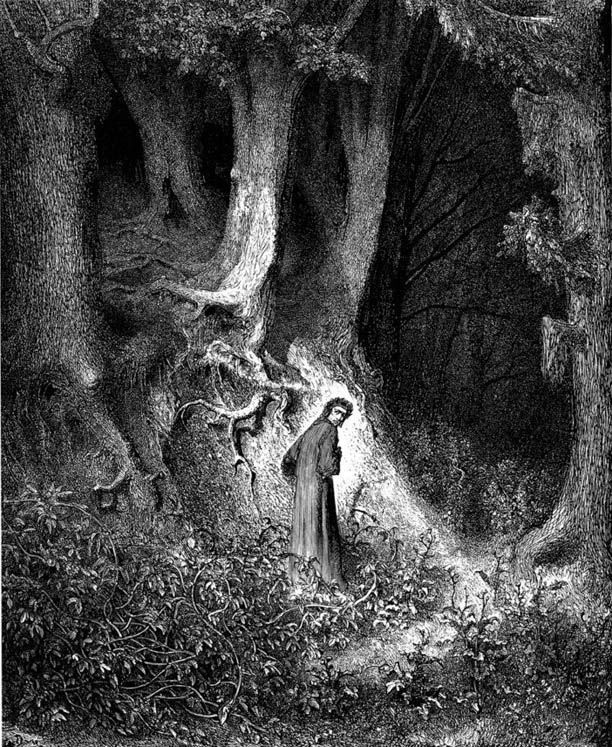
Once there was a Boy Scout group backpacking in the forest with their leader who, I am sorry to say, broke his leg and died because infection.

The Boy Scouts were in a bad way, having no idea where they were. Some thought they knew where to go to get out of the woods, following streams or paths, but others weren’t so sure.

After much deliberation, with factions formed, some in favor of streams, others paths, and still others in favor of smoke signals and staying jolly put, a quiet little boy raises his hand amidst the throng and meekly proffers what appears to be a mere piece of paper on which is scrawled some lines.

The eldest of the troop comes over to the little boy and asks what the heck he thinks he is doing. The little boy answers that it might be a good idea to use the map which fell out of the leader’s pocket when he fell down and broke his leg or whatever.

This not so well crafted moral tale has a moral. There are those with whom I meet here online who have their own ideas about the Apocalypse, and about what is going on, and other theological or prophetic speculation not unlike the boys who wanted to find a way out of the woods by following trodden paths or streams.

But I tend to think that kind of thinking is tricky and ultimately lands one in Protestant territory, if not in profession at least in spirit. That explains why there have been a few people who subscribe to the idea that there hasn’t been a pope since Pius IX or that Baptism of Desire is heretical or that marriage before non-Catholic witnesses is invalid.

Instead of consulting the map left by the leader, the catechism, which defines in clear delineation and definition the things we are to believe and do to save our souls and get out of the “forest dark,” people follow winding streams or paths deeper and deeper into the gloom of the wood, where the light scarcely falls.

We have a map. Let’s use it. Instead of going off in search of the way, let’s just use the way given to us, the way that was written for us laity, to understand what we are to do today. Will every single question we have be answered? No, but then not every question asked is important. But the catechism—make it any you please, just pre-1958–will serve you better than any other text to learn your faith.

Home Altar for the Home Alone Catholic

Home Alone Catholics Need Home Altars

Home altars are vitally important to the spiritual health of our family. When we gather together as a family at the home altar, we show God that we are willing to be present in public worship, to offer prayers to God in communion with each other. This post is as much a reminder of that for myself as it is for those who may be reading this.

Many try to answer to the crisis in the Church–and anyone who is sufficiently catechized is well aware of the nature of the crisis–by offering solutions that don’t work and aren’t Catholic. Over at TheThinkingHouseWife, Laura Wood said it well when she said, “This is all the inevitable unfolding of the principles of Vatican II and of a false hierarchy, which has abdicated its authority. The only answer is to pray at home, availing ourselves of Spiritual  Communion and Acts of Perfect Contrition, — avoiding the false solutions of Traditionalists who set up chapels without any authority and the blatant schisms and heresies of “Orthodoxy” or Protestant sects.”

We can’t be Sedevacantist chapel goers, offering prayers to God through illicit clergy. That won’t do. And it goes without saying we can’t go to Orthodox chapels unless we fancy being schismatics. And Protestantism is enticing to those who think Christian worship can be reduced to pop melodies and sugary-sweet lyrics about God, but for people who think that divine things are somehow sacred, that won’t do either.

What is needed, then, is a space and place to offer to God public acts of worship even if that is done in private. The answer, of course, is a home altar. Here we can offer to God our thanks for His daily blessings, as well as offer our tears and petitions, and, above all, we can offer praise and worship through St. John’s Mass (links are not endorsements!) and the Holy Rosary.

I said that this post was as much a reminder for me as it was information for you. You see, I have been neglecting my public prayer with my family ever since I started working. I really commend those working men who can be the spiritual leaders of their families as well as the breadwinners. It is a difficult juggling act. The cares of the world pull on a man’s mind away from the spiritual necessaries by the demand of the physical necessaries. That is why a home altar is so important.

Our home altar (featured above) is placed in the middle of our home really. It isn’t tucked away in some corner of the house, which would be ideal for contemplative prayer and devotion to be sure. Our altar is front and center, and harkens to us to come there and offer prayer throughout the day. The Angelus is a good prayer practice to get into, because it is traditionally said three times a day.

We pray the Mass of St. John, which is really just the offertory and spiritual communion, on Sundays as a family. And we pray the Rosary on Sunday as well. We used to pray the Rosary every day, and do so always at the altar, but it has become increasingly more difficult to pray the Rosary daily since our cares, worries, and work have increased–we as a family we tend more toward Martha than Mary:

“Or by Mary who sat and heard our Lord’s words, is signified the contemplative life; by Martha engaged in more outward services, the active life. Now Martha’s care is not blamed, but Mary is praised, for great are the rewards of an active life, but those of a contemplative are far better. Hence Mary’s part it is said will never be taken away from her, for the works of an active life pass away with the body, but the joys of the contemplative life rather begin to increase from the end,” (St. Gregory).

How to Furnish Your Home Altar

Whether we are called to the active or the contemplative life, however, we all need a home altar as Home Alone Catholics. The number one most important thing that we can furnish our home altars with is devotion. The second is candles–you simply cannot have a Catholic altar without candles. Wax candles get expensive, so think about investing in electric candles. Your kids will love changing out the dim ones for bright ones every evening–you have to do it during the evening because that way the light is fresh and bright all through the night for anyone who may want to sneak over to the altar for a midnight votive offering.

In addition to devotion and a good set of electric candles, or wax candles if you have the cash, is a bell and incense. “The devil hates everything beautiful and the bells are specifically used to draw attention to the divine worship of God,” (An Exorcist Explains Why the Devil hates Bells So Much). There is something enchanting about the sound of a bell ringing over the crying of an infant or the washing of dishes in the sink. Get a good bell, one which has a silvery smooth ring to it. Ours is a cheap one, but it has a solid ring to it which can be heard throughout our home, even through doors and the noise of rambunctious children.

I do not know much about incense other than that I use frankincense and myrrh and charcoal and a brass censer. I do not know why, for instance, incense tends to transport my soul from time and place into the Holy of Holies like a wormhole or something. But it does. If you have never prayed with incense at home, do. It will change everything.

The altar itself can be something actually like an altar or just a table. Children will appreciate an altar that is shorter as will short adults, so think about that when picking out the best piece of furniture to offer your daily prayers at, preferably while kneeling–because that is what Catholics do.

To keep your altar fresh and inviting and decorative throughout the year, consider alternating between the seasons on each Ember Day. We have pumpkins, leaves, and autumn decor in our baskets right now. The kids love to arrange them. Our winter baskets are especially splendid and charming. The baskets beautify the altar but they also allow the contemplative soul to ponder the meaning of pumpkins, and other fruits of the Earth, while praying: “If you do not think it extraordinary that a pumpkin is always a pumpkin, think again. You have not yet even begun philosophy,” (Miracles and Modern Civilisation).

And one more thing: don’t forget the Crucifix.

I hope I have made it sufficiently plain (if to no one else then at least to myself) why home altars are indispensable to Home Alone Catholics today and how fun they can be. Please share your own ideas of your home altar in the comments section.

What and Where is the Catholic Church?

The following email was sent to me by a thoughtful and faithful Catholic man named simply Mark. He has some interesting ideas about the Church today which invite reflection and discussion. I post his email here in hopes that readers will wrestle with the ideas presented here, namely, what the Church is and where it is. Oftentimes we modern people see the world in terms of visible realities—what Mark says in his own idiosyncratic way as “sentient.” Instead, we should ask what the Church is in terms of the invisible reality that is far more powerful and essential to the structuring of reality itself than matter, e.g., fine silken cloth for vestments, carved oaken furniture for altars or chairs, or marble, brick, and stone of church buildings versus supernatural life of grace by which the will and intellect of man is moved toward God and the good. Doing so we will be more on our way to see by faith instead of human sight, and so see the signs of the times and prepare ourselves for the Bridegroom.

Mark writes:

Almighty God so willing, we will now continue in finer clarity. Amen. “What and where is the Church today?” Your website gets no traction not because it is not utterly compelling to read, or listen to, rather because there are no authentic Christians/Catholics (as the terms are comingled from their metaphysical essence) left to find interest in the reading of truth, as all but all are simply not who they believe themselves to be, with their itchy ears, most basically understood then as,- we are now living the greatest preternatural deception,- while at the summa and summit of the power of Satan, allowed for by Almighty God, this world has ever known or will know. Amen.

Now then, to develop intellectively this reality of the magnum opus of satanic deception, which we have lived and are living since 1958 October, while under, “…the operation of error to believe lying:…” (2 Thess 2:10), we have to be utterly cognizant of separating the accidents from the substance, with pristine clarity in our minds, of the 2 realities (that is the Church conceived by the Son of God and the other church instituted by not the, “miracles”, as their genesis is divine, rather, “…according to the working of Satan, in all power, and signs, and lying wonders.” (2 Thess 2:9), while worked through his Antichrist as the efficient cause, in the sentient understandings perceived) as they actually are, while properly understood metaphysically from their potency and act, matter and form. With that foundation then, we know as a matter of divine revelation the quid of the thing which Christ Jesus deemed, His Church. Amen.

   To answer now directly this query, as to the quid of the thing we call the Church, conceived by the Son of God and instituted under the power of His Holy Ghost, we contemplate the Holy Magisterium, perpetual in its esse’.  The One Holy Roman Catholic and Apostolic Church is now, as She was then (prior 28 Oct. 1958), and will be unto the Second Coming, perfectly preserved as immutable and impregnable in Her Substantial form.  Period and end.  We know this with apodictic certitude as infallibly taught in, “Satis Cognitum”.  We turn now then to His Holiness Pope Leo XIII, 29 June 1886, section 3., “Satis Cognitum”:

       “And, since it was necessary that His divine mission should be perpetuated to the end of time, He took to Himself Disciples, trained by Himself, and made them partakers of His own authority.  And, when He had invoked upon them from Heaven the Spirit of Truth, He bade them go through the whole world and faithfully preach to all nations, what He had taught and what He had commanded, so that by the profession of His doctrine, and the observance of His laws, the human race might attain to holiness on earth and never-ending happiness in Heaven.  In this wise, and on this principlethe Church was begotten(all color emphasis mine).  If we consider the chief end of His Church and the proximate efficient causes of salvation, it is undoubtedly spiritual; but in regard to those who constitute it, and to the things which lead to these spiritual giftsit is external and visible.  The Apostles received a mission to teach by visible and audible signs, and they discharged their mission only by words and acts which certainly appealed to the senses.  So that their voices falling upon the ears of those who heard them begot faith in souls-‘ “Faith cometh by hearing, and hearing by the words of Christ” ‘ (Rom. x., 17).  And faith itself – that assent given to the first and supreme truth – though residing essentially in the intellect, must be manifested by outward profession – ‘ “For with the heart we believe unto justice, but with the mouth confession is made unto salvation” ‘ (Rom. x., 10). In the same way in man, nothing is more internal than heavenly grace which begets sanctity, but the ordinary and chief means of obtaining grace are external: that is to say, the sacraments which are administered by men specially chosen for that purpose, by means of certain ordinances.”

And now as to the ubi of the thing we call, “The Church” (as yet section 3. “Satis Cognitum”, continued)

  “For this reason the Church is so often called in Holy Writ a body, and even the body of Christ – ‘ “Now you are the body of Christ” ‘ (I Cor. xii., 27) – and precisely because it is a body is the Church visible: and because it is the body of Christ is it living and energizing, because by the infusion of His power Christ guards and sustains it, just as the vine gives nourishment and renders fruitful the branches united to it.  And as in animals the vital principle is unseen and invisible, and

is evidenced and manifested by the movements and action of the members, so the principle of supernatural life in the Church is clearly shown in that which is done by it.”

And so there we have it, dear Robert, as to both the quid and the ubi, of the thing we know as the Catholic Church, and with apodictic certitude, to be precisely as pristinely just exactly what and where She is, and to the iota of the iota, without a singular movement of change in Her Substantial reality as Her foundation, since conceived by Christ Jesus and instituted then by His Holy Ghost. Amen. Alleluia. One more small part then from, “Satis Cognitum”, now section 15., so as to give you apodictic certitude, while in pristine clarity, as to this common query of, “but I thought we had to have a Pope until Christ comes again on the Last Day?”. And now Pope Leo XIII, from section 15., Satis Cognitum: “….But it is opposed to the truth, and in evident contradiction with the divine constitution of the Church, to hold that while each Bishop is individually bound to obey the authority of the Roman Pontiffs, taken collectively the Bishops are not so bound. For it is the nature and object of a foundation to support the unity of the whole edifice and to give stability to it, rather thanto each component part; and in the present case this is much more applicable, since Christ the Lord wished that by the strength and solidity of the foundation the gates of hell should be prevented from prevailing against the Church. All are agreedthat the divine promise must be understood of the Church as a whole, and not of any certain portions of it. These can indeed be overcome by the assaults of the powers of hell, as in point of fact has befallen some of them.”
And so, before I close for now, dear Robert, let us sum up what has been achieved in this response to your two questions of, “what and where?”. There are now, and since 28 October 1958, two churches in the sentient cosmos which call themselves, “Catholic”, while at once one of them actually is the Church conceived by the Son of God, and this One yet finds its wellspring in His Substantial Being, as Being Himself, as His Mystical Body and Bride, as it always has and will, as the, “Church”, was never found in a building, rather it has always, everywhere, and only, been found freely in the operation of the will of those who have received, and are yet receiving, the perfectly gratuitous Gift of the supernatural virtue of the divine and Catholic Faith. Amen. Alleluia. This One True Church no longer controls the metaphysical accidental forms of what once were the sentient aspects of Christ’s Church, while they indeed were aspects of Her sentient reality for 1958 years, from Her institution at Pentecost unto the loss of Her Juridical as Hierarchal aspect on 28 October 1958. Amen. We know with apodictic certitude that this Church is known, while in the sentient material reality, as infallibly taught by Pope Leo XIII, and as follows, while first quoted above, and now again: “the principle of supernatural life in the Church is clearly shown in that which is done by it.” Thusly, we know that the Catholic Church today, as prior October 1958, and unto the Second Coming, is known by the acts of those who belong to Her: “…and for Thy sake I also love my neighbour as myself. I renounce every thought which is contrary to that love of one another, by which men are known to be the disciples of Thy Son; I forgive all who have in any way injured me, and I beg Thy grace and mercy for all the world.” (Manual of Prayers for congregational use. Imprimatur: V. Cantineau, Vic. Gen., 27 April 1923). Amen. Alleluia. As our Blessed Lord and Redeemer, the Christ commands: “By their fruits you shall know them” (Mt. 7, 16). And further then, “A good tree cannot bring forth evil fruit, neither can an evil tree bring forth good fruit. (Mt. 7, 18). Every tree that bringeth forth not good fruit, shall be cut down, and shall be cast into the fire. (Mt. 7, 19). Wherefore by their fruits you shall know them.” (Mt. 7, 20)
Lucifer’s trick, dear Robert, is to get us to think of Christ’s Church as though it is a physical place, as though the Mystical Body of Christ, His Bride, is actually composed of those metaphysical accidental forms of the buildings, garments, sacramentals, etc. over the entire world; those same objects that were occupied and used by Catholics the world over, when the Vicar of Christ was present in this world, as he was the visible sign of the Unity of Faith and the Unity of Communion in the public sphere, in this now barren and desolate world. Amen. The supernatural society of Heaven on earth, NEVER HAS BEEN a place, rather there were only places where those who held the supernatural virtue of the divine and Catholic Faith could gather, for the proper public worship of Almighty God, while under the absolute Authority of the Vicar of Jesus Christ. Amen.Analogically, and as you well know, we eat the flesh of the cow, yet we do not become the cow. The substantial form of the beast remains, while the material reality is consumed, taking upon itself then, the substantial form of the one who consumes. In like kind, the buildings never were, nor could they ever be, the Catholic Church in se, as they were only the sentient realities of the Church. They no longer belong to Christ’s Church, as they have been passed on, as the flesh of the cow, yet and of course, the Substantial Being of His Church is Him, as it could only ever be. Amen. Alleluia.

Much Ado About Nothing: On the Inconvertibility of Medium and Message

As I have mentioned, I am currently working on a PhD in Communication. It so happens that the most recent article I have written in the program has to do with the Second Vatican Council. I thought it would make for good reading here on the CE Log, especially since I have been so remiss in publishing anything of any substance in a long while. I hope you enjoy it. If you do, please leave a comment. If you don’t enjoy it, because you think it is wrong in some way, I really want you to comment!

Robert Robbins

Department of Communication, Liberty University Online

Author Note

I may have a conflict of interest. I am a devout Catholic. Further, I am not a fan of the Second Vatican Council which I believe was illegally convoked by an antipope and was subsequently ratified by another antipope. I have very strong views about the Second Vatican Council, yet these convictions do not necessarily conflict with my thesis that McLuhen mistakes material causality of communication with formal causality. Still, to be forthright, the reader should know I am Catholic and have strong ideas about the Second Vatican Council and the purported Catholic hierarchy in power at the time.  

I may be reached at rarobbins@liberty.edu

Abstract

Formal causality is not material causality and medium is not reducible to or convertible with message, whatever McLuhen labors to theorize to the contrary.     

Keywords: McLuhen, Second Vatican Council, Medium is the Message, formal cause, material cause 

Much Ado About Nothing: On the Inconvertibility of Medium and Message

There is a continual refrain heard within the lines of McLuhen’s (1999) meditation on technological communication media and the Catholic Church, and that is, the hierarchy of the Church doesn’t get it. No one seems to care about media the way McLuhen cares, and what is more, no one seems to understand media the way McLuhen does. This is an idea that is expressed about every three pages or so, with the singular effect that the reader is left believing that only McLuhen really understands the fundamental nature of reality. At any rate, the most venerable institution the world has ever known—the Catholic Church—doesn’t understand the fundamental nature of reality. The institution which has been “Thinking about thinking for over 2000 years,” to paraphrase G.K. Chesterton—McLuhen’s intellectual boyhood hero—doesn’t understand communication quite so well as McLuhen. That strains credulity just a bit. 

There is much to say for McLuhen and his intellectual legacy. The man was a giant in the field of communication theory and has left his impression of his style and ideas in such memorable phrases as “The medium is the message” on the minds of entire generations. He rubbed elbows and wrote letters with the leading intellectuals of the last century. He was, in short, a scholar of the highest class, which is why it is rather difficult for me—a mere nobody in the sphere of scholarship—to point out that McLuhen’s ideas about the reforms of the Second Vatican Council are wrong to the point of being ridiculous, and that his views on the metaphysics of communication are false as well.  

Mcluhen goes so wrong because he mistakes accidental things for substantial things. More precisely, he mistakes the material cause for the formal cause. “The medium is the message,” McLuhen says, but that is false on so many levels, it is hard to see how to see any meaning and sense in it at all. It is true that the message is constrained by the matter through which it expresses its form, such as the spoken word must be reshaped on a harmonic level when uttered through a telephone or microphone, and, moreover, the spoken word is spoken in the environment of a body present, whereas telephone voices are just that, voices, without a body. But such modifications as these are mostly accidental to the formal elements of the thing being spoken, such as “I love you” or “I hate you” or “God is dead” or “God is risen.”  

McLuhen’s great mistake is to make much ado about the medium itself, when the content, the form of the communication—the message itself—is either not dealt with at all or is only minimally analyzed. This tendency of McLuhen to mistake the material cause of the communication for the formal cause of the communication will be shown by quoting examples in what follows. Doing so will provide a neat summary of how McLuhen understands strategic communication changes through different media use in the context of Catholic religious practice, while also providing solid evidence for the claim that McLuhen’s theory that the medium is the message misses the mark.               

Microphone as the Abomination of Desolation  

For the typical Catholic today, things are relatively normal in the Church. But to traditional Catholics or extreme and fringe group Catholics like Sedevacantists—those who believe the Chair of Peter is vacant–the Catholic Church is in a doctrinal and liturgical and hierarchical crisis. 

The better word would be schism. After the reforms of the Second Vatican Council, the ancient liturgy of Catholic Church was substantially changed, with the very words of Christ, “This my Body…This is my Blood,” being tampered with. Orientation of the priest during the mass was changed, from facing the altar and tabernacle to facing the people. The liturgy was celebrated in the vernacular, and Latin was done away with. Vestments were changed. Church architecture was changed. Icons and images of saints were demolished. Altars were demolished. Even entire churches were demolished. A new canon law was created. A new catechism was created. In short, nothing that was Catholic before the Second Vatican Council was left untouched by the reformers. There was a universal revolution in the Universal Church. There was a mass exodus of priests and nuns from their religious state, many casting off their life-long vows of chastity to marry each other. Laity, too, flocked in massive numbers into the world and out of the Sheepfold of the Church. After the updates, the Catholic Church trembled to find that it had apostatized from the Faith. The Catholic Church was no longer Catholic, in worship, faith or morals. By all reasonable accounts, the Great Apostasy, the turning away from the Faith by a great number of the faithful which Saint Paul prophesied about, had taken place. And McLuhen wants us seriously to believe that this all took place because some microphones were set up in some churches.

“Without reconstructing the history of the decision to shelve the Latin Mass, one can see the matter in parallel form in the discovery by the preacher that the microphone is incompatible with vehement exhortation or stern admonition,” says McLuhen (1999, p. 114). He goes on, “To a public that is electrically participant in a completely acoustic situation, loudspeakers bring the sounds of the preacher from several directions at once.” McLuhen argues that, because speakers and microphones make the priest present to everyone, the old architectural designs become obsolesced. This is “a factor which also turns the celebrant around to face the congregation” because the audience is in an immediate relation with the speaker. McLuhen concludes, “These major aspects of liturgical change were unforeseen and unplanned and remain unacknowledged by the users of the microphone system in our churches.”  

There are three claims here being made. First, microphones cannot be used to exhort. Second, microphones make acoustical architectural design obsolete. And thirdly, microphones make the priest face the people. The supposition is that the microphone exercises some kind of magical spell on priest and congregation, directing their actions quite apart from any legal or moral or cultural forces—let alone religious—which may be acting on them at any point in time. But that is not how things work in the Catholic Church nor in reality. 

Claim One: Exhortation and Admonition Incompatible with Microphones 

This claim is perhaps the least convincing, in part because McLuhen just makes it without any evidence to back it up. Who says that the amplified voice cannot exhort or admonish, or arouse an audience to any kind of emotional state towards virtue or vice for that matter? This is an instance—and there are many in the formal writings and letters of McLuhen—where he just makes things up. I could list any number of counterexamples which call into question the claim, but I will name one: The “I have a Dream” speech by Martin Luther King, Jr. That was one of the most heard, quoted, and exhorting and admonishing speeches given in the electric age of communication, and I should add the most effective. It eventually led to an entire country’s repentance for racial oppression and paved the way to equal rights. Is it altogether believable that a priest could not so admonish and exhort his congregation to repentance for sins committed against God from the pulpit because he was speaking into a microphone?     

Claim Two: Architecturally Obsolesced Churches

McLuhen makes the astounding claim that microphones obsolesced the acoustical churches of the pre-Second Vatican Council era, because multi-directional media speaker systems eliminate the space between the speaker and the audience. 

But do acoustics even have relevance to how churches were to be redesigned? A new cathedral was erected in Taranto which was considered a masterpiece of architecture, yet directly contradicts Catholic doctrine in many respects, (Amerio, 1996). First, the altar at Taranto occupies the lowest place in the sanctuary. God is in the lowest place, and the people are placed above God. Next, the vaulted ceiling is open, letting in light from the sky, with the expressed purpose of the architect to symbolize that the outside is sacred, too. But Catholic worship is centered on the sanctity of the Eucharist, not on all that is sacred. If everything is sacred, nothing is sacred. Further, the Blessed Sacrement altar is set aside, thereby signifying that it does not occupy a central place in the worship life of the Church. 

Examples like Taranto could be multiplied to near infinity. There is a symbolic meaning behind the redesigning of Catholic churches, and it has nothing to do with acoustics. Even granted that it may have something to do with acoustics and nothing to do with doctrinal changes, McLuhen’s idea that speakers make the speaker present to the audience is clumsy and unconvincing. 

Consider the fact that sound travels at over a 1,000 feet per second, and since churches prior to the Second Vatican Council were constructed to be acoustically perfect echo chambers, the sound emanating from a priest during a sermon would not only be instantaneously heard by the congregation, but it would have also been heard in surround-sound as it were, bouncing off the archways and high walls of the church building. This would at least be comparable in effect to any multi-dimensional speaker system. True, clarity would be improved with reverberation distortions decreased as buildings were constructed to be less echoing, but it seems to stretch credulity to say Church leaders decided to demolish and redesign churches because of the advent of microphones and speakers. The idea is intellectually offensive.                

Claim Three: Ad Populum 

In the Catholic Church, the priest who celebrates mass follows rubrics which direct his actions. These are written by Church leaders. After the Second Vatican Council, Church leaders instituted and decreed liturgical reforms, which changed the way priest and people worshiped God in the mass. 

“As Mass was usually celebrated in the pre-conciliar period, priest and people were all of them turned towards a God who is symbolically before and above them all. These positions reflect a hierarchical arrangement and a theocentric orientation; they look God-ward. In the new ‘back to front’ Mass…both people and priest are turned toward man, in an anthropogenic arrangement,” (Amerio, 1996, p. 647). 

Further, Amerio writes, “The Church is reduced to a closed community of human beings, when by nature it is really a community directed outwards beyond itself, towards a single transcendent point,” (1996, p. 647). In other words, after the reforms, the priest faced the people in the pews and turned his back on God. In other words, the people apostatized—turned away—from God. Microphones and multi-dimensional speaker systems had nothing to do with that. Sin did.  

The Form and Matter of Communication

I do not bring up the examples listed above to embarrass McLuhen. I think it is peculiar that a man with such vast learning could go so wrong in explaining a handful of relatively simple religious phenomena. But then I remembered that McLuhen is a theorist, and his theories are everything. That is not to say an individual theorist could not be objective about even his own theories applied to the real world, but the theoretical framework, the structuring of the theory tends, in whatever domain of the specialist, to limit the perspective and confine the intellect to a few select set of principles, which are then used to explain everything even at the risk of appearing inane or insane.  

For McLuhen, a fundamental principle he developed early on was the idea that media are formal. McLuhen says that he often would be upbraided by his intellectual peers for lacking Thomistic precision and terminology, and he also says that he thought philosophy a useless truncation, and preferred literary investigations, (1996). And it shows in his theorizing. 

In explaining what is meant by “The medium is the message,” McLuhen says, “It might be illustrated by saying that the English language is an enormous medium that is very much more potent and effective than anything ever said in English,” (1993, p. 79). McLuhen is saying that our language forms the way we perceive, the way we taste, touch, smell, see, and hear, as do other media like “printing, radio, movies, and TV.” Media have a formal relationship to ourselves, in other words. 

“My own approach to the media has been entirely from formal causes. Since formal causes are hidden and environmental, they exert their structural pressures by interval and interface with whatever is in their environmental territory. Formal cause is always hidden, whereas the things upon which they act are visible. The TV generation has been shaped [formed] not by TV programs, but by the pervasive and penetrating character of the TV image, or service, itself,” (McLuhen, 1993, p. 74.)

Here in a nutshell is how McLuhen (1993) can claim that the microphone caused the Catholic Church to destroy its own churches and altars. The idea is simply asinine. The reason is simple enough, really. McLuhen thinks that different media are substantial forms—that which orders things to be what they are in reality–when in fact they are merely accidentals, or the quantity, quality, relation, action, passion, time, place, disposition, or equipment of a thing. McLuhen often speaks of the increased frequency of media messages, as if this were a formalizing component in reality; or he speaks of the disposition of the message coming through the multi-dimensional speakers, as if this had a formalizing effect on an audience. He speaks this way because he does not understand Aristotelian metaphysics, because he has never studied it. He may have picked up terms here and there, but he abuses those terms and uses them against their original meaning.

The form or substance of communication is the word. This is clear from Thomistic theology which says that the form of the sacrament of the Eucharist, for instance, is the words of consecration which give meaning and effect to what they signify. Here the bread itself is matter upon which the words act and transubstantiate into the Body and Blood of Christ. It is a fitting example, because the Eucharist is also called Holy Communion, or the way man communicates with God. He does so through words which are the formal components in the act of communication, giving structure and meaning to the matter, or the bread and wine which are changed into the Flesh and Blood of Jesus Christ, which man then consumes and subsumes into his body and soul. 

By analogy, then with Holy Communion, Holy Communication, if you will, words in media of different kinds are also the form of the act of communication, whereas the pixels, the wavelengths, radio frequencies, the sound and light that is, the material makeup of the medium itself, be it radio, speaker, or video projection, are the matter of communication. McLuhen’s analysis is incomplete and incoherent because he lacks the basic Aristotelian Form-Matter structure to give an account of the communication phenomena. Consequently, his conclusions lack credibility and sense, to say the least.

Medium and Message are Inconvertible 

The fact that the medium is not convertible with the message stems from the analysis of the structure of reality of form-matter. The message, that is, the meaning, the whatness, the thrust or point of a communication, is itself the structuring form of the communication itself. The medium is nothing more than the material through which the message passes to be heard or seen. If the medium were the message, then the message, the meaning of the communication, would be reduced to how it is seen or heard, that is, the quality, which is repugnant to reason. Even a crackling disembodied voice of a long-distance phone call of a fiancé saying, “I’ll wait for you,” to a deployed sailor overseas invokes all the heavy reality of the heart which words fail to express to any adequacy. There is formal power even in those four little words, so hampered as they are by the medium they must use to communicate through. Such power moves the heart to hope and to love and to tears. And the only explanation of the communication’s power is not in the so-called “formal” or structuring or environmental factor of the medium but in the simple, soft-spoken words themselves, because words are the message, and the message is inconvertible with the medium.            

References

Amerio, R. (1996). Iota Unum. Kansas City, MO: Sarto House. ISBN: 978-0-9639032-1-1. 

McLuhan, M. (1999). The Medium and the Light : Reflections on Religion and Media. Eugene, OR: Stoddart. ISBN: 9780415027960.   
Thank You, Anonymous Donor

Our Lady of Perpetual Help, Pray for Us

Recently I had decided to downgrade my website hosting plan, which would mean that many features like the forum for instance would not be available anymore. My decision to do so was that there was so little traffic, I couldn’t justify spending so much money on an upgraded plan to have plugins that no one really used.

Well, now I don’t have to make that decision, at least for another whole year, because a reader made the decision for me to donate the $319 for the upgraded premium plan!

So, whoever you are, generous donor, thank you very much! May Our Lady of Perpetual Help help you on the road to heaven with many graces in return.

Life Update

Much has changed since last I wrote about my personal life. For starters, I am no longer a reporter for the local newspaper. Corporate decision makers terminated my position for financial reasons. I cannot blame them: local journalism is dead, not just dying. Every citizen with a social media account and smart phone is a photographer and journalist, at least at the local reporting level where journalistic prowess and story telling skill is not required or desired. There will always be specialized reporters and investigative journalism, we hope, but the local reporter is extinct as the triceratops.

I was working concurrently in the U.S. Forest Service at the time I was laid off from the newspaper, so that worked out. I am a front desk worker at the Shawnee National Forest, where I answer tourists’ questions about recreational sites, and general forest information. Additionally, I help in public affairs, taking photos, creating graphics, writing news releases and feature stories, and updating social media.

Another iron I have in the fire is my enrollment in a PhD in Communication program. I am very exited to be doing scholarly work again, but I have found that several years of not doing so has dimmed my wits and stunted my memory glands. I am hoping that with practice ability will follow.

Finally, my seventh child has been born, Francis Thomas, after the saints most famous of those names. Though born premature, he is very healthy and beautiful and I am deeply grateful to God for him and for all my children and wife of fifteen years.

Well, that is just a recap of the past several months of what has been happening in my neck of the woods. I hope you all are doing well, growing in holiness and in the love of neighbor and God, praying at home the mass and rosary, and finding little ways throughout your days to bless God and thank him for your constant creation.

A Comment Too Long

The following comment was attempted on Introibo’s blog about visualization which you can read here: http://introiboadaltaredei2.blogspot.com/2023/07/contending-for-faith-part-17.html?m=1

The article was fairly good as far as it goes, but as I think I show, it lacked clear and definite language to get at the heart of occultist visualization.

I wrote this comment only to find out that it was too long for Introibo’s blog. I hope you find it interesting enough to comment below.

No doubt what you have presented is startling and cautionary, and everyone should be on guard against visualization as it is expressed in occult method literature and the like.

But the formulation of its components quoted below is a little loose for my taste and does not smack of nefarious demonic principles but poorly articulated orthodox dogmas.

“Pantheism : Everything is interconnected by divine energy, the One power, or ultimate cosmic reality”

Pantheism is not the interconnected unity of divine energy or power but the equation of all things with God. It is a point of Thomistic metaphysics that everything is a unity and imbued with Divine power: the act of existence or esse, and all things participate in this power and are united by it through the genus of being—of which, it must be stated, God is not, since God cannot occupy any genus. This saves the Thomistic metaphysical analysis from reducing all creation to God, but also rightly places the power of God at the heart of all things.

Next:

“Humans are divine in their true nature and each person controls his personal destiny; he is an integral part of this divine energy and can realize this experientially through proper technique and instruction”

I think it was Saint Gregory Nanzianzus who theorized that prelapsarian Adam and Eve would not have died had they never fallen into sin and subsequent death. Immortality was a birthright from the beginning. It is only because of sin that man decays. Humans, then, in their true or original nature were in a manner of speaking divine. But so too are humans, faithful, that is, to Christ, who are destined to be divine: “For the Son of God became man so that we might become God.”

It is orthodox Catholic teaching to say each man controls his destiny: to posit the contrary of which is to deny free will. It is true that no man is sufficient unto himself to guide and control his destiny, since grace affords him the means by which he is to be saved, nevertheless, he chooses or controls those means in the sense of using the grace given him or not.

The experience of the unity of creation in God has been often written on by the saints. There is a point at which all things pass away and only God remains. This is a common mystical theme and does not necessarily involve occult belief.

“The mind of each human has “infinite” potential; the “higher self” or unconscious mind provides the connecting link to the infinite and is believed to be the repository of vast wisdom and ability”

It was Aristotle and not some 20th century occultist who said the intellect in a certain way is all things. The intellect and will are powers of the soul the likeness of which is known only in God and the Angels. These powers are indeed beyond compare in the natural, material world, because, though they are natural in the sense of being created, they are nevertheless immaterial and unlike anything in all creation. They are indeed of infinite potential because they cannot be limited by matter. The intellect and will are true repositories of vast wisdom and ability. That is evident by what man has done by means of them—think of aeronautical engineering or the Sistine Chapel, for instance. Of course these achievements are wrought in the intellect and will alone, not through a downloading of the divine; yet there is something to be said for divine inspiration, which all great men of genius have alluded to in one way or another.

“Visualization is an important technique that initiates contact with the ultimate cosmic reality.”

When understood in the sense of contemplation, the visualizing act of the intellect does place the individual intellect in contact with the ultimate cosmic reality which is known also as mysticism or the experience of God.

These are some of my thoughts on how you formulated the problem. I think you make a good point that visualization as practiced by the occultist is spiritually dangerous indeed, as the conjuring Philip piece at the end shows so well. Definitions and distinctions must be made, however, to avoid falling into the delusion that one is God or controls his world through his mind. That is absurd. But man does control himself through his mind, and he becomes what he thinks and does.

CE

Come To Think Of It: My Country is My Mother

I read an advertisement today raving about streaming a fireworks show from the air conditioned comfort of one’s living room, where the decibels will be more conducive to the dog’s delicate disposition, and one may be free from the aerial assault of Fourth of July mosquitoes. Apparently there is even an app one can use to simulate a pyrotechnic celebration in the darkened sky of one’s cellphone. If that is how you will be observing Independence Day, I suppose you have that freedom to do so. But if you would like to know why I’d never live-stream fireworks or play Pyro-Arcade in lieu of attending a fireworks display or, better, putting one on myself, the answer is simply that it isn’t American and it isn’t honoring America.

What is America? I suppose the question must be asked in preparing to celebrate one’s country, but the question is at once too general and too specific. It is like asking, “Who is my Mother?” You could answer, “The woman who gave me life,” but that is true of all mothers as it is true of all countries. Then again you could answer, “The woman with the amber necklace who smells of vanilla and cream and tobacco when I hug her,” but those details are far too intimate to be of any help in understanding the mother’s personality, just as it would be difficult to describe one’s country by such intimate details.

I could ask where my Mother or my country comes from, but that would only turn up more questions of nationality, like “What is Poland?” or “What is Britain?”

Is it even necessary to ask the question? Surely the citizen knows his country as the son knows his mother, and to ask the question somewhat smacks of irreverence.

I know my country like I know my mother. She is beautiful and tranquil and sad like red wine clouds hanging over a beer-foam tide, palm tree silhouetted like so many idle laurels waving in the sea breeze.

Or she is the Colossal Canyon, misnamed “Grand,” which stretches out arms as wide as deep, channeled by ancient streams of blood and water.

Her lands are low as the caverns beneath the earth, entombing the very mysteries of existence with the diamonds, or seemingly clipping the stars with her white-capped peaks.

My Mother, whose mind is open like the plains of Iowa, lets the sunshine nourish and fructify her thoughts by the light of justice and truth, until—at last—a late but bountiful harvest of peace and prosperity is brought into the barn.

She’s any number of dark and disturbing forests, where legends are born, live and die, and buried in unmarked graves, like some noble Indian Chief, cut down by a tomahawk like a stalk of corn.

She’s the land between two infinities, the Pacific and the Atlantic, which together encircle the world as the mighty Oceanus, transporting the wealth of all the peoples of the world to her shores, where she mightily sets them to use and good.

And my Mother is of two moods or minds, at once permissive but also oppressive, allowing liberty while disallowing life, magnanimous with mere information but a miser with truth, a woman inebriated by amorality yet with laws as sober as a judge at court, a veritable Tale of Two Countries, variations on a theme of Right and Left.

My mother is this and so much more than I can say, that I simply am silent as the mosquitoes bite my legs, and the dog cowers in the corner between the thunder and lightning and rain shower of light, as a tear of wonder and gratitude falls to the ground, the land that gave me birth.

Come to think of it, my country is my mother.

Come to Think of It: The meaninglessness of man

Electronic communication has given a whole new meaning to the word ephemera. And as writing began in stone and in its current form, secured somehow in the ether of electronic coding, I fear for our children’s children who may be disinherited from the literary traditions of history, not to mention one’s written language itself.

Just where language came from is as mysterious as life itself, if not more mysterious. We are perplexed by the hippopotamus, with its largeness and hunger for tons of grass or whatever is a hippo’s daily bread; but we are perhaps unspeakably bewildered at the thought of a hippo praying before it gorges itself yet again on another ton of turf. The idea of a hippo talking is incongruous with our cognitive habits because we are intellectual snobs in the society of the world’s species.

But wherever language came from, which is probably the same place life came from (read here God Almighty), it is not altogether certain that language will endure, at least as written.

We as a species seem to be either devolving or evolving, I can’t say which. Modern day electronic communication proceeds from the principle that less is more, when, with the medium of language and the written word, the very opposite is true.

Thus we text a smiley emoji to indicate our pleasure at someone’s equally curt compliment about our new haircut. I suppose in such things, more isn’t much needed, but such a habit carries over into heavier moments of one’s life, like birth and death and marriage.

These events are oftentimes acknowledged with the same brevity and inhuman distance as a smiley emoji by a very short text like: “Grandpa past away today.” I speak from experience, because that is how I was informed of the passing away of my own father’s father.

In more formal and human epochs—like two decades ago before text messaging—the notice of a loved one’s passing was usually given in person, with sorrow mitigated by warm affection and moving words, however learned, because these were tempered by an equally warm and affectionate tone; or by telephone call which transported at least the tone.

I say we may be evolving or devolving, and the way we use language is the reason. It may be that man’s thought and expression will become all feeling and all analytics or mathematics, that he will perfectly express all he has to say on his wedding day, for instance, by a kiss and the formula 1+1=1, but somehow that may be a cause for confusion. In words, “The two shall become one” is perfectly intelligible, because the thought, being mystical, is easily conveyed in the mystical medium of words. But in pure feeling or pure number, man is diminished, and his world shrunk like a juicy grape into a dried up raisin.

There’s a vision of the caveman, homo erectus, with his sunken skull and club and hairy back doodling with a rock pencil on the wall of a cave by the light of a Promethean fire. There’s another vision, of modern man hunched over his cellphone thumbing away the words and thoughts and criticisms of his age. The scrawling scratches of the half-wit in the cave have endured tens of thousands of years, and probably will be there tens of thousands more. I doubt this article will last more than a day or two, but will probably end up going down the memory hole.

Come to think of it, man isn’t so much evolving into a superman or devolving into his pre-historic former self but is simply becoming smaller and more insignificant in the precise meaning of the word—man is becoming meaningless because he is meaning less and less in what he writes by the minute.

The Black Man’s Jubilee

In light of the holiday Juneteenth, the day on which a vast body of enslaved black men, women and children were declared free from their white masters and captors, I wonder what the term really means. Not the word, ‘Juneteenth’, for that doesn’t mean anything at all, at least in an etymological sense. The word is a contraction of June and nineteenth, but who first contracted it is a mystery to me and Mr. Google, only that the contraction happened sometime in the late nineteenth century. Rather, I am more concerned and perplexed by the word freedom. What does it mean to be free? 

Surely freedom means not having to pick another man’s cotton because he tells you to. That kind of freedom, freedom from being a working slave to a master, is what Juneteenth celebrates.

But there are other kinds of slavery. One is not altogether free if he must beg on the side of the street for his daily bread, like the emaciated black man I saw this morning at the corner of University Mall in Carbondale, holding a red sign beneath the traffic lights. Yes, of course, the man has the choice to stand at the corner and beg or go to a shelter and simply stand in line for some food. But I suspect that the thin and tired looking man did not look like that because he wanted food, at least not directly. He was most likely a drug addict and wanted money for more drugs. 

The tragic irony is that the man I saw was literally drowning in a sea of prosperity, of currents of wealth and the means of material acquisition bustling all about him. Just across the road fifty feet away stood Taco Bell, where the man could have been hired on the spot for a team member position beginning at $14 dollars an hour, an entire dollar more than minimum wage. Assuming no overtime, speciality pay, etc., that is bringing home $29,120 a year. And did I mention Taco Bell offers free and discounted food and drinks for its employees? 

But the chains that kept that man captive were invisible, and those prevented him from walking over to Taco Bell for a paycheck and a life off the street. Who put those chains on him, the white man? Hardly. What is more than likely, he put them on himself when he turned to drugs to escape a childhood full of pain, perhaps from an absent or drug-addict father who never taught him to be a man, let alone a free man.  

Freedom means being free from things which hinder us from acting as we would like or ought to act. In early America, slavery took the form of forced work, chains, and the lash. Today, slavery takes the form of addiction, ignorance, and vice. In the days of early American slavery, one could hear a black man under a burning sun singing in some cotton field a hymn of hope and jubilee. That man, though a slave before man, was a freeman before God, and secretly he knew it, which is why he sang in the sun. On the other hand, the manacled black man of today thinks he is free, but he is enslaved by a thousand different chains which hinder his movements at every turn. He stands on the street corner looking pitiful and small and does not sing. He cannot walk fifty feet to a trendy, colorful and air-conditioned restaurant which will pay him almost $30,000 to do what he is already doing in the street and sun because his mind and will are enslaved. 

Come to think of it, I cannot fully celebrate Juneteenth, because I am still waiting on the black man’s jubilee.        

New Background and Text Colors Needed!

I have heard readers complain about the text and background colors for too long now, and I must do something.

I have not wanted to change the color scheme because I always thought it was perfect for the theme of an eclipse: dark, warm tones.

But the colors are not conducive to an enjoyable reading experience. So I want to open up the comments for suggestions on what colors I might try. If there is a clear winner, I will use the suggested scheme, otherwise I will try black on white.

So leave your comments below of which colors to use for the background and text of CE!