On the Secret of Life

Elysian Fields or Limbo?

The secret of life is death. Life as such is no mystery. We are born according to set laws by which the universe is governed, both physical and metaphysical. Of course, the soul is a mystery, since it is caused directly by God, and partakes of His eternality, but even this is proven by natural reason, that is, that there must be such a thing in man as an eternal soul.

So, as I was saying, life is no secret, but death is a huge secret in the most perfect sense, for no one save One has ever come back to tell its secrets, and He was rather mum about the affairs of the underworld, save that we ought to avoid Hell as a place of unending torment.

But this brings up an interesting point: what does it mean when we say and believe that “He descended into Hell”? Does it mean that our Lord dwelt in a place of torture and defilement for the time His Body lay in the tomb? By no means, as the BC teaches us:

65. The word “hell” was sometimes used to signify the grave or a low place. In the Apostles’ Creed it means Limbo.

Now that is interesting, don’t you think? Limbo. I recall in my childhood a debate which broke out between my Dad’s friend and my stepmother, and it was over this idea of Purgatory and also Limbo, both ideas I seem to recall were abhorrent to my Dad’s friend, who was Protestant (of course) yet dogmatically certain to my stepmother, who was Catholic.

Protestants labor under the bewildering delusion that our Lord died and descended into Hell, which, I suppose must mean that He went down into the abyss of despair, because a Protestant—at least my Dad’s friend—didn’t believe in Limbo. I don’t know, but that seems to me to smack of blasphemy, but perhaps I am reading too much into it. Anyway, what concerns us here is the secret of life, which is death, and what, as Shakespeare says, is the “undiscovered country,” in particular as it relates to the question of Limbo.

What is Limbo, and is it still a place one may find himself in after death? To answer these questions and others, one would do no better than to take fifteen minutes and read the entry in the Catholic Encyclopedia on Limbo. I’ll wait.

You didn’t read it, did you. Oh, well, I’ll summarize it for you now.

The answer to the first question, according to the article, is that Limbo is understood in two senses, one, according to the old dispensation (Old Law), under which the just were awaiting the Redeemer to open the Gates of Heaven, and lead them into life eternal and into the Beatific Vision, which is precisely what He did when He descended into Hell. The other sense is according to the New Law of Grace, whereby man is redeemed according to baptism into the Passion, Death, and Resurrection of Christ. Hence, those who die without baptism, or without the desire thereof, yet without personal sin, enter into what is called in English, the Borderland of the Children, Limbus Puerorum, which, to my mind, sounds a lot like Candyland.

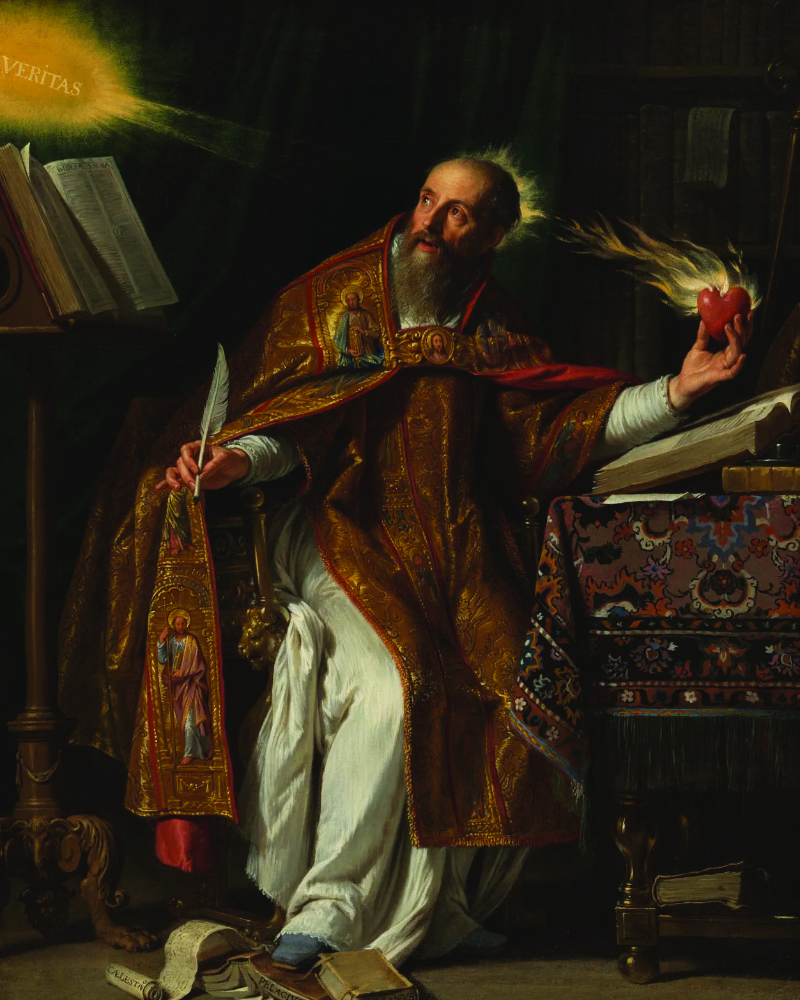
Now, in what this life exactly consists there has been considerable dispute, with the Greek fathers teaching that Limbo was not a place of punishment on account of original sin, to Saint Augustine teaching otherwise, and persuading the Church in his time to view it accordingly, to Saint Thomas Aquinas arguing to the contrary, upholding the Greek Fathers, yet seeking to reconcile (however imperfectly) them with Saint Augustine. Then, in the modern period, a kind of revival of the Augustinian view held sway with prominent theologians, yet the conclusion to be drawn from the back and forth, is that whether Limbo was a state of everlasting natural bliss or not, it is undeniable that, as a natural state, it could never compare with the eternal bliss of grace in beholding God Himself, the mere instantaneous act of which would out measure all the the ages of ages of a purely natural existence.

I am no fan of C.S. Lewis on account of his heresy, but, as a man of considerable literary genius, he gave is an wonderful little image of the joys of Heaven compared with those of the earth:

“It would seem that Our Lord finds our desires not too strong, but too weak. We are half-hearted creatures, fooling about with drink and sex and ambition when infinite joy is offered us, like an ignorant child who wants to go on making mud pies in a slum because he cannot imagine what is meant by the offer of a holiday at the sea. We are far too easily pleased.”

Speaking of the sea, I remember that the Greek psgans also had a name for such a place where the souls of the just would go: Elysium, which comes from a verb meaning to be deeply stirred by joy. This is how Hesiod describes it:

“And they live untouched by sorrow in the islands of the blessed along the shore of deep-swirling Ocean, happy heroes for whom the grain-giving earth bears honey-sweet fruit flourishing thrice a year, far from the deathless gods, and Cronos rules over them.”

To dig a bit deeper, let’s listen to Lewis again. Here he remembers a time when his brother showed him a diorama garden while he was a tender youth, which experience and stirred him deeply by joy:

“I call it Joy. ‘Animal-Land’ was not imaginative. But certain other experiences were…The first is itself the memory of a memory. As I stood beside a flowering currant bush on a summer day there suddenly arose in me without warning, and as if from a depth not of years but of centuries, the memory of that earlier morning at the Old House when my brother had brought his toy garden into the nursery. It is difficult or find words strong enough for the sensation which came over me; Milton’s ‘enormous bliss’ of Eden (giving the full, ancient meaning to ‘enormous’) comes somewhere near it. It was a sensation, of course, of desire; but desire for what?…Before I knew what I desired, the desire itself was gone, the whole glimpse… withdrawn, the world turned commonplace again, or only stirred by a longing for the longing that had just ceased…In a sense the central story of my life is about nothing else… The quality common to the three experiences… is that of an unsatisfied desire which is itself more desirable than any other satisfaction. I call it Joy, which is here a technical term and must be sharply distinguished both from Happiness and Pleasure. Joy (in my sense) has indeed one characteristic, and one only, in common with them; the fact that anyone who has experienced it will want it again… I doubt whether anyone who has tasted it would ever, if both were in his power, exchange it for all the pleasures in the world. But then Joy is never in our power and Pleasure often is.”

I have had such experiences of joy, as I hope you have, too. It is as Lewis describes, a desire that arises out of an experience of beauty but lasts only so briefly, and which desire, if I can even say this, is itself desirable, because it is a longing which is tinted by love but the object of which is not present, just as a lover loves to long for his beloved when away—something I myself was very fond of when underway at sea. But what is it that is desired? For me, it is never associated with person but place, because the emotional movement of my being begins in solitude and ends in solitude, and which arises through a landscape, be it the vast vista of the ocean (which I have ever loved) or a grassy hill I can never see the other side of. Is it a memory of my childhood? Is it a memory of paradise?

The joy of heaven is incomparably more joyful than any earthly paradise, hence the belief that the denizens of Limbo do not know that there is a heaven, and this by a miraculous and merciful act of God. But this discussion about a blessed realm for the just does put me in a fanciful frame of mind. What would such a world be like? In what way would these children live? Would they grow up? Is there generation in this natural existence? Would they give and be taken in marriage? Is sin possible in Limbo? Is grace required to live such a blissful existence? Whatever the answers we may devise by our imaginations, it is certain that such are reasonable and considerate of those children who have gone before us, not marked by baptism or faith, into the oblivion of time and place. And therein lies the secret of life, which we find in the mediation on the secret of death. Many there are who perhaps would pine for the unborn-unbaptized, yet I see a profound beauty and order and justice and mercy, which is the secret and mystery of God’s own justice: The one consolation, the one thing that makes the mass murder of so many infants in the womb bearable (if so great an evil can be borne with in the heart of man), the cutting of so many lives short, snuffed out even before beholding the light of day, is that the babes unborn will never know the evils of this world, apart from their own death, but will wake to a life eternally blissful as like on the first day in the Garden of Paradise.

Apparent Aporia in the CatholicEclipsed Position

There is a growing sense of the tension between holding the view that there will always be a Church hierarchy until the end of time, based upon a teaching from the Vatican Council, as well as numerous doctors and theologians, and the fact that we are faced with from day to day, namely, that there is no shepherd and teacher to whom we can look or by whom to be governed and sanctified. There are those who argue that it is dogmatic to believe this, that there will always be shepherds until the end of time, but I question, not only that it is dogmatic so stated, but that it is true so understood.

The only dogmatic source for the teaching that I can find, is found in the fourth session of the Vatican Council, which Steve Speray happily quotes ad infinitum:

“So then, just as he sent apostles, whom he chose out of the world , even as he had been sent by the Father, in like manner it was his will that in his church there should be shepherds and teachers until the end of time.”

This, as the story goes, solidifies the teaching that there will always be shepherds and teachers until the end of time, which, in practice means that there will always be bishops. There are a number of issues with concluding that this is a dogmatic teaching. For starters, the text doesn’t say that. Rather, what it does dogmatically teach is that God willed that there should be shepherds and teachers until the end of time, not that there in fact would be.

To this idea of God’s will I will return momentarily, but I want to briefly discuss the text above, but quote it in its full context:

FIRST DOGMATIC CONSTITUTION ON THE CHURCH OF CHRIST – July 18th, 1870

“Pius, bishop, servant of the servants of God, with the approval of the sacred council, for an everlasting record. The eternal shepherd and guardian of our souls [37], in order to render permanent the saving work of redemption, determined to build a church in which, as in the house of the living God, all the faithful should be linked by the bond of one faith and charity. Therefore, before he was glorified, he besought his Father, not for the apostles only, but also for those who were to believe in him through their word, that they all might be one as the Son himself and the Father are one [38]. So then, just as he sent apostles, whom he chose out of the world [39], even as he had been sent by the Father [40], in like manner it was his will that in his church there should be shepherds and teachers until the end of time. In order, then, that the episcopal office should be one and undivided and that, by the union of the clergy, the whole multitude of believers should be held together in the unity of faith and communion, he set blessed Peter over the rest of the apostles and instituted in him the permanent principle of both unities and their visible foundation. 

Upon the strength of this foundation was to be built the eternal temple, and the church whose topmost part reaches heaven was to rise upon the firmness of this foundation [41]. And since the gates of hell trying, if they can, to overthrow the church, make their assault with a hatred that increases day by day against its divinely laid foundation, we judge it necessary, with the approbation of the sacred council, and for the protection, defence and growth of the catholic flock, to propound the doctrine concerning the institution, permanence and nature of the sacred and apostolic primacy, upon which the strength and coherence of the whole church depends. 

This doctrine is to be believed and held by all the faithful in accordance with the ancient and unchanging faith of the whole church. Furthermore, we shall proscribe and condemn the contrary errors which are so harmful to the Lord’s flock.”

The strength and foundation of the Church is, of course, the Rock of Peter. The Pope is the principle of unity of the episcopal office, and through the unity of the bishops in communion with the pope, the faithful are united and one as well, which also results in the visibility of the Church–because oneness is a mark by which the Church is known. As the BC teaches us:

547. These attributes are found in their fullness in the Pope, the visible Head of the Church, whose infallible authority to teach bishops, priests, and people in matters of faith or morals will last to the end of the world.

550. It is evident that the Church is one in government, for the faithful in a parish are subject to their pastors, the pastors are subject to the bishops of their dioceses, and the bishops of the world are subject to the Pope.

It is the foundation of the Church in the Pope which will last to the end of the world. Teachers and Shepherds will not always be until the end of the world without the Pope. The clear teaching above in the dogmatic constitution of the Church of Christ is that Peter constitutes the unity we are to look for in the Church by which it is known. It is false to say that we must seek for the bishop in the woods to know where the Church is, unless that bishop is the Bishop of Rome, though he be in exile: “Ubi Petrus, ibi ergo ecclesia,” that is, where Peter is, there must be the Church, as St. Ambrose says, not, “Where the bishops are, there is the Church.”

But Sedevacantists, or those Traditionalists who are leaning that way–like those in views espoused at the WM Review–do not seem to be overly concerned with finding where Peter is, only where the bishops are. As John Lane writes:

“We do not believe that the Church has a hierarchy because we have read about this or that “good bishop;” nor do we base our theories on what might appear to be far-fetched theories about unknown bishops. Rather, we think that the Church’s hierarchy must always exist in act, because this is what we are taught in the Church’s theology. Possible solutions are posited after we have grasped this necessity of faith. This possibility of such solutions shows that we have no need to deny the existence of the hierarchy; and even if one or more of these solutions are proved to be false or impossible, then the situation has not changed one iota, in dogmatic and logical terms.”

In order for the hierarchy to exist in act, there must be a pope to actualize it. I am not sure of the possible solutions Mr. Lane is referring to here, but those solutions which I know of, namely, the Material-Formal thesis (which you can read the refutation of here), which says that the hierarchy does exist but only materially (that is the hierarchy are designated but have no authority) does not exist by definition in act, because it lacks the form of authority to bring it into act–I apologize for the philosophical terminology, but Mr. Lane used it and so I have to, as well. All act means is being really what it is.)

Then there is the bishop in the woods (or behind the Iron Curtain) theory. Yet this theory is also contradictory for the reason that, insofar as the bishop is in hiding–even if he be the Bishop of Rome in exile and so able to constitute the Church in his own power and office–it is obvious that he isn’t shepherding or teaching anyone, since he is hidden. Thus, we are back to the problem of an invisible Church, even assuming the existence of a bishop in the woods.

Then there’s the theory that Steve Speray espouses, which I have already addressed elsewhere. But it is to this statement of his that I would like to speak:

“The home-aloner has to appeal to a theory with no evidence to maintain the existence of the Church. The problem is that if the Church exists only in the hope that some bishops exist somewhere even though no one knows where or how, the devil has ultimately won anyway. The gates of hell have prevailed, because the will of Christ and His purpose in having shepherds and teachers are ultimately thwarted. Christ left us shepherds and teachers for the benefit of the whole Church only to be incapacitated and our benefit effectively lost. The Church is effectively incapacitated throughout the whole world, which is exactly opposite to the will of Christ and His promise.”

I agree with Steve that, if we maintain that the Vatican Council teaches that there must always be shepherds and teachers in the world, then we appeal to a theory with no evidence. But, that is why I never believed that there must always be shepherds and teachers in the Church, not because (as Mr. Lane would say) I do not see them, but because the Church never taught this dogmatically. What it did teach was that:

1. God willed that there should be shepherds and teachers until the end of time.

2. The shepherds and teachers would be unified by the Roman Pontiff.

3. The faithful would be one with their shepherds and teachers under the Roman Pontiff.

The curious thing is, that Sedevacantists get their name, not from sede vacante of episcopal sees but from the Apostolic See itself. And yet, they insist upon the teaching of the Vatican Council, when this teaching completely destroys any of their claims to be shepherds and teachers, precisely because the Chair of Peter is empty.

So, here we are. We have no pope to unify or even confirm bishops. No one knows either where a true bishop is or, what’s more important, where the true Vicar of Christ is. Yet there is this teaching from an ecumenical council (dogmatic and infallible) which teaches that God wills that there should be shepherds and teachers until the end of time. Where might we look for a solution to the question and seeming contradiction between the evidence of our experience and Church teaching? Perhaps the answer lies in what the Council means by “willed.”

In the Summa Theologiae, Part I, Question 19, Article 6. “Whether the will of God is always fulfilled,” St. Thomas Aquinas answers the question in the positive, but not without making distinctions. The first distinction to be made is between the universal will and the particular will:

“The will of God must needs always be fulfilled. In proof of which we must consider that since an effect is conformed to the agent according to its form, the rule is the same with active causes as with formal causes. The rule in forms is this: that although a thing may fall short of any particular form, it cannot fall short of the universal form. For though a thing may fail to be, for example, a man or a living being, yet it cannot fail to be a being. Hence the same must happen in active causes. Something may fall outside the order of any particular active cause, but not outside the order of the universal cause; under which all particular causes are included: and if any particular cause fails of its effect, this is because of the hindrance of some other particular cause, which is included in the order of the universal cause. Therefore an effect cannot possibly escape the order of the universal cause. Even in corporeal things this is clearly seen. For it may happen that a star is hindered from producing its effects; yet whatever effect does result, in corporeal things, from this hindrance of a corporeal cause, must be referred through intermediate causes to the universal influence of the first heaven. Since, then, the will of God is the universal cause of all things, it is impossible that the divine will should not produce its effect. Hence that which seems to depart from the divine will in one order, returns into it in another order; as does the sinner, who by sin falls away from the divine will as much as lies in him, yet falls back into the order of that will, when by its justice he is punished” (Emphasis added).

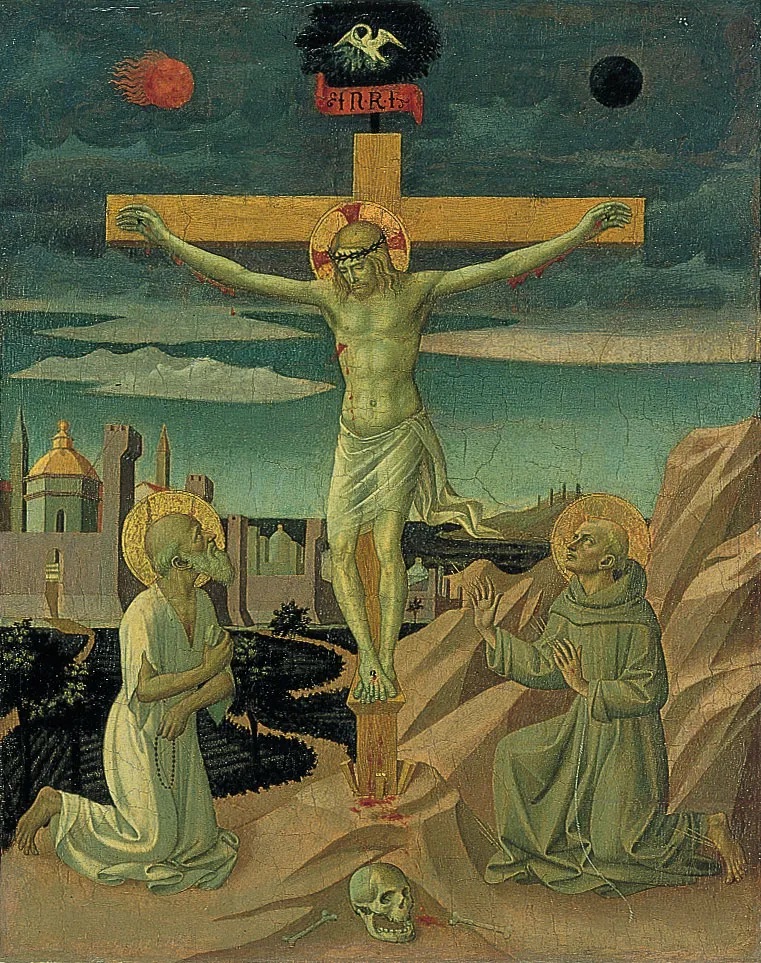
I draw your attention to the celestial image, because it is very much instructive and apropos to our question and the crisis in the Church. What is the Sun but a star, and an eclipse but a hindrance? To bring it home, God wills that there shall be a Sun which gives off its light until the end of time (the Shepherds and Teachers in the Church), and yet an eclipse happens which hinders the light. But the eclipse (the Great Apostasy and Reign of the Antichrist) is cause of the universal influence of the first heaven (God). Therefore, God both wills that the Sun should shine but also that it should be in eclipse, just as God wills that there should be Shepherds and Teachers in the world until the end of time, but that these are hindered from showing forth their light.

Next, St. Thomas makes an argument for the will, not according to itself, but in relation to antecedent and consequent conditions to it:

Objection 1. It seems that the will of God is not always fulfilled. For the Apostle says (1 Timothy 2:4): “God will have all men to be saved, and to come to the knowledge of the truth.” But this does not happen. Therefore the will of God is not always fulfilled.

Reply to Objection 1. The words of the Apostle, “God will have all men to be saved,” etc. can be understood in three ways.

Thirdly, according to Damascene (De Fide Orth. ii, 29), they are understood of the antecedent will of God; not of the consequent will. This distinction must not be taken as applying to the divine will itself, in which there is nothing antecedent nor consequent, but to the things willed.

“To understand this we must consider that everything, in so far as it is good, is willed by God. A thing taken in its primary sense, and absolutely considered, may be good or evil, and yet when some additional circumstances are taken into account, by a consequent consideration may be changed into the contrary. Thus that a man should live is good; and that a man should be killed is evil, absolutely considered. But if in a particular case we add that a man is a murderer or dangerous to society, to kill him is a good; that he live is an evil. Hence it may be said of a just judge, that antecedently he wills all men to live; but consequently wills the murderer to be hanged. In the same way God antecedently wills all men to be saved, but consequently wills some to be damned, as His justice exacts. Nor do we will simply, what we will antecedently, but rather we will it in a qualified manner; for the will is directed to things as they are in themselves, and in themselves they exist under particular qualifications. Hence we will a thing simply inasmuch as we will it when all particular circumstances are considered; and this is what is meant by willing consequently. Thus it may be said that a just judge wills simply the hanging of a murderer, but in a qualified manner he would will him to live, to wit, inasmuch as he is a man. Such a qualified will may be called a willingness rather than an absolute will. Thus it is clear that whatever God simply wills takes place; although what He wills antecedently may not take place.”

Thus we see that, if the teaching of the Vatican Council is taken according to its antecedent conditions, what God wills may not take place, because the conditions which are consequent to His will are not considered as restricting the application of the act of His will. Further, the argument that is made based upon the necessary and volatile modes of speech in my recent post is vindicated, insofar as we understand that an antecedent will is a kind of desire or wish and not an absolute willing with all things considered. As St. Thomas says, “Such a qualified will may be called a willingness rather than an absolute will.”

So, the question is, is the teaching from the Vatican Council that God willed that there always be Shepherds and Teachers until the end of time an antecedent willing or a consequent willing? Is it a willing with qualification or a simple willing? What justifies the interpretation that God is willing here simply and consequently (taking into account everything that would unfold in the course of time) and not willing antecedently to any condition in time? I believe that we have ample evidence that the teaching of the Vatican Council is of God’s willing that there should always be Shepherds and Teachers according to His willingness rather than to His absolute will.

This would solve the apparent aporia–logical or theoretical impasse–of the CatholicEclipsed position, and, actually quite fortuitously, give the very name of this website substantial ground upon which to stand. The Church is indeed in eclipse. God so wills that the Church should shine out its divine light, and yet we know that, just as there are solar eclipses which hinder the light, so the Great Apostasy and reign of the Antichrist has obscured the Church. As akaCatholic even acknowledges:

It is often said, and for very good reason, that the Holy Roman Catholic Church, she who “enjoys perfect and perpetual immunity from error and heresy” (cf Quas Primas 22) is somehow in eclipse.

As analogies go, this one has an impeccable pedigree. In the gospels, Our Lord says:

And immediately after the tribulation of those days, the sun shall be darkened and the moon shall not give her light and the stars shall fall from heaven and the powers of heaven shall be moved. (Matthew 24:29)

In his commentary on Sacred Scripture, the eminent biblical scholar Fr. George Haydock cites St. Austin (d. 604) who taught: “By the sun is meant Jesus Christ, by the moon, the Church, which will appear as involved in darkness.”

I am not interested in trying to have the best theory to solve the crisis. All I care about is satisfying my sanity and my Catholic conscience. I believe that the explanations reached thus far on CatholicEclipsed do both, that is, keep us reasonable and faithful. The theories thus far provided: 1. The Pope, Non-Pope Thesis of Sanborn; 2. The Redefined Pastors Theory of Speray; and 3. The Shepherds and Teachers in the Woods idea by nameless Home Alone Catholics, have all been proven false and violate either faith or reason or both. The CatholicEclipsed theory may be called the Denying the Consequent Will Theory, which means that I deny God willed consequently that there should be Shepherds and Teachers until the end of time. The name has the added benefit that if someone where to disagree and say, “I affirm consequently that God willed…” I could stop them there and shout, “Fallacy!” And have my laugh.

On the Form and the Matter of the Papacy

I have completed my critique of the Material-Formal Thesis of Bishop Sanborn, and have published it over on the QUASI STELLAE page. I reproduce it below with the CE Log signature colorizing which you have come to know and love–or else merely tolerate.

By way of comment on the overall conclusion of the article “On the Form and the Matter of the Papacy,” I would say this: Sanborn’s thesis, that there is a material-formal distinction of the papacy, is not wrong, as there really is a material-formal distinction of the papacy. What is wrong with the thesis, is that it confuses what the material and formal principles of the papacy really are. I argue that the formal principles of the papacy are designation and jurisdiction, as these really are formal with respect to the subject, which is a material principle. Further, I argue that the matter of the papacy is not merely a man of sound mind but a man of faith.

The material-formal thesis offends both faith and reason, which is nothing other than our Catholic sense. It has stood for too long without the metaphysical grounds upon which it is based being challenged. I do not claim to have done a perfect job in challenging those metaphysical grounds, but I do believe I have shown adequately that the material-formal thesis cannot stand as argued, because it violates both metaphysical principles, which are known by reason, and theological principles, which are known by faith.

Another objection to the material-formal thesis, besides the ones already articulated in the following articles, is that it is not understandable by the vast majority of those who desire to be members of the Catholic Church. This is a consequence, not of its density and difficulty of subject-matter, which is metaphysics, and which difficulty is real and to be expected, but rather because the material-formal thesis owes its near incomprehensibility to its contrariety to Catholic sense, which is to say, to its absurdity. Even those most elaborate truths, when the terms are explained, become intelligible. Indeed, those truths which are complex, i.e. admitting of a multiplicity of principles whereby an essence of a thing comes to be and is known, are more intelligible in themselves, though with difficulty is the total of their truth understood. But, incomprehensibility may be through a complexity of principles or through a confusion of principles, the latter of which, I would argue, is what makes the material-formal thesis difficult to understand. Simply put, the Cassiciacum Thesis disturbs the heart because it does not rest in the truth but rather rests in falsehood.

Cor nostrum inquietum est donec requiescat in Te.

Saint Augustine

On the Form and Matter of the Papacy

(In Three Articles)

As all things which are exist either on account of themselves, or through another, and, insofar as things do exist in the concrete of our experience, these must exist as a composition of two principles, namely, form and matter, and, since the subject matter under investigation in the present is of the papacy as it is understood in the concrete, that is, as to its formal principles found in matter, in order to know under what conditions a man is said to be in possession of the papacy, and indeed, to be the pope, the following points of inquiry are here undertaken:—

(1) Whether the form of the papacy is the conjunction of the accidental forms of designation and jurisdiction? (2) Whether the material part of the papacy consists of a man of faith? (3) Whether a pope is a designated man of faith with authority to govern the Church? 

FIRST ARTICLE

Whether the form of the papacy is the conjunction of the accidental forms of designation and jurisdiction?  

We proceed thus to the First Article:—

Objection 1. It seems that the formal principle of the papacy does not consist in both designation and jurisdiction, since the proper object of designation is to select a lawmaker, whereas the proper object of jurisdiction is to make laws. Hence, designation is not fittingly ascribed as the formal principle of an authority, but rather should be considered as the material principle, that is, as that which receives power or act, just as matter receives form which is its proper act. 

Objection 2. Further, designation, being a potency principle in relation to jurisdiction, seems to be unfittingly described as a formal principle in relation to a subject, insofar as potency does not perfect potency, since a subject is in potency as it relates to the act of a formal accident which perfects it. Therefore, designation is a potency principle, not a principle of act, and so not a form of the papacy. 

On the contrary, It is written, (Matt. 16: 18-19): And I say to thee: That thou art Peter; and upon this rock I will build my church, and the gates of hell shall not prevail against it. And I will give to thee the keys of the kingdom of heaven. And whatsoever thou shalt bind upon earth, it shall be bound also in heaven: and whatsoever thou shalt loose upon earth, it shall be loosed also in heaven. Now designation and jurisdiction are formal principles of the papacy, as is evident by the fact that God both designates and gives jurisdiction, as is clear from the above. That thou art Peter, is an act of designation, or a naming, which comes from the Incarnate Word of God, and that jurisdiction presupposes and depends upon a designation, which jurisdiction is granted by the words, And I will give to thee the keys of the kingdom of heaven, etc. Therefore, both designation and jurisdiction are formal principles of the papacy, both by virtue of their cause, which is God, and with respect to their necessary composition and order to each other in a subsistent subject.

I answer that, the form of the papacy is the conjunction of the accidental forms of designation and jurisdiction in the subject of the power of the papacy. With respect to the subject of the papacy, these accidental forms are both formal principles and material principles, the formal principle being jurisdiction, the material designation. But, just as these accidental forms are ordered to the subject, they are ordered also to each other, as designation is prior to jurisdiction and without which jurisdiction cannot be. The papacy as far as its formal cause is concerned is the conjunction of the act of designation with the accompanying perfection of jurisdiction. Yet, even in a sense, the act of designation presupposes the act of jurisdiction. For example, the power of designation belongs to a cardinal to elect a pope by virtue of his membership to the Body of Christ and by virtue of his designation as a cardinal-elector, yet which designation required a prior act of jurisdiction by one who could so designate, which alone is the pope. Hence, it is clear that the accidental form of the papacy, or any authority, such as a cardinal-elector, presupposes both designation and jurisdiction, just as St. Peter and the rest of the Apostles were designated and given the power of jurisdiction symbolized by the Keys of the Kingdom of Heaven. 

Reply Obj 1. The proper end of the act of designation is not the making of a lawmaker, which is but the intermediate end of his action, but rather the making of law which is the final end of his action. Consider an example: a voter in the United States has the power of designation by virtue of his citizenship. He casts his vote for a representative, one which will serve his community well by drafting and voting on laws which will increase the common good of his community. The voter does not only act to elect a lawmaker, which is proven by the fact that he would not vote if there were no one in whom he had confidence to work for the common good of his community. Rather, he votes for a lawmaker for the potentially good laws that lawmaker will make. Thus, the voter, as an agent of designation, acts according to the end of making law, which is properly called authority or jurisdiction. Therefore, the formal power of designation is not separable from the act of jurisdiction with respect to its final cause, that is, the purpose for which it exists.   

Reply to Obj. 2. Designation as an accidental form with relation to the subject of the papacy is not a potency principle but the first act whereby a man of sound mind and faith becomes a pope, and as such should be considered as a formal principle. With respect to the accidental form of jurisdiction in the subject of the papacy, designation is a potency, or material principle in relation to jurisdiction, whereby the man designated pope so acts. 

SECOND ARTICLE

Whether the material part of the papacy consists of a man of faith?  

We proceed thus to the Second Article:—

Object 1. It seems that the material part of the papacy does not consist of a man of faith, for even St. Ambrose while he was yet a catechumen and so not counted among the faithful was designated to the episcopacy of Milan. But the papacy is nothing else but the episcopacy of Rome. Hence, since a man need not have faith to be designated a bishop of Milan, neither then does a man need faith to be designated bishop of Rome.  

On the contrary, the Theologian teaches, “One should say that Christ is the foundation through himself, but Peter insofar as he holds the confession of Christ, insofar as he is his vicar,” (Commentary on Matthew, 1384). 

I answer that, faith is that upon which Christ builds His church, as is evident by the words, And I say to you that you are Peter; and upon this rock I will build my Church, and the gates of hell will not prevail against it, (Matthew 16:18). Now, a foundation is a kind of matter, and, since not the man himself, Peter, but his confession or faith in Christ is that upon which Christ builds His Church, that is, the foundation or matter, so then does the matter of the papacy essentially consist in the faith of Peter and his successors with the same, and not merely a man.  

Reply to objection 1. Though St. Ambrose was designated to the episcopacy of Milan without baptism, and so not counted among the faithful, this in no way implies that the saintly man was without faith. On the contrary, that the people of Milan desired Ambrose to be their bishop even while he was a catechumen demonstrates his faith. For, inasmuch as Ambrose loved God, and desired baptism, he was sanctified without baptism by his faith. For no one can love what one does not believe in. As the Theologian teaches, “Secondly, the sacrament of Baptism may be wanting to anyone in reality but not in desire: for instance, when a man wishes to be baptized, but by some ill-chance he is forestalled by death before receiving Baptism. And such a man can obtain salvation without being actually baptized, on account of his desire for Baptism, which desire is the outcome of  “faith that worketh by charity,” whereby God, Whose power is not tied to visible sacraments, sanctifies man inwardly. Hence Ambrose says of Valentinian, who died while yet a catechumen: “I lost him whom I was to regenerate: but he did not lose the grace he prayed for,” (Summa Theologiae, III.68.2).

THIRD ARTICLE

Whether a pope is a designated man of faith with authority to govern the Church? 

We proceed thus to the Third Article:—

Objection 1. It seems that a pope is not a man of faith designated with authority to govern the Church, for a man without faith only posits an impediment to the reception of the form of authority as such, and not to the form of designation, which is the right to exercise authority but not the power to exercise authority. Authority as such comes directly from God, whereas the right of the use of authority, which is designation, comes from the Church. Hence, it is possible that a man who does not have faith may be designated pope by the Church, for designation does not require faith, even while a man so designated does posit an impediment to receiving the power of authority from God. Therefore, a man without faith may be designated pope without authority, which man would be called pope materially but not formally. 

Objection 2. Further, insofar as designation, or the right of electing, is not jurisdiction as such, on account of the different objects, viz., the object of designation is the continuation of the hierarchy, whereas the object of jurisdiction is the making of laws, it follows that he who has only a designation to elect electors, but not the power to make laws, nevertheless is able to designate electors to elect a pope, even if these same electors have not the faith, just as a man without faith may receive the right of designation, for he who has is able to give, according to the contrapositive of the axiom, nemo dat quod non habet. Therefore, he is designated pope by those who have a right of designation. 

On the contrary, It is written (Luke 21:31-32) “And the Lord said: Simon, Simon, behold Satan hath desired to have you, that he may sift you as wheat: But I have prayed for thee, that thy faith fail not: and thou, being once converted, confirm thy brethren.” 

I answer that, it is altogether impossible for a man without faith to be designated pope without the form of authority, for designation stands in potency to the act of authority, which perfects it, as was shown in the preceding article (Article 1. Reply to Object. 2.). The pope, designated and with jurisdiction, is in act in relation to men he decides to designate as cardinals. There must be a proportion between this act of designation by the pope, which act is exercised through the power of jurisdiction—thus proving the dependency of designational acts on jurisdictional acts—by the pope on the men just as God acts on a man to be pope, both with respect to the act of designation, and jurisdiction, as was proved by the words, thou art Peter, etc. The difference being however that the act of designation is mediated by a long succession of popes acting on men in designating them cardinals who in turn designate popes, whereas the power of jurisdiction is given to the man designated to be pope immediately by God but dependent upon a designation which is dependent on God also, but through the succession of designated designators. Thus the source of both jurisdictional power, which is not mediated by men, and designation, which is mediated by men, is the same, namely, God. A man who is disposed to receive the designation of the papacy is by that very act able to receive the perfection of that designation, which is the power of jurisdiction. The distinction between the two powers is as form is to matter, not a distinction of essence. To be designated to an office is to be in the possession of the right to exercise the power of that office. The right of designation is the matter from which but not by which a man exercises authority of jurisdiction. But the power itself of ruling is given concomitantly with the power of designation, yet the right precedes the use of the power as matter precedes form and potency precedes act—yet act precedes potency, as all matter is in act, without which act matter cannot be. The authority, exercised as a power, gives form to the right of the power, whereby it comes into act in a subject. Therefore, he who has an impediment to the reception of the use of authority necessarily also has an impediment to the right of authority, for right is prior to use, and use is dependent upon right. But the right to the power of the authority depends upon faith, as was shown above (Article 2), as form depends upon matter, since faith is the necessary matter which the form of designation perfects. Therefore, a pope is a designated man of faith with authority to govern the Church. 

Reply to objection 1. As was shown in the body of the article, designation, or the right to use the power of authority, indeed comes from the Church as through a succession of designated designators, yet not ultimately, as to the first cause of the right of designation, which is God. Hence, the right of designation depends upon authority which grants the right, for nemo dat quod non habet. But this right of the use of authority is granted on the grounds of faith. It follows, then, that he who is without faith does not receive the right of designation. Therefore, a pope cannot exist materially only, if he lack faith, which is the matter of the papacy, for then he would be and not be at the same time in the same respect, that is, in respect to the matter of the papacy, which is the faith—which is absurd. 

Reply to objection 2. Though designation is not in the proper sense jurisdiction, as there exists a distinction between right and use, nevertheless, right depends upon use, as matter depends upon form, as designation depends upon authority to be designated, for all acts of designation are acts of jurisdiction, just as all acts of jurisdiction are acts of designation, insofar as use presupposes right also, as form presupposes matter. Therefore, he is not designated pope by those who do not have authority to designate.      

Top Ten Reasons to be a Home Alone Catholic

G.K. Chesterton wrote concerning his conversion to the Catholic Church: “The difficulty of explaining ‘why I am a Catholic’ is that there are ten thousand reasons all amounting to one reason: that Catholicism is true.” I do not have the same difficulty in explaining the reasons to be a Home Alone Catholic, because there are not ten thousand reasons but only one reason: that Home Alone Catholicism is the only true way to be Catholic today.

And yet there are at least ten—probably ten thousand—consequences or effects of this elephantine truth which may be enumerated to elucidate the principle reason or cause. If there is no bishop in Rome who is the legitimate and actual successor of Saint Peter, as there surely isn’t, and if there are no bishops who have retained the faith and so are truly apostolic, having been appointed by a true Vicar of Christ, as there surely aren’t, and if there are no known priests with legitimate and valid holy orders who have jurisdiction to offer the Sacrifice of the mass publicly and absolve sins in the tribunal of the confessional, as there surely doesn’t appear to be, then the Home Alone position is so very much demonstrable that its denial either arises to the height of stupidity or else sinks to the depths of heresy. I think most who do wage intellectual combat against Home Alone are simply wielding the intellectual equivalent of butter knives. It is not a fair fight when you have the certitude of dogmatic authority and your opponent has mere opinion which turns out to be heresy.

So far then has the truth of the Home Alone position been demonstrated on the pages of this blog, I would like to offer my top ten reasons to be a Home Alone Catholic, which are the consequences of the truth.

10. No More Mass in the Hood

When my family and I realized that the mass of Paul VI—aka the Antichrist—was invalid at best and Satan’s supper at worst, we decided to attend the mass offered by the Institute of Christ the King in St. Louis, which was over two hours away. Though we didn’t realize at the time the multitude of inconsistencies in attending the indult mass, because we were blissfully ignorant of the spiritual dangers of offering a mass una cum—offering the mass in union with the Roman Pontiff—with one we did not believe could be the Roman Pontiff, I recall a Midnight mass where we became frightfully aware of the physical danger of attending mass at midnight in a metropolis.

The mass had concluded and we were sent out into the cold night, and, having nursed a long fast, and feeling quite peckish, we decided to hit the Jack in the Box drive-thru before our flight back to Little Egypt. The line was long, which I suppose one is to suspect when grabbing a bite at midnight in the city which never rests, but my impatience boiled over into extreme restlessness to get my burger and get the hell out of there when I distinctly heard the clear ringing out of at least two small caliber pistol shots not a block or two from the fast food lane I was currently stuck in with my family. I finally rolled up to the barred drive-thru window, and rolled down my car door window, received my food—which was forgettable—and entered the freeway home, leaving the nightmare of attending midnight mass in a metropolis—which was not forgettable—to the past and my memory.

9. Goodbye to Glutenation

I almost do not want to mention this reason because some may misunderstand me, or think I speak irrelevantly about the Blessed Sacrament. Let me just preface my remarks by saying that I would give up all bodily comfort for the chance to partake of my Lord and God sacramentally in the Holy Eucharist again, if I knew that the reception of Him by the hands of the priests available today would be lawful. But, since I think it is not only unlawful but sacrilegious to do so, I cannot help mentioning as a happy consequence of this fact that my family no longer need fear ingesting gluten, which is one of the accidents of the substance of the bread which remains after the miracle of transubstantiation, wherein the substance of the bread—that which it really is—is changed into the Body, Blood, Soul, and Divinity of Jesus Christ.

As we attended the Saint Gertrude the Great Mission, my wife, Laura, being more sensitive to gluten, had already to abstain from sacramental Communion, and offer up a spiritual communion instead, so now we all abstain from sacramental communion and offer up a spiritual communion instead, being most sensitive to sacrilege.

8. Cutting Costs on Clothes

Anyone who has more than the Freemasonic atomic family of four knows that clothing costs are exponentially more the more children one has. This effect is mitigated by the necessary protocol of hand-me-down, but not altogether neutralized, especially with boys who, after wearing a pair of jeans for a month, wear kneecap holes so big mother is obliged either to discard the pants, or hem them so high they become shorts.

As I have six children, the costs of clothing is already about as expensive as a second mortgage, I sure am glad that I do not have to afford a Church wardrobe for the children. That probably would make me have to take out a second mortgage on our home.

Think about it, six children, that’s six pairs of dress shoes every six months, each about 50 dollars on average—I’m talking JC Penny here, not Kmart. Then there’re hats for the ladies, or veils, dress coats and pants, and pretty dresses, the costs of which so far exceed my budget that we would have to dip into the grocery fund and start eating conventional food, i.e., genetically modified, toxically fertilized, pesticide-laden poison, just to pay for it. So I guess this is two for one, since not only do we cut our costs on Church clothes, since we do not need to be so spiffy in our living room offering mass and spiritual communion, we also don’t have to buy the cheaper conventional food. The Great Apostasy is a gift that keeps on giving!

7. Home School, Not Parochial School

It is doubtful that, had we never left the Novus Ordo, or the Sedevacantists, we would have become a classical homeschooling family. The tradition has always been for Catholics to send their children off for instruction at the hands of strangers three-quarters of the waking day, to receive training in the arts and sciences by religious sisters, usually very competent and skilled in doing so. Most of the Novus Ordo has abandoned this practice, and prefers to let laity run their parish schools, but one group of Sedevacantists still carries on the tradition. At QUEEN OF ALL SAINTS ONLINE ACADEMY which, though it has a veneer of being classical, doesn’t even require (so far as I can tell from the website) or even offer courses in either Latin or Greek–peculiar, to say the least, of a supposedly Catholic academy run by traditionalist religious that doesn’t require Latin of its students! We probably would have been tempted to enroll our children into the Sedevacantist academy, and would have never expanded our children’s language horizons beyond two world language credits, probably in Spanish or French.

Now, since we are Home Alone, our children are learning Latin and Greek, in addition to every single subject the Queen of All Saints Online Academy offers, plus some. The bonus boon is that I don’t have to pay for those adorable sweater vests and ties. And, what’s even more awesome, I get to spend more time with my children, and learn with them, and foster bonds with them that will last a lifetime–because they don’t spend three-quarters of the day away from mommy and daddy. Thank God for Home Alone.

6. Local Poor More Well-Off

In the Book of Proverbs we learn that “He that hath mercy on the poor, lendeth to the Lord: and he will repay him.” Now, since we do not tithe to the Novus Ordo churches, nor the Sedevacantists, we have a hefty item to balance on our budget every month, which is allocated to tithing ten percent of our income. Those who can find a worthy–and efficient!–charity which does not have so high an overhead as to make your contributions worthless, great for you! I know of none. But I do know of one charitable way of giving, or tithing your ten percent, which doesn’t have any overhead, usually because the one to whom you give doesn’t have a ceiling, let alone a home. Neither does this entity who stands to benefit from your benevolence require a salaried staff, which often is the sole beneficiary of your tithe. I am speaking, of course, of your local beggar on the street corner with the Sharpie-inscribed cardboard sign pleading with you to fulfill the commandment of God to love your neighbor as yourself. That is your actual neighbor, and not someone in Zimbabwe, who isn’t. As St. Thomas teaches, there is an order of charity which must be observed in performing acts of charity, and in relation to our neighbor, to the degree of his closeness:

“Moreover there is yet another reason for which, out of charity, we love more those who are more nearly connected with us, since we love them in more ways. For, towards those who are not connected with us we have no other friendship than charity, whereas for those who are connected with us, we have certain other friendships, according to the way in which they are connected. Now since the good on which every other friendship of the virtuous is based, is directed, as to its end, to the good on which charity is based, it follows that charity commands each act of another friendship, even as the art which is about the end commands the art which is about the means. Consequently this very act of loving someone because he is akin or connected with us, or because he is a fellow-countryman or for any like reason that is referable to the end of charity, can be commanded by charity, so that, out of charity both eliciting and commanding, we love in more ways those who are more nearly connected with us.”

It follows, then, that to give to our fellow-countryman on the corner is more commanded by charity than to give to a family in a hovel on another continent. So consider giving to your local poor as a way to tithe. I guarantee you, God will not be outdone in generosity.

5. Children’s Choir

When attending mass at some beautiful traditional chapel, one is amazed to hear the beauty of the Catholic musical heritage on display: the pipe organ, with its majestic nuanced tones, powerful as they are subtle, like the breath of angels, or the choir loft, so lofty one cannot even see the singers, but one would have to be tone deaf not to hear the overwhelming beauty of the Gregorian chant and Sacred polyphony. The loss of these are very much regrettable when one has to stay home for mass, and, were I anymore of a heathen, I’d probably give up the position all together, if only to savor the auditory delights of the Missa de Angelis. But, thankfully, that is what Youtube is for.

And yet there is a good which we receive from staying home and not attending mass with the professional choir. We ourselves must learn how to sing. Thankfully, my wife is already naturally talented to sing, and has a beautiful voice and discerning ear, so we already have a cantor to keep the children’s choir in line. There would simply have never been a reason to develop our ears and voices to glorify God had we remained in the pews of the sects, absorbed as we were in the beautiful professional choirs and majestic pipe organ, which, as I have alluded to, may be the last thing keeping people in the pews. Now, we sing a cappella, and hear every voice of the choir, even the little, mousey voices of the youngest. And, though we do not expect to be recording any chant album anytime soon, our choir is intimate and beautiful in its humility, and that pleases us, but, what’s infinitely more important, it delights our Mother Mary and our Father who is in Heaven.

4. Matrimony, the Mother of Souls

It goes without saying perhaps that the domestic Church is indispensable to being a Catholic. I say perhaps, because some people think it is antithetical to Catholicism, but that is just because they aren’t Catholic. Any real Catholic knows that the home is where holiness happens. True, we receive sacramental graces from going to communion, provided we go to ministers of the word and the sacraments who are actually sent to us by the Church, but when that is not possible, there are graces which we receive from praying at home, particularly through the Sacrament of Matrimony, which, the BC teaches, has particular graces:

1028. The effects of the Sacrament of Matrimony are: 
   1. To sanctify the love of husband and wife;
   2. To give them grace to bear with each other’s weaknesses;
   3. To enable them to bring up their children in the fear and love of God.

It is axiomatic that, when one breaks a leg, the other leg becomes stronger. Now, the sacraments may be considered the supports or the legs of the Church, and, when one is not available through the break in apostolic succession, the other sacraments become stronger through an increased dependence upon them. Matrimony is just one such, and my wife and I rely upon the sacramental graces which flow from our Matrimonial union to strengthen us on the most difficult task yet devised by God: the bearing with each other’s weaknesses. Most people, and I do mean most, even among so-called Catholics, simply divorce, and attempt to marry again, I guess with the assumption that their first marriage (and only marriage, since, when once married, always married) broke down on account of matter and not will. Well, being Home Alone, my wife and I depend upon the sacramental graces of Matrimony as if our lives depend upon it, because they do, not only our physical lives but our spiritual and eternal lives depend upon it, as well as our children’s lives, which is the whole point of Matrimony, the raising of our children in the fear and love of the Lord.

3. Isolated from Evil Influences

The world is wicked. Period. Not just the bad actors behind the globalist cabal–probably Luciferian in origin–but also your neighbor across the street, as well as yourself, if you are honest. That is why it is so important to try to control what comes into your home, and what comes into your children’s souls through evil influences, be they from children at school or church. Our children live what many may consider to be very isolated lives. We prefer to call it monastic in body if not in spirit. Being members of worldly associations is not altogether conducive to sanctity, as any monk or cloistered sister would tell you. As the Imitation of Christ teaches:

“What can you find elsewhere that you cannot find here in your [home]? Behold heaven and earth and all the elements, for of these all things are made. What can you see anywhere under the sun that will remain long? Perhaps you think you will completely satisfy yourself, but you cannot do so, for if you should see all existing things, what would they be but an empty vision? 

Raise your eyes to God in heaven and pray because of your sins and shortcomings. Leave vanity to the vain. Set yourself to the things which God has commanded you to do. Close the door upon yourself and call to you Jesus, your Beloved. Remain with Him in your [home], for nowhere else will you find such peace. If you had not left it, and had not listened to idle gossip, you would have remained in greater peace. But since you love, sometimes, to hear news, it is only right that you should suffer sorrow of heart from it.”

Home is where humans and heaven meet. God became Man, and dwelt among us, in a home, in the Holy House of Loreto, which, as pious legend has it, was so holy that the angels where ordered to relocate it from the Holy Land to Loreto, Italy, which stands today as one of the most visited shrines in the country. There He lived isolated from evil influences, safeguarded by Saint Joseph and Mother Mary. Living out the faith at home alone in imitation of the Holy Family–it doesn’t get much more holy than that.

2. Increased Prayer Life

I know that when my family attended the fake mass at the Novus Ordo, we almost never prayed at home, and when we started to attend the Traditional Latin Mass, we prayed the rosary, and when we attended the mass of Sedevacantists, we prayed the Angelus and the Rosary, and some more personal prayers, but only when we decided that the Home Alone position was the only way to keep the faith and the commandments of the Catholic Church, did we start to pray much more:

  • Angelus, 3x daily
  • Rosary
  • Acts of Faith, Hope, Love, and Contrition
  • Consecration to the Sacred Heart daily
  • St. John’s Mass and Spiritual Communion on Holy Days, including every Sunday
  • Confiteor, Mass prayers and parts, etc.

And a handful of other prayers it would be tedious to mention. The point is, being Home Alone, we pray so much more than we ever did, and prayer is a means to attain grace, as the BC teaches:

1117. The fruits of prayer are: 
   1. It strengthens our faith,
   2. nourishes our hope,
   3. increases our love for God,
   4. keeps us humble,
   5. merits grace and atones for sin.

I can attest to the fruits of prayer in my family. Are we perfect? By no means! Do we still have a lot to work on? Absolutely. And yet I wonder how we would be today, had we remained in the Sedevacantist mission, being content with saying our daily Rosary and the few prayers, compared with now, where we pray throughout the day. We who pray at home, pray at home! The whole point of Home Alone Catholicism is being a Catholic at home, which means we are not depending on being a Catholic at church, and praying there, since that option has been taken away from us. And, though the loss of the sacraments and attending mass is harder than I can say, there are benefits from being Home Alone none of our opponents consider. An augmentation of the fruits of prayer is, simply put, an increase in holiness. If we pray more, we become more holy.

1. Home Church

The last reason to be a Home Alone Catholic is the building up of the Home Church. The way in which we do this has already been explained in the preceding nine reasons. We do not go to church because there are no lawful pastors, so we bring the Church home, and build it up through works and prayer, and build it on the Rock of Christ:

Every one therefore that heareth these my words, and doth them, shall be likened to a wise man that built his house upon a rock, And the rain fell, and the floods came, and the winds blew, and they beat upon that house, and it fell not, for it was founded on a rock. And every one that heareth these my words, and doth them not, shall be like a foolish man that built his house upon the sand, And the rain fell, and the floods came, and the winds blew, and they beat upon that house, and it fell, and great was the fall thereof, (Matthew 7:24-27).

The Rock of Christ is the rules and articles of the faith, which one may learn from their catechism. There it teaches that we must not go to unlawful ministers who have not been sent to us. It also teaches everything we must know and do in order to save our souls. We can carry on the faith at home, and, as I think I have at least strongly suggested, carry on the faith at our Home Church even better than trying to do so in the Novus Ordo or Sedevacantist churches, and this is so even if they were lawful–which they are not! The Novus Ordo is heretical, and the Sedevacantists are schismatic, which means no one receives graces from their sacraments. Of course, had we be born in a difference age, and not during the Great Apostasy, then living out our faith at home would have been greatly influenced and made more holy by the reception of the sacraments from actual Catholic ministers. We would have had the spiritual benefit of a confessor who could not only absolve us of our sins, but also offer us Catholic counsel, because he had been trained in an actual Catholic seminary, as opposed to whatever you want to call happening down in Florida, were it is deemed near miraculous to have seminarians who have manners. But the necessity to have a Home Church would have been the same, even during normal times. The only difference is, not that Home Church is now indispensable whereas it wasn’t before, that now we can look to nowhere else for grace.

Powered by

Introducing QUASI STELLAE: A Journal for the Inquiring Catholic

Perhaps you have noticed in the menu bar the new addition of the QUASI STELLAE tab? I originally envisioned the idea for a philosophical journal as a whole new website, but after I started to think about the project, I thought that a page on CatholicEclipsed would work just as well.

It is my intention to explore the crisis of the Church from philosophy, and publish articles on the QS page which dive into the principles behind the crisis, to help make sense of things. There will of course be overlap into theological principles–those truths which come from Divine revelation instead of reason–but generally I would like to focus on the philosophical underpinnings of what we believe, as that is my special competency and training.

As you navigate through the page, you will see that there is a table of contents which has hyperlinks to the various content on the page. This will be periodically updated with new material, which I will announce through the CE Log. The one I am currently working on, and which is published in part, is On the Form and Matter of the Papacy, which takes a look at what the papacy is from an analysis of the form and matter. Though it does not state outright, the article (which is made up of three articles), has Bishop Sanborn’s paper, On Being Pope Materially in the background, which gives voice to the objections the articles try to deal with.

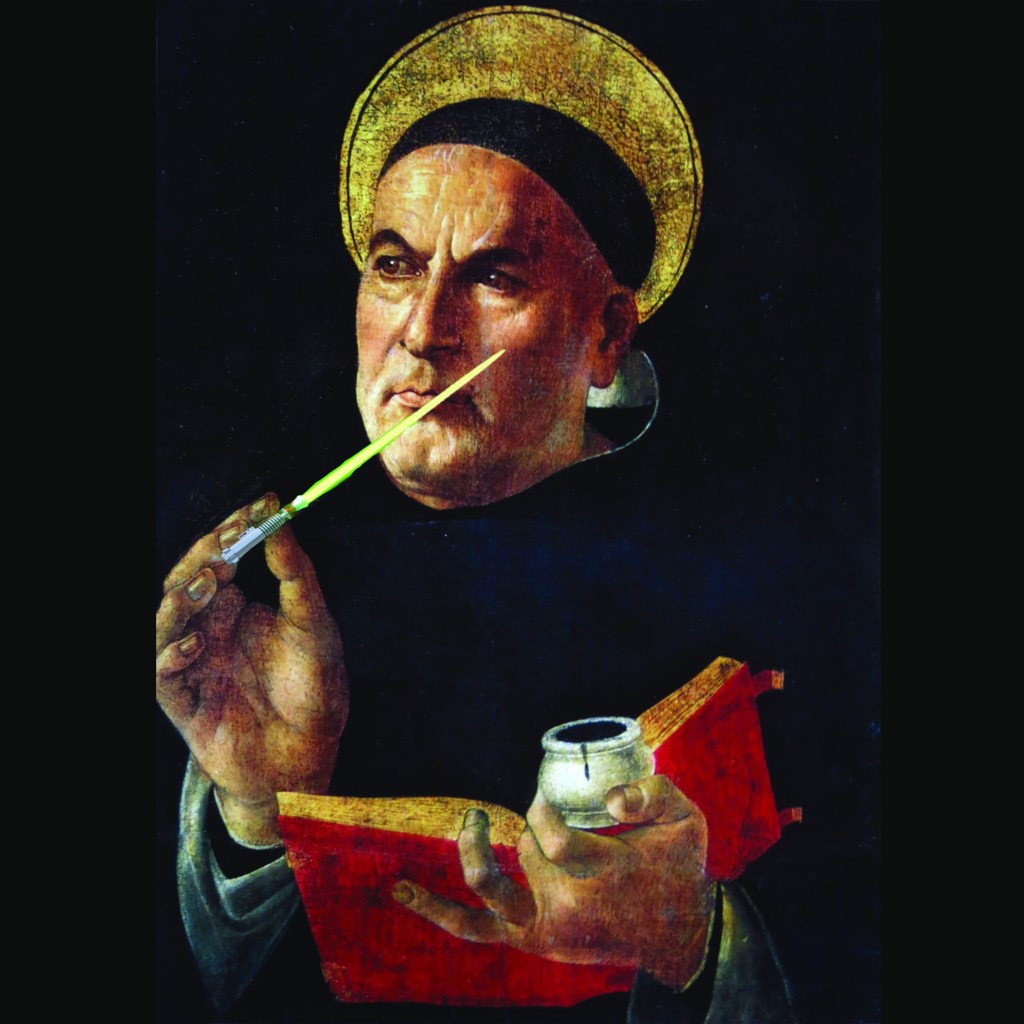
Let me share with you a word on the method of the Dialectic of Saint Thomas Aquinas, which I have adopted for my mine on QUASI STELLAE. There is a great short article on Thomstica.net, “St. Thomas Aquinas for Beginners,” by David A. Smither, which I encourage you to read in full. Below is a section taken from the website, on how to read the articles written in the dialectic style of Aquinas:

HOW TO UNDERSTAND THE SUMMA ARTICLES

Articles of the Summa are written in the style of a “scholastic disputation.” These are really short, systematic debates, and once you know your way around them they are a ton of fun to read. Sadly, most people who open the Summa get lost in the seemingly obtuse structure of the articles, get discouraged by this, and end up giving up on St. Thomas.

The basic structure is as follows.

  1. Statement of the Question, usually in a yes/no form.
  2. Objections, wherein Aquinas summarizes arguments against his own position.
  3. “On the contrary,” wherein Aquinas quotes from an authority like the Bible, a Father of the Church, or ancient pagan philosophers like Aristotle, in support of his own position.
  4. “I answer that,” wherein Aquinas argues for his own position. This is typically the longest part of the article and where the real substance of Aquinas’ one view is to be found.
  5. “Replies,” wherein Aquinas answers each of the previously stated objections and explains why it’s wrong, frequently by recourse to careful distinctions that show the objection to be partly right and partly wrong.

It is very difficult to write as clear as Saint Thomas Aquinas, because one needs to have the clarity of thought that he had in order to do so. Oftentimes elaboration and a casual style are more appropriate for difficult and complex issues of philosophy. When this is the case, I will venture from the scholastic disputation style of Aquinas, and write more in the classical style, with an introduction, definition of terms, body, and conclusion. But the method used in presenting arguments in the Summa served Aquinas and generations after him very well, so I will utilize mainly this method.

I hope you check out the QUASI STELLAE page, and frequently return to it for new articles. Further, I hope it may help to clarify certain issues, or open up your mind to grander vistas of the faith.

Against Reactionary Distributism: Civilization Built Upon Technocracy

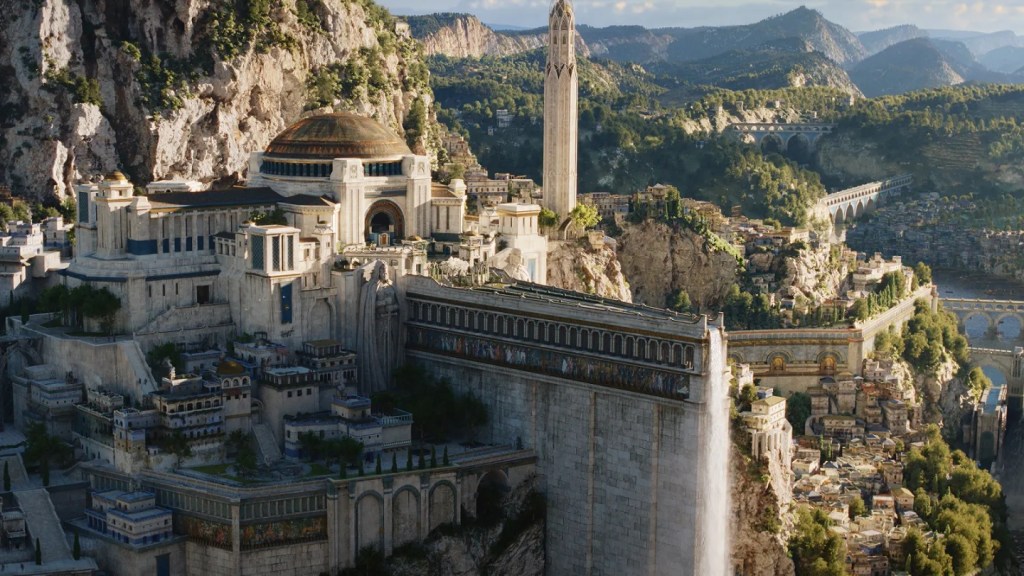
The Technocratic Island of Númenor

I woke this morning with the fog of a dream on my head, which I vaguely recall had something to do with restoring the guild-system to furnish artifacts once again actually worth having as furnishings. In my dream the item was a crucifix, no doubt inspired by the replica crucifix hanging behind me, which was modeled after a crucifix of a chapel in a Word War II warship, which itself was sunk in the sea so many years ago. Finding my way through the fog of that dream to my coffee pot, then to my rounds on the internet, I came across a delightful little blog, which featured the article by Ben Reinhard, “Amazon, Tolkien and the American Technocracy.” I do not know, but I am assuming that Reinhard is a devoted distributist, as indeed any sane and reasonable Catholic would be. But there are different flavors of distributism, nor do I claim to have theoretical knowledge of the economical complexities that bless or plague the word and the theory. But, as far as I can make out from the happy article, Reinhard seems to be an exponent of a reactionary kind of distributism.

What is demanded for in any theory, be it practical or speculative, is a certain modicum of consistency and what might just as well be called fair-play, and, as the practical theory under discussion at present deals with the notions touching (however disagreeably) on economics, we might say also fair-trade. The system cannot contradict itself, and when a contradiction arises based upon the essential structures of the system, you have a collapse of the system as a practicable theory. Take the case of what I shall call reactionary distributism, as in that which Reinhard seems to promote. In the article cited above, Dr. Reinhard (sorry for not mentioning he is a doctor and teacher at Franciscan University of Steubenville) speaks eloquently against Amazon for making everything so convenient and quickly available. He chides Bezos for his billions, and casts him as a kind of second Servant of Sauron, after Saruman, ready to make waste Middle Earth by his technocratic dictatorship. Now, there is something to say for how big business has become pretty much the only business, but there’s something that the adversaries of big business never allow, and that is, that big business tends to have standards that little businesses have almost all but forgotten or never had to begin with. This is because big business is no longer an isolated endeavor and enterprise of one or a few merchants wanting to make a buck. Big business has left the shop mentality behind and has become a culture, a people of its own. Big business has become, in no small measure and not equivocally, in its essentials the medieval guild which distributism so exalts to the stars.

The guild system of medieval Europe consisted in general outline, as groups of highly skilled tradesmen and merchants who were unified by their art-science, and ensured productive quality based upon rigorous standards of membership. In a word, the guild was a society and culture, much like the society and culture of Amazon, for instance. What the guild was precisely not, and what it actually stood against openly, was the independent workman with no credentials, who insisted on his own way, his own technique, his own name brand. The guild stood against and wanted to crush the (ever idealized in our contemporary American culture) Ma and Pop Shops, because these were a spot on the guild’s standards and undermined their profit margins, through selling inferior goods. This brings me back to the notion of contradictory systems.

The brand of distributism that Reinhard pushes is contradictory in this regard, that, not only is it reactionary but it conflates the bad with the good. As Reinhard says:

“There does not seem to be a universal solution; specific steps will vary according to the abilities and needs of a given individual or family. For some, this may mean downgrading to a ‘dumb’ phone; for others, sharply curtailing smartphone use. It could mean a commitment to never buy online what could be purchased in person. It could mean dumping Amazon altogether, along with all its works and pomps. More positively, resistance could mean engaging in activities that are natural but arduous: writing a poem, planting a garden, raising a family.”

We are to give up our smartphones in exchange for dumb phones, because technology is bad. Online shopping, which is convenient for the average healthy person, and absolutely critical for the cripple who can’t make it out his house without breaking something, is to be accounted a social blight, presumedly because, Amazon, along with any store you please, provides the service. This is simply unthinking and reactionary and contradictory. First, that dumb phone, it might surprise Dr. Reinhard, was an invention directly borne out of the minds of a thousand technologically inclined men who did not see it altogether evil to make communication evermore efficient and lucid. If Reinhard had it his way, we should stick to feather quill and rolled parchment and carrier pigeons, but that only betrays the point even further, for these things were just as much technology as smartphones are today. The only difference is, whereas ink pens and pigeons do not require a guild-like culture to make them, smartphones do.

I contend that one is able to write a poem, plant a garden, and raise a family with technology. Actually, I would argue that one is not able to write a poem, plant a garden or raise a family without technology. The problem with the reactionary distributism of Reinhard is that it is wholly based upon sentimentalism of degree and not on the cold distinctions of the essentials of things. Obviously one is not going to get far digging a garden without a plow, which is just a piece of ironmongery of the Iron Age. Obviously written language was just a technology devised by men to make man forget how to remember. If, taken to its ultimate conclusion, this brand of distributism which is purely reactionary instead of thoughtful and productive contradicts itself and blows up. Man is, as has ever been the case, an inventor, because he is made in the image of God, Who is the Creator. Invention is nothing other than creation from something. God creates out of nothing. Man creates out of something, which means he uses what already exists to create something new.

Now, if Reinhard’s criticism of Amazon and the American Technocracy were strictly confined to criticizing those things which perhaps never should have been invented, then I am all for such. But that is not upon which his criticism is based. Rather, it is because Amazon is big:

“For all its heat, however, The Rings of Power controversy has generated surprisingly little light, as neither the show’s critics nor its defenders have shown that they possess any clear sense of what Tolkien’s work is actually about. Or perhaps not so surprising. The simple truth is this: never has a society been so ill disposed to receive Tolkien’s vision as twenty-first-century America, and never has a company been so poorly qualified to safeguard Tolkien’s legacy as Amazon Studios. Quite the opposite is true: our modern technocratic society (and the trillion-dollar company that serves as its avatar) are very nearly the picture of Tolkienian evil.”

Now we come to the beginning which is also the end of the discussion–and the debate. The claim that Amazon Studios is not qualified to safeguard Tolkien’s legacy is very intellectually and historically clumsy. Reinhard says this, because Amazon represents, in his mind, everything that is bad about big business and our modern technocratic society. The only problem with his analysis is that the reverse and exact opposite is true. Because Amazon Studios is the exemplar of the avant-garde of cinematic arts, which itself requires and is indeed built upon the latest technologies of the technocratic society we happily live in, and because Amazon is an amazing (sorry for the pun) billion-dollar business of Bezos, who is a genius businessman, it is most, not least, qualified to put into mind-boggling high definition live-streaming cinema the fantastical world of Tolkien’s vision in every home across the world.

Let me just pause here for a moment and add an artistic critical review of what I believe is already the greatest achievement in the cinematic arts to-date, and there have only been three episodes aired. The Rings of Power is in vision, sound, and story development, a visual arts production by far surpassing anything I’ve ever experienced before. Peter Jackson’s The Lord of the Rings was probably the greatest before our age, but that is just the thing about living in a technocratic society. Things keep getting better. The Rings of Power makes The Lord of the Rings look almost amateurish if you can believe it. Of course, the new show has nothing on the acting of the movies, and that is a big blot, but technologically speaking, e.g., the sets, the special effects, the costumes, the sound, these qualities of the new series blow the old out of the water. But, back to my argument against this reactionary distributism threatening to throw us back into technology-free barbarism.

Should we have entrusted the great artistic task of communicating Tolkien’s literary legacy in the visual arts to the local Ma and Pop Shop, perhaps in the form of a church pageant play, with handmade costumes and that really down-to-earth feel of festivity and amateurism so often displayed at such open-air enterprises? By no means, nor would that be very medieval at all! Were the construction of the cathedrals entrusted to such Ma and Pop Shops? Were the construction of the cathedral organs? To whom were given the commissions of stone or paint of the Renaissance, and who funded them? The most skilled and the rich, that’s who, just as it is today. Reinhard is not reacting to modernism but to medievalism, where the rich and the most skilled ruled.

The problem with Reinhard’s form of distributism is that it is a democratic reaction to a non sequitur, because, if taken to its logical conclusion, Reinhard’s position ends in self-contradiction. The problem with democracy is that it elevates the fool over the wise and the mediocre over the marvelous. Democracy is inimical to invention and discovery, both in the practical arts as well as the theoretical sciences, because it exalts the Ma and Pop Shops who have neither the leisure or inclination to improve or progress in technology or science. For progress in technology as well as in knowledge a guild-like approach must be used, not a local, private, do-it-yourself enterprise. Every civilization which is worthy of the name had its great ages and inventions and was, at its heart, technocratic in industry, from the Roman aqueducts and roads, the technology of which was not surpassed for a thousand years, to the Medieval cathedral and printing press, to the Edisonian era in which artificial lighting literally changed the face of the earth, to the present Computer Age, against which Dr. Reinhard writes. But to be against technocracy is to be against man in his most noble attribute. It is to try to efface his image in the likeness of the Divine Creator.

Whether Anyone May Licitly Receive Holy Orders Without Canonical Mission?

In his latest, Steve Speray says, 

“Probably against my better judgment, I’m going to reply to it even though it’s so bad. However, it gives me an opportunity to demonstrate how the home-alone position attracts real know-nothings.” 

And further on, Speray asserts:

“I demonstrated clearly how our clergy are rightly ordained and sent using Bishop Carmona’s explanation. Apparently, Robbins doesn’t understand what he reads.” 

And then, he says: 

“On my survival mode point, Robbins states, ‘Steve makes the argument that one is able to break the law when required to do so for survival.’ This is an outrageous lie. I’ve made it clear that our clergy are not breaking the law but are following the spirit of the law and not sinning against it.”

Finally, Steve concludes: 

“I expect Robbins to reply again with more buffoonery, more lies, and more hypocrisy. After all, he believes he can ignore, twist, or break ecclesiastical laws and publish without permission since he has made himself the final authority in his churchless world. This is to be expected from home-aloners because they’ve lost the Church. It only exists in their imaginary dream world where they pretend to be hobbits cuddled together in their little cottages.”

Well, happily (from my Hobbit hole in which I am fated until my doom to remain a know-nothing on account of my pleasure I receive herein, smoking my Longbottom Leaf, feet up, and not violating Divine precepts) I did manage to write a reply, but whether it is full of buffoonery, lies and hypocrisy, the world and God may judge. I have attempted to demonstrate—actually demonstrate as opposed to what Steve does which is merely assert without logical proof from authority and reason—what the Church teaches concerning this business of holy orders and canonical mission, based upon my reading and understanding of Carmona and what the Church teaches. Whether I understood what I read, I will, again, leave to the world and God to be judge.  

It is my sincerest desire that it be read with the same spirit of care and attention with which it was written and that if there be any falsehood found therein, Mr. Speray may have the goodness to point out wherein it errs. But that if there be no falsehood found, then perhaps a civil and truly Catholic discourse on the problems facing us Catholics may be broached, so that we do not become:  

“Ships that pass in the night, and speak each other in passing,

Only a signal shown and a distant voice in the darkness;

So on the ocean of life, we pass and speak one another,

Only a look and a voice, then darkness again and a silence.”

Whether anyone may licitly receive holy orders without canonical mission?

Objection 1: It would seem that those who do not have a mission in the Church are able to act as ministers of the sacraments. For, as Pope Gregory IX declares in the fourth rule of his decretal, “What is not lawful by law, necessity makes lawful.” But holy orders are necessary for salvation, insofar as the sacraments are necessary for salvation, and holy orders are necessary for the sacraments. Thus, holy orders are licitly received in a time of necessity without canonical mission. 

Objection 2: Further, according to Rule eighty-eight of Boniface VIII, “It is certain that one sins against the rule who adheres to the letter and leaves aside the spirit,” hence, it is unjust to impute to the legislator a desire to greatly harm the Church during a vacancy of the Holy See by forbidding the ordination of bishops and priests. Therefore, it is not only lawful to receive holy orders but a sin not to receive holy orders without canonical mission through a strict adherence to the letter of the law.    

Objection 3: Further, the supreme law of the Church is the salvation of souls. But the necessity of canonical mission seems to be a matter of ecclesial law, which is itself directed by a higher law, namely the Divine law, of which the salvation of souls is a precept, indeed the highest precept. Therefore, holy orders are not illicitly received without canonical mission when the Divine precept would be violated if the ecclesiastical precept were followed.

On the contrary, the Ecumenical Council of Trent teaches, “If any one shall say…that those who have neither been rightly ordained, nor sent, by ecclesiastical and canonical power, but come from elsewhere, are lawful ministers of the word and of the sacraments; let him be anathema, (Session XXIII. Canon vii.). 

Further, the necessity of canonical mission for holy orders is a rule of faith and not discipline. But a rule of faith must be believed and followed. Therefore canonical mission for holy orders must be believed and followed as  a rule of faith.    

Further, canonical mission is a matter of divine law and not human law. But divine law is not subject to change as human law is, because the Divine lawgiver being infinite and perfect in understanding foresees all contingencies, whereas human law being finite and imperfect cannot. Neither therefore is canonical mission subject to change. 

I answer that, ecclesiastical canons are of two kinds, those of discipline and those of faith: 

“As to the authority of ecclesiastical canons, it is evident a distinction must be made when speaking of canons of faith and canons of discipline, for the former are irreversible, the latter are not. Similarly, it is plain that canons containing a precept already binding by reason of Divine or natural law, cannot be on the same footing as those that are of mere ecclesiastical origin,” (Catholic Encyclopedia, “Ecclesiastical Canons”).

Now it is evident the necessity of canonical mission cannot be set aside because it pertains to the rules or canons of the faith, none which may be set aside without becoming by that very act a heretic, as the Theologian teaches: 

“Accordingly there are two ways in which a man may deviate from the rectitude of the Christian faith. First, because he is unwilling to assent to Christ: and such a man has an evil will, so to say, in respect of the very end. This belongs to the species of unbelief in pagans and Jews. Secondly, because, though he intends to assent to Christ, yet he fails in his choice of those things wherein he assents to Christ, because he chooses not what Christ really taught, but the suggestions of his own mind,” (ST. II.II:11.1).

Rectitude of the Christian faith is determined by the rule of faith. Hence, the denial of a rule of faith is a deviation of the rectitude of the Christian faith, which is heresy. That canonical mission is a rule of faith, the Council Fathers of Trent made clear:   

“…yea rather it doth decree, that all those who, being only called and instituted by the people, or by the secular power and magistrate, ascend to the exercise of these ministrations, and those who of their own rashness assume them to themselves, are not ministers of the Church, but are to be accounted as thieves and robbers, who have not entered by the door.These are the things which it hath seemed good to the sacred synod to teach the faithful of Christ, in funereal terms, touching the sacrament of Orders. But it hath resolved to condemn things contrary thereunto, in express and specific canons, in the manner which follows; to the end that all men, with the assistance of Christ, using the rule of faith, may, amidst the darkness of so many errors, more easily be able to recognize and to hold Catholic truth,” (Trent, XXIII, Sacramental Orders, emphasis added).

Hence, the denial of the rule of faith of the necessity of canonical mission is heresy. But an act cannot be both heretical and licit. Therefore neither can holy orders be received without canonical mission, because to do so is an act of heresy, not in word but deed, insofar as the act implies the denial of the divine precept which should bind the conscience, as all rules of faith so bind. 

Reply to Objection 1: There are different kinds of necessity: “…the sacraments are necessary, not absolutely but only hypothetically, i.e., in the supposition that if we wish to obtain a certain supernatural end we must use the supernatural means appointed for obtaining that end…It is the teaching of the Catholic Church and of Christians in general that, whilst God was nowise bound to make use of external ceremonies as symbols of things spiritual and sacred, it has pleased Him to do so, and this is the ordinary and most suitable manner of dealing with men. Writers on the sacraments refer to this as the necessitas convenientiae, the necessity of suitableness. It is not really a necessity, but the most appropriate manner of dealing with creatures that are at the same time spiritual and corporeal.” (Catholic Encyclopedia, “Sacraments”). 

The objection rests on the assertion that holy orders are necessary for the sacraments, which are necessary for salvation, which is true, if necessity is understood in the right sense, which the above shows to be hypothetical necessity or necessity of suitableness, and not absolute necessity. But believing and following a rule of faith is absolutely necessary, as was demonstrated in the body of the article. Therefore, we should follow what is absolutely necessary and not what is only hypothetically so. 

And, since what is not lawful by law, necessity makes lawful, and since it is absolutely necessary to follow a rule of faith, though it be ordinarily unlawful not to receive sacraments, the necessity of impossibility of receiving sacraments from those who have not received their holy orders from canonical mission would make it lawful not to receive the sacraments. Thus, the decretal of Gregory IX applies to the hypothetical necessity of the reception of the sacraments more fittingly than to the absolute necessity of the rule of faith, which cannot be dispensed with without committing the act of heresy.     

Reply to Objection 2: Since canonical mission is a matter of Divine law, as is evident by the words, “As the Father hath sent me, I also send you,” (John 20:21), and as the Theologian teaches, “Our Lord said (Matthew 7:24): ‘Every one . . . that heareth these My words, and doth them, shall be likened to a wise man that built his house upon a rock.’ But a wise builder leaves out nothing that is necessary to the building. Therefore Christ’s words contain all things necessary for man’s salvation,” (ST. II.II.11.2), it is evident that one who adheres to the strict meaning and interpretation of Christ’s words does not sin but, on the contrary, is a wise and holy man, and acts in accordance with the necessary means of securing his personal salvation.   

Reply to Objection 3: Canonical mission is a matter of Divine and not human law, as was proven above. Further, as a rule of faith, the necessity of canonical mission for holy orders is a part of the supreme law of the Church, insofar as the belief of all articles of faith are required for salvation. Hence, because the denial of a rule of faith amounts to a violation of the precept of the supreme law of the Church, the reception of holy orders without canonical mission is not only illicit but a violation of the Divine law, which is itself an act of sacrilege, as the Theologian teaches: “Isidore says (Etym. x) that ‘a man is said to be sacrilegious because he selects,’ i.e. steals, ‘sacred things,’” (ST. II.II.99.1). Now the reception of holy orders without canonical mission is an act of stealing, which is evident by the words above, “…thieves and robbers, who have not entered by the door.” Therefore, the reception of holy orders without canonical mission is both illicit and sacrilegious.         

Home Alone Hobbits: A Refutation of Steve Speray’s Problems with being a Catholic during the Apocalypse

An Analogy and Apology

I begin this refutation of  “Where the Shepherds and Teachers Are—The Problem with the ‘Home-Alone’ Position—Part III” with an apology to Steve Speray. I am sorry that, in attempting to explain the circumstances at present affecting the Body of Christ, and the problems facing the Kingdom our Lord has established here on Earth, it is necessary to make an analogical appeal to the most popular literary achievement and subsequently most popular cinematic achievement ever, or one might just say generally, the most popular artistic achievement ever. I am speaking, of course, of J.R.R. Tolkien’s The Lord of the Rings (LOTR), and the film adaptations of Peter Jackson. As an aside, it might also be of interest that Amazon has just started to air what may turn out to be the greatest achievement in series-based cinema, called Rings of Power, the first two episodes of which blew my hair back, and made me ponder the mysteries and beauties of Middle-Earth and Tolkien lore for the rest of the evening, bathed as it was (fittingly) in hues of golden sunset signaling the coming ember days of autumn. Very Elvin. Very Catholic. 

And that is perhaps the beginning point of the analogy I wish to draw, between the LOTR and the crisis facing earth today. The parallels are so very near the case, that analogy almost breaks down, because there is no analogy between two things essentially the same. The only difference between the fictional epic and the story it tells and what is going on now in the world is that the one is fictional and the other is not. 

The LOTR is not a novel because nothing like it has ever been achieved. It is more like a novel-novel epic. But even the epics of old, The Aeneid, The Odyssey, The Divine Comedy, etc. do not compare with it, either in literary scope, or world-creation and fandom. It is entirely different. The only thing that is comparable in literary achievement to the LOTR is the Bible, which comparison isn’t even fair, because the Bible was written by God and LOTR by man. 

But let me develop the analogy, with all apologies to Steve Speray. You see, Steve’s position is so very much on the wrong side of the story, that it really is embarrassing to have to point out the fact to him. The main LOTR story line is that there exists a Ring of Power which must be destroyed and cannot be wielded by anyone, be he wizard, elf, dwarf, or man—the only one who really can “wield” it is Tom Bombadil, but that is only because he is a prelapsarian Adam figure preserved from temptation to evil. As Jospeh Pearce, a renowned Tolkien scholar, puts it in a lecture series he has on the LOTR:

“Tolkien also describes his work as an allegory of “power usurped for domination” – a theme which is all the more important to examine in our modern world. Characters throughout The Lord of the Rings are tempted by power and the urge to seize it and wield it for personal gain and unlawful control. Throughout the journey of the Fellowship, various characters face the temptation of the One Ring – the wizard Gandalf, through whom the Ring would wield a terrible power; human man Boromir, who would use it to save his people; elf queen Galadriel, weary from fighting the “long defeat” against evil. Among the characters who do usurp power for domination are Saruman, the white wizard who succumbs to evil, whose machinations at Isengard only bring more evil into Middle-earth.”

As I have argued before on the CE Log, the powers of Holy Orders are real powers. If I could liken a priest to any Middle-Earth character, I would say a priest is most like a wizard—the most powerful characters in bodily form in Middle-Earth. Granted, then, that the sacramental and jurisdictional powers of Holy Orders are in fact powers, then it is evident that the Sedevacantist clergy go against the whole moral of the myth of LOTR

In this argument from analogy I must pause and answer an objection which some may be entertaining at this point. Is it even reasonable to make an analogy from fictional literature (however seemingly inspired it is, if not by God Almighty, then surely by the Muses), to answer what seems to be a question in theology? How can such this argument be taken seriously?

The answer to the objection is simple enough. This isn’t about theology. If it were, the Home Alone position would win every time, because the arguments for it in theology are so strong and self-evident as to be dogmatic. Canonical mission is so much required to exercise the powers one receives in Holy Orders that to deny this truth is heresy. Steve recognizes this as fact. He just makes a distinction between the dogma in ordinary times versus those in which we are find ourselves now, which, everyone agrees, are extraordinary times. As Steve writes:

“In ordinary times, the clergy are sent out by being placed in offices. This is how bishops attain full apostolic succession. The sedevacantist clergy are sent, but not in ordinary fashion, because of the extraordinary circumstances of the Church’s existence. All the normal rules and teachings from the theological manuals only address the Church within the framework of pre-apostasy times.”

So we agree on the theology. The only difference is, whereas Home Alone Catholics dare not disturb the law and usurp the powers which are not proper to them, Sedevacantists—going against the clear warnings of the LOTR—do not think twice to usurp those powers and try to use them to fight the evil in this world. You cannot fight evil with evil. You cannot create order and law by disorder and lawlessness. You cannot sanctify through profanation.

Refutation Proper

It is not my intent only to level Tolkien against Sedevacantists, as if that would satisfy any intellectually rigorous mind on the question of whether one should attend their chapels and missions for sacraments. As convincing as the analogy is in itself, it only goes so far, since it is an argument, not so much for the head as it is for the heart. Now I must descend into the realm of the intellect, and, if not point by point, at least head by head, demolish the absurd claims Steve Speray makes in defense of his indefensible position of usurpation of holy orders.  

THE NECESSITY OF HAVING SHEPHERDS AND TEACHERS

In this section, Steve claims that the Vatican Council (there is only one council of the Vatican, since the other council was illegitimately convoked by a false pope), teaches there must be shepherds and teachers until the end of time. Steve quotes:

“‘So then, just as he sent apostles, whom he chose out of the world [39], even as he had been sent by the Father [40], in like manner it was his will that in his Church there should be shepherds and teachers until the end of time.’”

This quote does not teach that there must be (necessary mode) pastors until the end of time. Rather, it teaches that God willed (volitive mode) that there should be pastors until the end of time. Steve argues from the volitive mode to a necessary mode, which is fallacious. The argument fails, because it assumes a quality in the conclusion (necessity) that is not in the premises. 

The arguments on the absolute necessity of the sacraments has already been disproved elsewhere on this website. But suffice it to say that the sacraments are not in themselves absolutely necessary for salvation, and to insist otherwise is actually a form of Feeneyism, which insists that at least one sacrament, baptism, is absolutely necessary as such for salvation, which the Church has taught time and again to be false and ridiculous. 

So Steve’s argument of the necessity of pastors in the Church does not stand from the words taken from the Vatican Council, because it was not written in the necessary mode, nor an argument for the necessity of the sacraments, because the sacraments are not absolutely necessary.   

WHERE THE SHEPHERDS AND TEACHERS MUST BE FOUND

In this section, Steve attempts to get around the necessity of canonical mission by broadening the definition of pastors (shepherds and teachers) claiming insofar as Sedevacantists administer sacraments, they are shepherds and teachers, or pastors. Steve concludes:

“Imagine if Christ sent out the Apostles only to be immediately imprisoned so the Church could never take off. What would be the point of sending them out? How would it benefit the Church? Vatican I is saying that shepherds and teachers will exist till the end of time precisely for the same reason Christ sent out the Apostles, to actually be effective and benefit the Church. Again, the gates of hell have prevailed if the Church is totally incapacitated.” 

The problem with this is that it rests on the refuted interpretation of the Vatican Council, and the absolute necessity of the sacraments. Further, it is ironic that Steve talks of the Apostles being sent out. That is precisely what Home Alone Catholics deny about the Sedevacantists. If they had been sent by God, then of course we must submit to them. Since they have come in their own name, we must refuse them submission, as they are anathema, as the Council of Trent teaches and commands: 

CANON VI.–If any one saith…that those who have neither been rightly ordained, nor sent, by ecclesiastical and canonical power, but come from elsewhere, are lawful ministers of the word and of the sacraments; let him be anathema. 

Those who insist that we should go to ministers who have not been sent by the Church but are nevertheless lawful, run afoul of this canon, and are the true heretics. Which brings me to the next section in Speray’s tediously argued refutation. 

THE LAWFULNESS OF SEDEVACANTIST CLERGY

Steve opines:

“Because Christ wills that there shall be shepherds and teachers till the end of time, they must exist by divine right. No human ecclesiastical law can prevent this right. It is absolutely necessary that shepherds and teachers exist for the perfecting of the saints, for the work of the ministry, and for the edifying of the body of Christ, which is why Jesus wills their existence.” 

Now, not only must pastors exist until the end of time, but they exist by divine right, which, Steve argues, no “ecclesiastical law” can prevent. Well, as it happens, canonical mission is a matter of divine law, not human, so that’s strike one. The second strike already happened when it was disproved that there must be pastors until the end of time. And Steve strikes out with the third error in asserting that Sedevacantists are pastors, because a pastor is one with holy orders who has been sent by canonical power, not any Joe off the street who happens to have stolen holy orders. 

Then Steve proposes the asinine argument that Sedevacantists, though they do not have ordinary mission, have extraordinary mission, because the Church supposedly needs them to. Steve opines:

“Our sedevacantist bishops and priests are not working in an extraordinary mission that works outside the framework of the Church where there exists a pope, his ordinary succession, and bishops with ordinary jurisdiction who are ready and willing to transmit valid orders. Rather, our clergy work in an extraordinary mission that continues the ordinary mission of the Church insofar as possible precisely because these things are wanting.”

But this runs counter, not only to the above canon, but also to what extraordinary mission is. As St. Francis de Sales teaches:

“THESE reasons are so strong that the most solid of your party have taken ground elsewhere than in the ordinary mission, and have said that they were sent extraordinarily by God because the ordinary mission had been ruined and abolished, with the true Church itself, under the tyranny of Antichrist. This is their most safe refuge, which, since it is common to all sorts of heretics, is worth attacking in good earnest and overthrowing completely. Let us then place our argument in order, to see if we can force this their last barricade. 

First, I say then that no one should allege an extraordinary mission unless he prove it by miracles: for, I pray you, where should we be if this pretext of extraordinary mission was to be accepted without proof? Would it not be a cloak for all sorts of reveries?” 

I encourage those who have not read the book of St. Francis de Sales to do so, especially the first part which deals directly with actual necessity of canonical mission. Here Steve, along with the Sedevacantists, is no different than any other heretic or sect trying to reform the Church. “Would it not be a cloak for all sorts of reveries?” St. Francis asks. Of course it is, and has been for decades now, from private conclaves, to a stupendous theory asserting the heresiarch of the Novus Ordo sect is in a sense pope, to the innumerable independent mass centers and missions out there dotting the landscape, which have no mission at all, either ordinary or extraordinary. They are simply so many usurpers feigning to be Catholic clergy.      

OTHER PROBLEMS WITH THE HOME-ALONE POSITION

In this section, Steve has positively lost, if not his mind altogether, at least his commonsense and Sensus Catholicus. He makes this preposterous statement right out of the gate:

“Staying at home is the antithesis of Catholicism. The Church is sent out. We are sent out after Mass, Ite Missa Est. We don’t stay at home, we go out. If every Catholic stays home, there are no Sacraments except baptism and marriage FOR THE WHOLE WORLD. That’s the foundation of Protestantism,” (emphasis original).

I could argue and write probably ten thousand words, and proffer authority after authority to dismantle this claim, but for the fact that it already dismantles itself by its own interior contradictions. Steve says that we are sent out of Church. We don’t stay at home. When I first read that sentence, I really did laugh out loud. I was thinking to myself, where exactly does Steve go after mass on a Sunday anyway, if he doesn’t go home? I don’t know where Steve goes, but when I was attending mass, I would go home. 

But this objection—if it can be construed as an objection and not the unhappy effect of a brain aneurysm—that “Staying at home is the antithesis of Catholics” needs further word. The reverse is so obviously the case, I do not know where to begin to set it aright, because I would need to talk about almost everything our Catholic faith touches on. There was a book written on the subject, The Christian Home: A Guide to Happiness in the Home,” by Celestinew Strub, which you can read in full here. Let me at least quote the concluding words of that holy instructional work on the Christian home by the author:

“Home, sweet home! What a multitude of tender thoughts and feelings are associated with the utterance of that sweet word! What a host of happy memories it conjures up of the innocent days of childhood, of the carefree days of youth, of the toilsome days of maturer age. The home is, indeed, the center of the sweetest and purest of all earthly joys, the starting point of all that is best and greatest in human history. Our Divine Savior Himself gave the home a special consecration by gracing the humble home of Nazareth with His presence during thirty long years; and He thereby gave us also the first and the supreme model of the truly Christian home. Yes, so sacred is the word home that it is commonly used to designate even that eternal dwelling place that God has prepared for those that love Him. 

Love your home, then, dear reader, and try to make it worthy of that sacred name. You can adopt no surer means than to establish religion in your home by enthroning the Sacred Heart as its King and by conforming it as closely as possible to the home of the Holy Family. If the father seeks to imitate St. Joseph; if the mother emulates the loving care of Mary; if the children are docile and diligent after the example of the Child Jesus; and if all seek first the Kingdom of God and His justice,–be it ever so humble, yours will be a happy home. What, then, if those foes of your salvation, the devil and the wicked world, storm and rage without,–you and yours will be safe within the walls of your Christian home. For, built as it is on the rock of Faith, we may truly say of it what Our Blessed Savior said of those who hear His words and do them: “And the rain fell, and the floods came, and the winds blew; and they beat upon that house, and it fell not; for it was founded on a rock” (Mt. 7, 25).”

One who would claim “Staying at home is the antithesis of Catholicism” either doesn’t have a brain in his skull or has a devil in his heart. I am sorry if I am coming down on Steve hard here, but the defense of the home today is so vastly more important than anything in existence, that I am inclined to say that the assault on the home is the one fight, the only fight, that ever there was, or will be. It is just as important as religion, even more so, because it is the necessary cause, the material cause of our religion, both in its origin and practice. In origin, God became Man, and dwelled, not among us, but among his mother and father, the Holy Family of the Holy Home. And Christ did so for thirty years, then went out according to Providence, and was treated as an enemy and murdered. That is what happens outside the home. And in practice, our religion is carried out on a daily basis in the home in earnest, and only superficially witnessed to in the world. We are not wholly ourselves at work or play. But at home, we relax into our personal habits and hobbies, and live out on a fundamental level who we are, and how we are with others, our children and spouse, and relatives. It is in the home that our Catholic faith is tested, because that is where we live for the greater majority, in childhood and then adulthood. 

I could write a whole post on just this idea alone, but since a greater man than I has already written the book on it, I recommend you read that instead. 

Steve goes on in this section of the problems with Home Alone to say that there is an implicit heretical denial of perpetual succession of the papacy, because the solution would require a Divine intervention. As I have argued before, that this idea of perpetuity denotes the essence of the papacy as it relates to the quality of continuity of time of the papacy itself, and does not imply the quality of extension of any given pope. Let me explain: I could say that there shall be a father as the head of a home in perpetuity. All this means is that, insofar as there is a home, there shall be a father which is its head, in order properly to be called a home. But the definition of the thing does not prove the existence of the thing, but only the essence of the thing. Steve thinks that because the Church teaches that the papacy will be perpetual, this means that there will always be popes. But this is utterly false even on the facts. There hasn’t been a pope in over a half a century! The principle of perpetual succession of the papacy simply means that there will always be the potential for there to be a pope, because the Church as such is a family with a Holy Father as its head.

The next so-called problem with Home Alone is, if not the stupidest objection is at least the most funny:

“Also, home-aloners admit that we are in the great apostasy. However, Holy Writ tells us that the great apostasy is part of the reign of Antichrist. The reign of Antichrist is short-lived due to Christ’s return. If we are indeed in the great apostasy, then we are not coming out of it. There’s not going to be anyone to fix the Church save Christ at His Return. Therefore, we can’t stay at home hoping that someone somewhere on earth can rectify this terrible crisis. We must do the best we can and the sedevacantist clergy did just that. They fulfilled having shepherds and teachers for the faithful for the whole Church as Christ willed.” 

So, let me get this straight, Steve, you admit that we may be in the Great Apostasy and the reign of the Antichrist, and that the Second Coming may in fact be nigh upon us, but (and this is where it gets really funny) “we can’t stay at home hoping that someone somewhere on earth can rectify this terrible crisis”? So, does that count Jesus Christ, coming to judge the living and the dead? He’s not one we can rely on? Or do you mean, because—technically—Christ is coming on clouds in glory, he is not actually on the earth or from the earth? You bet on your usurping Sede clergy to fix things up. My chips are on the one like the son of man who comes with the clouds of heaven

SURVIVAL MODE

In this section Steve makes the argument that one is able to break the law when required to do so for survival. If ever there was a time to break the law, say, of the First Commandment, then surely the martyrs should have been dispensed from following the law to save their own lives. But let’s set that aside, because Steve seems to be arguing from spiritual survival of the Church and members of the Church. So the Church (or those who claim to be members of it) is allowed to break God’s law and ignore canonical mission for the sake of survival. But this argument relies upon an assumption, namely, that without the sacraments, the Church has defected. But that is not how the Church has defined indefectibility:

BC 544:…when we say the Church is indefectible, we mean that it will last forever and be infallible forever; that it will always remain as Our Lord founded it and never change the doctrines He taught.

Indefectibility is tied up with doctrinal soundness, not the availability of the sacraments. And the only Church which has the mark of indefectibility, by which the Church as a whole is indefectible, is the Holy See of Rome. No other see was granted the promise of indefectibility. The indefectible teachings of the Roman Pontiffs is preserved and we are living testament to its efficacy, because we adhere to the BC, and to other approved pre-1958 catechisms and works of religious instruction which teach us what to believe and what to do to save our souls, or, how to spiritually survive. Nowhere in any pre-1958 Catholic book is it taught that we should seek sacraments from those without canonical appointment, as even Steve admits:

“The books don’t cover the extraordinary mission of sedevacantism, but only condemn, and rightly so, those who assume authority apart from the authority of the pope and the ordinary transmission of the faith.” 

Laura couldn’t stop laughing after she read this out loud while we were editing the article together, so I guess this quote takes the cake for the funniest thing Steve wrote, which we’ll let be an end-cap to this section.  

THE PRINCIPLES OF THE HOME-ALONE POSITION CONDEMNED 

In this section, Steve brings out what I suppose he thinks are the big guns against Home Alone, papal teachings against Old Catholics. But the quotations are actually very much applicable to Sedevacantists rather than Home Alone Catholics. Steve quotes Pius IX:

“’They assert the necessity of restoring a legitimate episcopacy in the person of their pseudo-bishop, who has entered not by the gate but from elsewhere like a thief or robber and calls the damnation of Christ upon his head.’”

That pretty much sums up Sedevacantists.  

The other papal quotes Steve uses speaks of the Church as carrying on the mission and mandate Christ received from the Father, to teach all nations the ways of God and to baptize them. This mission, Steve believes, is only carried out by the Sedevacantists. The only problem with this is that the Sedevacantists have no mission, as is evidenced by their lack of miracles. But the other objection is that, insofar as we who keep the faith at home, baptizing and educating our children by our approved catechism, and other books of instruction, and praying the mass, offering up spiritual acts of communion, and abiding by all the laws of the Church, not just those we think are convenient to keep, we who hold the Home Alone position, not Sedevacantists, are the ones who are carrying on the mission of the Savior.

The problem is, Steve has a problem with what it means to be a Catholic during the Apocalypse. He would rather bend and break Divine law, stretch and tear divine teaching of ecumenical councils, than live according to the standards that Catholics have always lived by and always will, no matter how tough it gets under the Antichrist. I really do pity Steve in his ignorance, for his lack of Catholic sense, and for his being too immersed in the false sect to see the forest for the trees. Perhaps he really should just stay home, and meditate and pray and be still, instead of running out his door in search of an adventure or whatever he is seeking outside his home.  

Hobbits as the Heroes of the Story

I began with an analogy taken from LOTR characters, and reasoned that the Sedevacantists are those who are tempted to usurp the power of holy orders just as characters in the book and movies were so tempted by the Ring of Power. The fictional characters who were so tempted either perished or were doomed to walk the roads of the world in utter destitution–Sharky as Saruman. So much for the antagonistic characters of the Sedevacantists in this epic we are living out. What about the heroes of this story? I would humbly submit to your judgment, that the heroes of this story are the Hobbits who only want to live in peace at home, who do not grasp for power beyond a good walking stick:

Roads go ever ever on

Under cloud and under star,

Yet feet that wandering have gone

Turn at last to home afar.

Eyes that fire and sword have seen

And horror in the halls of stone

Look at last on meadows green

And trees and hills they long have known.   

For most of us Home Alone Hobbits, we have journeyed far from home for long enough, thank you. We have seen the “horrors in the halls of stone” of the Novus Ordo, and have dwelt with the dragon long enough. Perhaps Steve and his fellow Sedevacantists find the home a cramped vision and space for the Church, that evangelization and carrying on the mission of Christ is better served on the roads of the world which go ever on and on, instead of at rest at a happy hearth and home. But that is not what I have found. I have been on journeys halfway across this wide world, and had my adventures on land and sea, and tried to evangelize those I met on the way, but to no avail. So now I focus on evangelizing my children, teaching them the ways of God from what I have received from Church teachings in the catechism. In this story, I am not the large-scale hero who goes out and conquers with power and might and skill, like Gandalf or Aragorn, nor yet even like Frodo, who bore the burden of the temptation to power unto the cracks of Mt. Doom, where the evil of the Ring finally destroyed itself through the temptation of Gollum. Of all the characters of Tolkien’s imagination, I’d say Home Alone Catholics are most like Hobbits, Samwise Gamgee in particular, who was simple, humble and home-loving, and who was, according to author himself, the true hero of the story.

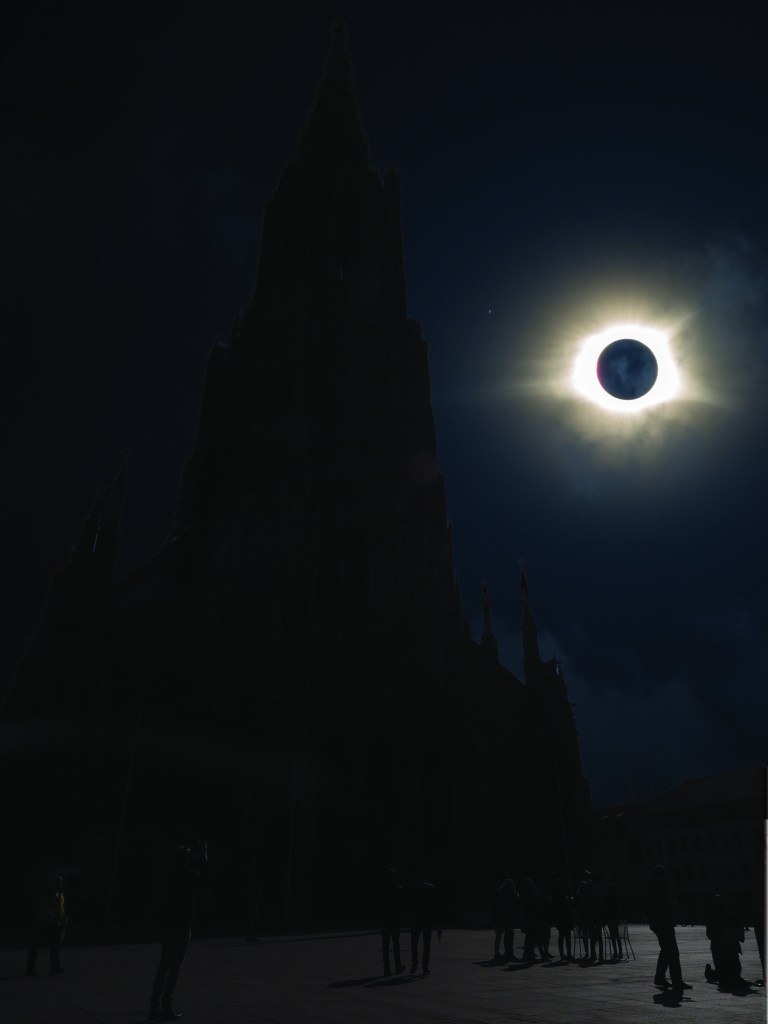
Whether Heretics and Those Who Are Cut Off from the Church Can Confer Orders

By St. Thomas Aquinas

St. Thomas Aquinas, Summa Theologiae, Supplement, Question 38. Article 2:

Whether heretics and those who are cut off from the Church can confer Orders?

Objection 1: It would seem that heretics and those who are cut off from the Church cannot confer Orders. For to confer Orders is a greater thing than to loose or bind anyone. But a heretic cannot loose or bind. Neither therefore can he ordain.

Objection 2: Further, a priest that is separated from the Church can consecrate, because the character whence he derives this power remains in him indelibly. But a bishop receives no character when he is raised to the episcopate. Therefore he does not necessarily retain the episcopal power after his separation from the Church.

Objection 3: Further, in no community can one who is expelled therefrom dispose of the offices of the community. Now Orders are offices of the Church. Therefore one who is outside the Church cannot confer Orders.

Objection 4: Further, the sacraments derive their efficacy from Christ’s passion. Now a heretic is not united to Christ’s passion; neither by his own faith, since he is an unbeliever, nor by the faith of the Church, since he is severed from the Church. Therefore he cannot confer the sacrament of Orders.

Objection 5: Further, a blessing is necessary in the conferring of Orders. But a heretic cannot bless; in fact his blessing is turned into a curse, as appears from the authorities quoted in the text (Sent. iv, D, 25). Therefore he cannot ordain.

On the contrary, When a bishop who has fallen into heresy is reconciled he is not reconsecrated. Therefore he did not lose the power which he had of conferring Orders.

Further, the power to ordain is greater than the power of Orders. But the power of Orders is not forfeited on account of heresy and the like. Neither therefore is the power to ordain.

Further, as the one who baptizes exercises a merely outward ministry, so does one who ordains, while God works inwardly. But one who is cut off from the Church by no means loses the power to baptize. Neither therefore does he lose the power to ordain.

I answer that, on this question four opinions are mentioned in the text (Sent. iv, D, 25). For some said that heretics, so long as they are tolerated by the Church, retain the power to ordain, but not after they have been cut off from the Church; as neither do those who have been degraded and the like. This is the first opinion. Yet this is IMPOSSIBLE, because, happen what may, no power that is given with a consecration can be taken away so long as the thing itself remains, any more than the consecration itself can be annulled, for even an altar or chrism once consecrated remains consecrated for ever. Wherefore, since the episcopal power is conferred by consecration, it must needs endure for ever, however much a man may sin or be cut off from the Church. For this reason others said that those who are cut off from the Church after having episcopal power in the Church, retain the power to ordain and raise others, but that those who are raised by them have not this power. This is the fourth opinion. But this again is IMPOSSIBLE, for if those who were ordained in the Church retain the power they received, it is clear that by exercising their power they consecrate validly, and therefore they validly confer whatever power is given with that consecration, and thus those who receive ordination or promotion from them have the same power as they. Wherefore others said that even those who are cut off from the Church can confer Orders and the other sacraments, provided they observe the due form and intention, both as to the first effect, which is the conferring of the sacrament, and as to the ultimate effect which is the conferring of grace. This is the second opinion. But this again is inadmissible, since by the very fact that a person communicates in the sacraments with a heretic who is cut off from the Church, he sins, and thus approaches the sacrament insincerely and cannot obtain grace, except perhaps in Baptism in a case of necessity. Hence others say that they confer the sacraments validly, but do not confer grace with them, not that the sacraments are lacking in efficacy, but on account of the sins of those who receive the sacraments from such persons despite the prohibition of the Church. This is the third and the true opinion.

Reply to Objection 1: The effect of absolution is nothing else but the forgiveness of sins which results from grace, and consequently a heretic cannot absolve, as neither can he confer grace in the sacraments. Moreover in order to give absolution it is necessary to have jurisdiction, which one who is cut off from the Church has not.

Reply to Objection 2: When a man is raised to the episcopate he receives a power which he retains for ever. This, however, cannot be called a character, because a man is not thereby placed in direct relation to God, but to Christ’s mystical body. Nevertheless it remains indelibly even as the character, because it is given by consecration.

Reply to Objection 3: Those who are ordained by heretics, although they receive an Order, do not receive the exercise thereof, so as to minister lawfully in their Orders, for the very reason indicated in the Objection.

Reply to Objection 4: They are united to the passion of Christ by the faith of the Church, for although in themselves they are severed from it, they are united to it as regards the form of the Church which they observe.

Reply to Objection 5: This refers to the ultimate effect of the sacraments, as the third opinion maintains.

Comment

It is not my custom to post entire articles from other people–however eternally eminent in learning and holiness–for the reason that I think it is kind of cheap. If you wanted to know St. Thomas Aquinas’s thoughts on heretics and holy orders, then you would have consulted the Summa to find out what they were. Nevertheless, after Laura read to me some pertinent parts of Teresa Benns’s most recent article, “A summary of epikeia and intention in Traditionalist orders,” I thought that a complete quotation of an applicable article from Aquinas might settle some doubts and confusion on the point of heretics and holy orders.

This is not a new idea with Benns. She has promoted this invalidity theory for seemingly as long as BetrayedCatholics has been on the web. Old opinions die hard, and the potency of the evergreen opinion of Teresa resides in her complete incomprehension of the two-fold power of orders, the sacramental and jurisdictional powers. As the BC explains:

984. The Church possesses and confers on her pastor, the power of orders and the power of jurisdiction; that is, the power to administer the Sacraments and sanctify the faithful, and the power to teach and make laws that direct the faithful to their spiritual good. A bishop has the full power of orders and the Pope alone has the full power of jurisdiction.

If, as simple children of the faith, we read and understand our catechism, and assent to the teachings found in it, we will not be daunted or confused by the wild world around us which insists upon confusion as burglars insist upon the cover of night. And, if St. Thomas is a little difficult for you to read, no matter. The BC is here to help:

1004. Bishops, priests and other ministers of the Church cannot exercise the power they have received in Holy Orders unless authorized and sent to do so by their lawful superiors. The power can never be taken from them, but the right to use it may be withdrawn for causes laid down in the laws of the Church, or for reasons that seem good to those in authority over them. Any use of sacred power without authority is sinful, and all who take part in such ceremonies are guilty of sin.

Thus, when the two-fold distinction of sacramental and jurisdictional power in holy orders is maintained, confusion is diffused, and we begin to see and think and believe as commonsensical Catholics again. Are the Thuc consecrations doubtful? Probably. Are they unlawful? Absolutely. Are all Sedevacantist sacraments invalid because a papal legislative act seemingly nullifies them in their sacramental and not just their jurisdictional power? Well, St. Thomas Aquinas, who was about as good with a pen as Luke Skywalker was with a lightsaber, said: “That’s IMPOSSIBLE!”

Powered by

On the Dangers of Home Alone

It has not been an infrequent occurrence to correspond with those who remain at home on Sunday instead of going to mass who are not altogether right in the head. I do not mean to draw a causal connection between the two, as conjunction is not proof of causation, but I do believe there must be an underlying cause or condition which must account for the higher frequency of having to converse with fools.

There are assumptions made in any thought, either known or not, which stand, as it were, at the back of the room of the thought. I am conscious of at least one assumption that my assertion above makes, and that is that the claim, ceteris paribus, any correspondence with people outside the home alone cohort would yield the same frequency of foolishness, is false. Be that as it may, I assume that the claim is false, though I cannot strictly prove it unless I try to verify the assumption by emailing fellow bloggers in my genre, which I’m not entirely inclined to do, at the risk of myself coming off as a correspondent equally foolish.

Moving on, then, with the thrust of my argument, I would say this: the reason, perhaps, for the higher frequency of bizarre beliefs and manners among home alone Catholics is that they are, well, alone. Not absolutely, of course, but compared with their counterpart religionists, with their parish hall, community outreach programs, school, congregation of smiling faces ready to greet you at the door, and, above all, priests and confessors to instruct you in spiritual and life matters, home alone Catholics are emphatically alone. And this being alone is dangerous.

Man is a social animal, which means that he is fitted by God to live in society. It takes a great deal of actual grace and practice living out the virtues to live in a society peacefully with others—and it takes enormously more grace to live peacefully outside society. Home Alone Catholics are just abiding by the commandments of God and the laws of the Church. I do not say Home Alone is wrong, so please do not misunderstand me. But I do so that the position is fraught with danger, both spiritual and mental, and even physical. Being in the desert is dangerous.

The physical dangers of living home alone are quite obvious. Your dependence on your physical welfare becomes almost completely dependent on those services your taxes afford, which is not exactly a consolation. If you are estranged from your relatives (perhaps most of us are) and your friends were all from Church you no longer attend, you are going to have a difficult time if a life issue happens, say, you are hospitalized with kidney disease, and there are no family or friends to help you make the life transitions that inevitably follow such a health crisis.

Let’s take the mental next. There are any number of issues, or problems, both practical and theoretical which a man is called upon to solve. If he has a community of persons, friends or associations with whom he can communicate, he is alleviated of the burden of bearing all the intellectual labor involved which is demanded by the problem. He asks a fellow parishioner, let’s say, who happens to be also an investment banker, whether he thinks it a good idea to sell short this month on a particular stock, since rumors are in the air of a merger. The fellow parishioner obliges him with free financial advice, and says the merger is a myth concocted by lunatic communist conspiracy theorist podcasters and mustn’t be heeded by any rational entity worthy the name. This man, being a rational entity himself, heeds the friend’s financial advice, cancels his subscription to the podcast “Red Scare” and saves himself the indignity and destitution which would have surely been his unhappy lot had he not a friend from Church with whom to consult.

Then there’s the spiritual. Let’s say you struggle with a vice of the flesh, perhaps it is gluttony in the form of the abuse of alcohol—not an entirely inconceivable probability in a country which had to pass a constitutional law forbidding hard drink. You belong to a parish-supported AA meeting group, which helps those like yourself overcome the sinful overconsumption of intoxicating liquor. You meet every Wednesday night, which is good, because otherwise you would be drinking yourself to hell-knows-where, down at the sports bar watching the seasonal game (it matters little which). Now you have a band of supporters you can work out your sinful addiction with and rely upon for moral encouragement.

But let’s remove you from those societies, from the parish hall where you were want to talk financial investment strategy over a donut and styrofoam cup of coffee, or the AA meeting which was the last thread keeping you sown to sanity and out of Satan’s jaws, and see how you fair home alone. Without a great deal of natural and supernatural virtue, I think you will agree, you won’t fair very well at all.

We who remain at home instead of soliciting sacraments from doubtfully valid and illicit priests whom the Church has not sent, do not do so because it is easier or because it is fun. On the contrary, the physical, mental and spiritual labor and suffering is arduous, and a great sacrifice. I truly believe that we who are home alone and who, by God’s almighty mercy, make it to Heaven, will wear shimmering crowns of golden glory for our spiritual martyrdom. Home alone calls us to live according to a higher demand on our natural intelligence and spiritual vigilance, just as one would need to in the desert, the path through which we trod is not primrose but penitential purple, mortifying our flesh, our minds, and our souls on our natural dependency on society in favor of a supernatural dependency on God and His Mother—have you prayed the Rosary today?For those who can endure it, and not long for the garlic and onions of Egypt, we must pray everyday for the unseen Manna from heaven, which is sanctifying and actual grace, to give strength to our bodies, clarity to our minds, and holiness to our souls.

Home alone is dangerous, but so is following Christ, for He is leading us to our death: God is leading us to Golgotha.