If It Be of God: Our Lady of Fátima

Guam is a dot of an island in the Pacific Ocean, about a mile across and thirty miles long, and over a thousand miles from any other landmass. I was flown off the aircraft carrier during deployment, just as we were passing by Guam on our way over to the Gulf. (I say passing by, but in reality I had to take a flight in a mail plane for two hours to reach the island.) When I landed, I distinctly remember the smell. It was not unpleasant, but the air was saturated with moisture. It wasn’t so much humid as wet. I felt like a voyager in a distant land, because that is exactly what I was. And what would have been perhaps a crushing reality for many was nothing more than a merry adventure for me, not because I was some ascetic saintly soul detached from life and longing for death and the unification with the Divine. On the contrary, I was rather carnal and worldly, though pious in my own Novus Ordo way. My wife had just given birth to our first born. We were just beginning our life together. But, Providence saw fit that I be diagnosed with end-stage renal disease. 

Between hospital visits, the hours past by on the island very slowly. I did not feel very adventurous, though I knew I was on an adventure—as we all are, whether we’re on a pinprick island in the infinite blue, or we are an invalid in an apartment building in a podunk town. I did manage to venture out on Sunday, however, because I was not going to miss mass. I remember walking along the road, taking in the tropical morning of the island, the heat and moisture and traffic. As I made my way into the church, I recall a very ugly Novus Ordo sanctuary, in the modernist all-wooden style and architecture but dramatical contrasted by brilliant bouquets of flowers and ribbons and such things over in the corner, where a handful of Guam native women were rolling up little strips of paper and placing them at the feet of the International Pilgrim Virgin Statue of Fátima. 

A brief snapshot into the history books shows us the following: “On May 13, 1951, the statue arrived at Fatima at the close of the Holy Year designated by Pope Pius XII. Over a million people were there for this solemn occasion. During his radio address, His Holiness remarked: ‘In 1946, I crowned Our Lady of Fatima as Queen of the World and the following year, through the Pilgrim Virgin, She set forth as though to claim Her dominion, and the favors She performs along the way are such that we can hardly believe what we are seeing with our eyes,’” (as quoted on CorpusChristiPhx.org, emphasis added).

Could this have been a coincidence? Sure it could have been. I am inclined to believe that it was much more than that, not because Guam is so small, the world so large, and the statue of my Lady and I happened to be in the same dinky little church at precisely the same time (the statue would be removed by a handful of men in suits and white gloves just following the church service (I won’t call it a mass!). I believe it so because, after the encounter with the statue, my cares and worries for what would become of my life dissolved like a Sweet ’N Low packet in ice tea. The Pilgrim Virgin was claiming her dominion even over that little island in the ocean, even over that little, young man in the wooden pew with kidney disease. That is where my devotion to Our Lady of Fátima really began.             

There has been so much controversy as of late about Our Lady of Fátimaon the internet. There is a growing faction among those who are Catholic enough not to solicit sacraments from schismatics, but who insist that the apparitions and private revelations and even the Miracle of the Sun are all a hoax and totally fabricated. And you know what? I am okay with that, because the Church is okay with that, if there is sufficient reason to believe so, and if the belief is consequently prudent to hold. I confess I have not studied the questions raised against the historical record and discrepancies found therein. It is a labyrinthine labor I at present would rather not dive into. There is most probably something to be said for irregular documentation, even fabrication of evidence and such nefarious happenings surrounding the apparition of Our Lady of Fátima, the so-called secrets of the children seers, and other questionable events, and persons. Such was the case at Lourdes and La Salette, as well, and most probably by the same actors, the Freemasons—you know, the ones who infiltrated the Church to the highest offices, from the cardinalate even to the papacy? If Freemasons could pollute the wells of doctrine at the Second Vatican Council, of course they would try to pollute the most popular private devotion of the twentieth century—if not in the history of the Church! 

But take or leave Our Lady of Fátima, I don’t care. What I do care about, and this is the point of the article, is that, when the Church lends credibility to an apparition, then, yes, one is permitted even then to dismiss it; but one is never permitted to despise it. And that is precisely what is going on now on the internet, and that is the controversy I wish to end here and now. 

As Teresa Benns wrote recently: “Where the Church has thus given Her approval to any particular private revelation, it is no longer permitted to ridicule or to despise it. Fas non est, says Card. Franzelin, tales revelationes contemnere (de div. trad. 22). To do so were to fail in the respect due to the Church. But not to believe the revelation is no sin against the obedience we owe the Church. For the Church, by her approval or quasi-approval of these revelations, has no intention of obliging the faithful to believe them,” (The Casuist, as quoted on BetrayedCatholics).

It is simply unlawful and impious to contemn or despise so great a revelation as Our Lady of Fátima. To do so marks a perversion to Christian unity and of charity toward those who hold such pious beliefs. I am not saying one is not able to investigate the historical record and try it. That is a holy practice, because the object is truth, and seeking the truth in the highest things is always meritorious. But there must be a place from which we launch such an investigation, and there must be boundary lines which we are in principle unable to cross without committing sin and public scandal. 
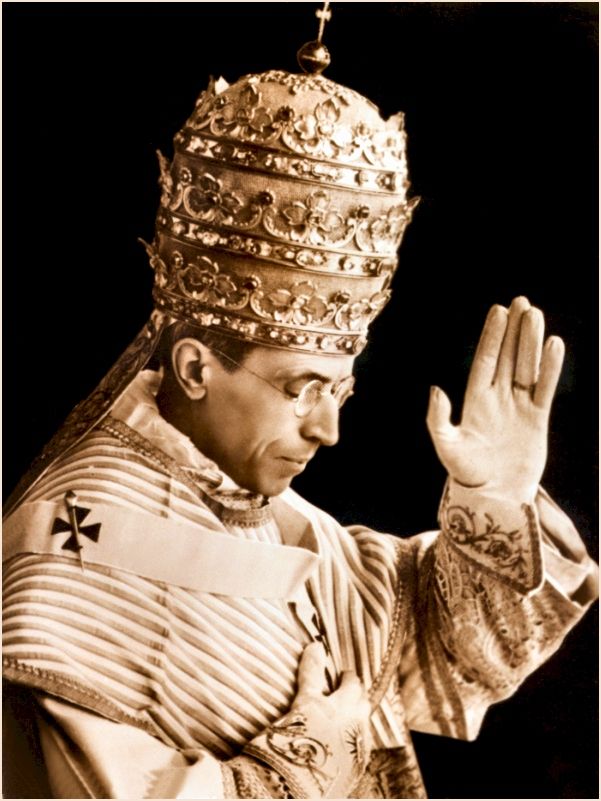
I believe that the pope is safe to follow, not only in matters of faith and morals, but in devotions, prayers, and in all things that touch upon our holy religion, which belief I learned from the Church: 

“You will firmly abide by the true decision of the Holy Roman Church and to this Holy See, which does not permit errors,” (Bull Cum Postquam; Denz. 740b, as quoted from NovusOrdoWatch, emphasis added).

Did you catch that? In the Holy See, error is not permitted. Keep that in mind.  

“Therefore, because of your special faith in the Church and special piety toward the same Chair of Peter, We exhort you to direct your constant efforts so that the faithful people of France may avoid the crafty deceptions and errors of these plotters and develop a more filial affection and obedience to this Apostolic See. Be vigilant in act and word, so that the faithful may grow in love for this Holy See, venerate it, and accept it with complete obedience; they should execute whatever the See itself teaches, determines, and decrees,” (Encyclical Inter Multiplices, nn. 1,7, quoted from NovusOrdoWatch, emphasis added). 

So, in addition to the fact that the Holy See does not permit errors, we are obliged by obedience to submit to “whatever the See itself teaches, determines, and decrees.” That is another very important point to keep in mind. Next,

“Nor can we pass over in silence the audacity of those who, not enduring sound doctrine, contend that “without sin and without any sacrifice of the Catholic profession assent and obedience may be refused to those judgments and decrees of the Apostolic See, whose object is declared to concern the Church’s general good and her rights and discipline, so only it does not touch the dogmata of faith and morals.” But no one can be found not clearly and distinctly to see and understand how grievously this is opposed to the Catholic dogma of the full power given from God by Christ our Lord Himself to the Roman Pontiff of feeding, ruling and guiding the Universal Church,” (Encyclical Quanta Cura, n. 5, quoted from NovusOrdoWatch, emphasis added). 

So, the Holy See does not permit errors, and the teachings, determinations, and decrees from the Holy See should be submitted to in holy obedience, and not just in matters of dogmata, but also in the Church’s general good, her rights, and discipline, and not to do so is a sin. 

Now I make a point which perhaps some may disagree with, but which may be argued for further in the comment box. I personally believe it is demonstrable, but I know that I am liable to err and am not infallible—like the Holy See I am trying to defend! That is, that Our Lady of Fátima has indeed received papal approval at the highest level, that of the Holy See, and so the devotion as such could never contain anything harmful to the faith. Teresa Benns made a similar point when she said, “Regarding the apparition itself, it seems clear that the Church found it worthy of belief and treated it as such. Several mentions of Fatima can be found in the Acta Apostolicae Sedis and this alone indicates the Church at least implicitly acknowledged the validity of the apparitions,” (from the article “Final conclusions regarding the Fatima apparitions controversy,” which I encourage you to read!) 

The Acta Apostolicae Sedis is simply a gazette of the Holy See, which periodically would come out (it is only a shell today, though it looks the same as in the days when the Catholic Church existed in its hierarchical structures). I reproduce below the two entries into the AAS to which Benns refers.    

“This holy and most urgent intention should have the principal place in the prayers of each priest. Those who have been called to the sacred orders of the contemplative life are to pray for this special intention, and the faithful, when reciting the rosary so highly commended by the Blessed Virgin at Fatima, should entreat this same Virgin to intercede in favor of this divine vocation in order that the missions will flourish,” (Saeculo Exeunte Octavo, Encyclical of Pius XII emphasis added).

“Without doubt God will shower upon the noble nation of Portugal the liberality of His blessings as he did at its birth. And the Blessed Virgin Mary of the Rosary, who is venerated at Fatima and is the same great Mother of God who obtained a great victory at Lepanto…It is well known that we have taken advantage of every opportunity – through personal audiences and radio broadcasts – to exhort Our children in Christ to a strong and tender love, as becomes children, for Our most gracious and exalted Mother. On this point it is particularly fitting to call to mind the radio message which We addressed to the people of Portugal, when the miraculous image of the Virgin Mary which is venerated at Fatima was being crowned with a golden diadem. We Ourselves called this the heralding of the ‘sovereignty’ of Mary,” (Ad Caeli Reginam, Encyclical of Pius XII, emphasis added.)

These are the endorsements of the Holy See of Our Lady of Fátima. According to what has been stated, the Holy See does not permit error. Therefore, there is no error in a devotion to Our Lady of Fátima. That is simple Catholic logic I hope everyone can follow.

It is true I have a special devotion to Our Lady of Fátima. I love her, because she has loved me first, and called my family and me out of the darkness of the false church and into her domain of heavenly grace which she spreads as like a mantle of maternal care over the entire earth—even over the oceans. But, do you know what? As much love and filial devotion as I have toward the Mother of God as she has made herself known in the apparitions at Fátima, I have a greater love and veneration for the Holy See, by which I even know that such an apparition is worthy of belief. Claims made of Marian apparitions are as numerous as the uncharted islands in the Pacific, and without the Holy See, one is liable to get marooned on one. But what is perhaps more perilous to the soul, is the insolent opposition to those apparitions the Holy See has approved; because, …if it be of God, you cannot overthrow it, lest perhaps you be found even to fight against God.     

In Defense of CatholicEclipsed

A very well-informed and good-willed Catholic just trying to get to the grave with his soul intact no doubt, emailed me with some arguably well-founded criticisms regarding the things I have published here on CatholicEclipsed; the most important perhaps being an accusation of hypocrisy. I reproduce his remarks in pertinent part now: 

“You and others publish material regarding religion. Such publications require jurisdiction and are also in violation of Church law (C. 1385). Nevertheless, you seem to hold yourselves dispensed from these requirements while at the same time you hold others strictly to them, e.g., the papal mandate. It comes across as being duplicitous and a classic case of “laws are for thee, not for me.” This strikes me as a contradiction, which if you could clarify, I would appreciate.”

The cited law here runs: 

Canon 1385: On the Previous Censorship of Books

§ 1. Unless ecclesiastical censorship has preceded, there shall not be published, even by laity:

1.° Books of sacred Scripture or annotations on them or commentaries;

2.° Books that look to divine Scriptures, sacred theology, ecclesiastical history, canon law, natural theology, and ethics and other religious and moral disciplines of this sort; books and booklets of prayers, devotions, and teaching or religious instruction on morals, ascetics, mysticism and other [topics] of this sort, even though they seem conducive to fostering piety; and generally those writings in which there is something of special import to religion and right living;

3.° Sacred images no matter how printed, whether they are published with prayers added or without them.

§ 2. Permission for publishing books and images mentioned in § 1 can be given by the Ordinary of the place of their author, or by the Ordinary of the place in which the books or images are going to be published, or by the Ordinary of the place in which they are printed, although if one of the Ordinaries denied permission, the author cannot petition another unless he makes him aware of the denial of permission from the other.

In a nutshell, the law forbids the publication of religious books or even images without the express permission of the local bishop. It would seem, therefore that I, the author of CatholicEclipsed, would stand guilty of violating this canon, because I have not received any such permission to publish articles and images and videos on my blog. I say would seem, because the word book is mentioned in this canon alone five times! Could it be that this particular canon is confining itself to the printing of books, and not to any publication? 

Hold that thought for a moment, first, is it even lawful for a layman to interpret privately the law himself? Teresa Benns of BetrayedCatholics—which has been recently renovated (the website, not the woman) and looking spiffy—wrote me the other day with this insight: 

Rev. Matthew Ramstein, S.T. Mag, J.U.D., OFM (“A Manual of Canon Law,” 1947, above) states: “In the absence of an authentic declaration concerning the meaning of the law, ANYONE may interpret the law for himself, provided he observe the rules set down by the lawgiver in Canons 18-21.” This is confirmed by the following canonists. Speaking of Pope Benedict XV’s Motu Proprio promulgating Canon Law, Monsignor Amleto Cicognani writes: “There is no prohibition in the Motu-proprio of private interpretation, which may be doctrinal or usual…It is said to be doctrinal when it is given by those skilled in canon law; customary (also called usual) when it is derived from unwritten practice, that is custom…General rules for the right interpretation of the Code are given in Canons 17 ff, besides those of Canons 5 and 6, (“Canon Law,” 1935, pgs. 434, 598-9). As Rev. Nicholas Neuberger explains in his dissertation, “Canon 6,” (Catholic University of America, 1927), “Of old the jurists distinguished between a mere declaration of and the interpretation of the law. The declaration today is called comprehensive interpretation. Its scope is not to change the law but determines the sense of the law comprehended therein from the beginning. Therefore, it adds or subtracts nothing from the original meaning…The comprehensive interpretation adds nothing anew but explains more and more the significance attached to the words …Ordinarily, every private individual may interpret laws according to the rules of jurisprudence, unless a special prohibition has been madeThe code, in Canon 6 §2 bids us have recourse to the doctrine of the approved authors. The authentic, however, always remains the guide for the doctrinal.”

For those interested in reading the law in English, here is a link to an online version of the 1917 or Pio-Benedictine Code of Canon Law , which I find most convenient when I am too lazy to retrieve my hardcopy from the schoolroom. 

Now we know that in the absence of an authoritative interpretation of the law, a private person—even a layman—may interpret the law himself, if the rules of interpretation are followed. One such rule we ought to have recourse to when interpreting the law is the following: 

Canon 18

Ecclesiastical laws are to be understood according to the meaning of their own words considered in their text and context; as for those things that remain unclear or in doubt, reference should be made to parallel provisions in the Code, if there are any, to the purposes and circumstances of the law and to the mind of the legislator.

Here’s another law which is important for interpreting:

Canon 19

Laws that establish a penalty, or that restrict the free exercise of a right, or that contain an exception to the law, are subject to strict interpretation.

My critic interpreted Canon 1385 incorrectly, because CatholicEclipsed does not print books. Rather it is the equivalent to an online newspaper column. The wording is precise and emphatic: the canon concerns itself with the printing of books and not with the publication of newspaper articles. Canon 19 tells us, further, that, because Canon 1385 restricts the free exercise of a right (printing books), the canon is subject to strict interpretation.   

And speaking of newspaper articles, it is interesting to note that the very next canon does concern itself with newspaper articles. What does it say? 

Canon 1386

§ 2. Neither shall laity, unless persuaded by just and reasonable cause approved by the local Ordinary, write for newspapers, pamphlets, or periodical literature that is accustomed to attacking the Catholic religion or good morals.

The wording of Canon 1386 is negative, and it would seem to be restrictive of the free exercise of a right, but the meaning contained in the canon, that is, that one may write for an anti-Catholic publication provided there is just and reasonable cause, is not restrictive but permissive, which suggests that it should be interpreted broadly instead of strictly.

So, here we have a canon which permits a Catholic to write for an anti-Catholic publication, provided it is done for a just and reasonable cause, but my critic believes that I cannot write for a Catholic publication at all, even if I do have a just and reasonable cause—the fact that I cannot solicit approval from my local ordinary being a moot point, because there is no local ordinary. So, do I have a just and reasonable cause to write about religion? What does the Church teach regarding this?

No one, however, must entertain the notion that private individuals are prevented from taking some active part in this duty of teaching, especially those on whom God has bestowed gifts of mind with the strong wish of rendering themselves useful. These, so often as circumstances demand, may take upon themselves, not, indeed, the office of the pastor, but the task of communicating to others what they have themselves received, becoming, as it were, living echoes of their masters in the faith. Such co-operation on the part of the laity has seemed to the Fathers of the Vatican Council so opportune and fruitful of good that they thought well to invite it. “All faithful Christians, but those chiefly who are in a prominent position, or engaged in teaching, we entreat, by the compassion of Jesus Christ, and enjoin by the authority of the same God and Saviour, that they bring aid to ward off and eliminate these errors from holy Church, and contribute their zealous help in spreading abroad the light of undefiled faith.” Let each one, therefore, bear in mind that he both can and should, so far as may be, preach the Catholic faith by the authority of his example, and by open and constant profession of the obligations it imposes. In respect, consequently, to the duties that bind us to God and the Church, it should be borne earnestly in mind that in propagating Christian truth and warding off errors the zeal of the laity should, as far as possible, be brought actively into play, (Pope Leo XIII, Sapientiae Christianae, 16). 

There was much more I wanted to include from Pope Leo XIII’s beautiful encyclical letter. I encourage you all to read more here. All I am is a small voice crying out in the wilderness, echoing my masters in the faith. Our Holy Father encourages those with gifts of mind to communicate the truths of the faith they have received. I don’t know what gifts of mind I may possess, being myself the poorest judge of myself, but I can say objectively that I have special training in the United States Navy as a Mass Communication Specialist. My skill sets are aptly fitted to communicating the Catholic Faith, which (I hope) is evidenced by my website design and delivery of content. As for the task of warding off errors, having received degrees in philosophy—the science, really, of identifying errors, I am again apparently aptly fitted to the task. As for zeal for the Catholic Faith, I was blessed from my baptism to be animated by an enthusiasm and passionate love of the Faith many may vouch for—just ask my former shipmates, who I would oftentimes entertain by preaching about morals during a Cleaning Stations session or sermonize on the Smoke Deck in the evenings. 

But even before the university and the Navy, I became a Catholic, not because of any Novus Ordo pastor, but because of a 300 pound, dead journalist, G.K. Chesterton. Reading his books, many of which were compilations of the 13,000 articles he wrote for almost forty years for Illustrated London News and Daily News, in weekly newspaper columns, I became convinced and was gifted with understanding and faith that the Catholic religion was true, and nothing else was. Chesterton brought actively into play his powers for writing simply but profoundly, which spoke to the masses of men without a university education. He was for everyman, because he was a man of genius. I am rather a simpleton by comparison, but I aspire to be like Chesterton in what he was able to do for whole generations of Catholics, in his own day and afterward: to make the Faith real and vivid to the imagination as well as to the intellect, to infuse into people’s souls a Christian humor that giggles as well as laments, to break through the barriers of ignorance and fear with a bulldozer or baseball bat (whatever works), and to free my fellow sheep from the inevitable death that awaits them following a wolf in a sheep or shepherd’s cloth.    

Hopefully this will silence my well-intentioned critic who says I ought not to be running a Catholic website and writing articles, so I can get back to my just and reasonable cause of defending the truth of the Faith against the heathen, heretic, schismatic and apostate. The Apocalypse sure does keep one busy, since it seems a Catholic does have–under certain conditions–freedom of the press!      

Dialectic as an Antidote to Delusion

Someone recently shared a video with me about flat earth, which I thought was entertaining and interesting and even convincing, at least when I watched it alone. But after discussing it over with my wife, who watched it herself alone, I came to realize a general truth now so evident and rampant among even those who are disposed to use their minds. 

The film begins with a segment on what may be called the herd instinct. We as a species, as the film shows, tend toward conformity as a matter of nature. We are susceptible to conditioning by our neighbors and society as a whole and so, as the argument goes, we must be on our guard from such mindless conformity. The film does a grand job of establishing a new group into which we ourselves would like to belong: the undeceived. 

After first establishing the principle of human nature to be avoided, the narrator takes us on a little journey through some deceptions that have been foisted upon us for years, like NASA’s circus that is the Apollo missions and space program in general, or the 911 atrocities committed against the American people by the government or other nefarious actors. 

When we finally get to view the evidence, we are prepped to be—paradoxically—as credulous to believe almost anything the narrator says, because he has positioned himself to be like that philosopher who plunges down into the darkness of Plato’s allegorical cave to liberate us stupid and unsuspecting intellectual slaves from our delusions. The rhetorical power of such a move cannot be overstated. But the narrator, as he informs us, is a lawyer, and so rhetorical devices are simply the tools of his trade.

I do not challenge any evidence the video presents in favor of a flat earth. The science involved is very interesting, and I will need time to understand it before being able to comment. I will say, however, this much. Almost all the evidence the narrator presents is experiments with light, be it reflected or laser, by casting beams over the water or other flat surfaces, in order to observe any obstruction caused by the supposed curvature of the earth. I found these experiments very convincing, because it seemed to prove that the supposed horizon didn’t exist. 

So, what’s my hesitation, then? For starters, I must trust that these scientific experiments conducted by a layman (a lawyer, not a scientist) were in keeping with the standard practices of empirical and experimental scientific method. Perhaps they were, perhaps not. The point I only wish to make is that we the audience must just accept and believe this guy on no grounds whatsoever. He’s just one guy among so many millions who has a camcorder and a laser pointer. But this seems to run counter to the habit of mind the narrator wishes us to have. From the first, the film insists that we be independent of mind, and then it presents us with a bunch of experiments we in principle should not believe: 1. Because they were conducted by a layman who has no specialized training in the sciences apart from an astronomy course taken in college; 2. Even granting their accuracy and strict adherence to scientific standards, the evidence is not peer-reviewed by other scientists, or even by amateur science enthusiasts; and 3. If, according to the argument presented at the beginning, we should not even believe the highly believable video and photographic evidence of NASA and man’s space exploration, why should we believe a private person’s home movies? 

These thoughts and others were not the product of meditation but discussion with my wife and best friend. This past weekend, while shopping at Walmart (judge not lest ye be judged!), my wife mused: “It’s hard to have a socratic dialogue with yourself.” It is my opinion that this flat earth phenomenon has gained such traction because people no longer talk anymore. A socratic dialogue, more aptly called dialectic, or the art of investigating or discussing the truth of opinions, doesn’t really take place anymore. True, people chat on social media, but what is really required for a dialectic to happen is an in-person back and forth living conversation and investigation into truth claims—preferably over soda and pizza, like my wife and I did this weekend. 

While dining together on our Saturday shopping date, we considered several aporia (internal contradictions to a theory) in the flat earth model which seemed impossible to our imaginations to solve. For instance, there’s the problem with the constellations being different in the northern hemisphere (forgive the assumption of “sphere” here) and the southern hemisphere—or southern quadrant if you prefer. The dome of the firmament should preclude such discrepancies, because the observational field of view would be available to all, if a plane were assumed. Then there’s the perplexing case of air travel. If, according to the flat earth model, there is no south pole, then travel between two points on the flat earth map would be a lot different than travel on a glob map. What is interesting to note, too, is that at least globe map travel can actually be verified through Google Earth imagery. 

Now these may or may not be valid criticisms of the flat earth theory. There were others we discussed, but that is not the point of this post. What I do want to talk about is what my wife said, that it is hard to have a socratic dialogue with yourself. There are issues plaguing us today which far outweigh the theories of whether our world is flat or round, and which require a far weightier measure of dialectic. Such things as jurisdiction, epikeia, validity of holy orders, the history of the traditional movement and its actors, papal and canonical law, must be discussed and not merely read about and assented to or not. These issues have eternal consequences, and though God would not damn one who made a good faith error in judgment concerning them, that is no excuse not to investigate them. There’s a lot of special pleading going on today, mostly through feigned ignorance—which is not good faith. 

I know there is no hope of having a good, old fashioned public debate with Sedevacantists. But there is hope yet that you could have a debate with your spouse, or children, or family relation, or close friend on the golf course. My wife and I argue like medieval monks sometimes, ready to cast kitchen utensils at each other over a dispute about etymology. But our marriage, and our minds, is better for it. Don’t agree to disagree. That is the death of the heart as well as the mind. It as soon makes the intellect atrophy as it does the affection we have for others, because it ultimately says that you don’t care what your neighbor thinks.  

Flat earth theory is a fascinating scientific discussion to have, as is geocentrism, and I for one am excited to engage in the discussion. But let us not lose focus of other things of more grave importance to the destiny of our souls, and have discussion about those, too. Truth is not discovered in a vacuum. If you lived on a desert island from birth, you would literally be as dumb and imbecilic as a crocodile. You wouldn’t be able to formulate a single human thought, without having interacted with other thinking humans. This is the extreme case, but the principle is valid even if not as dramatic, in the case of the individual who doesn’t talk with anyone about what he learns or thinks or believes. Too many of us live on desert islands without anyone to talk to. But even more of us live in our own heads and choose not to talk to anyone. If we watch videos like the flat earth video I received, and just take it in without talking about it with someone else, we are very much liable to believe it. If we read a book about how bishops in the past were able to consecrate other bishops without a papal mandate, and we don’t talk with anyone about it, we are very much liable to believe it.                             

Ekklesiametry

And he that spoke with me, had a measure of a reed of gold, to measure the city and the gates thereof, and the wall.

Oftentimes when I am busy on Twitter trying to disabuse people of the notion that Sedevacantist clergy are Catholic, I feel like St. Paul when he spoke to the people in the Areopagus, saying, “Ye men of Athens, I perceive that in all things you are too superstitious.” With super-credulity, ready to believe anything their clergy tell them, Sedevacantists try to contain and save the Church by merely human means in human constructions. I hear St. Paul’s admonition of this superstitious people: 

God, who made the world, and all things therein; he, being Lord of heaven and earth, dwelleth not in temples made with hands; Neither is he served with men’s hands, as though he needed any thing; seeing it is he who giveth to all life, and breath, and all things: And hath made of one, all mankind, to dwell upon the whole face of the earth, determining appointed times, and the limits of their habitation.   

It is no big surprise that Sedevacantists are superstitious, because where there is ignorance, superstition is not long to follow. We must all of us have something in our heads to live by. You can call it an operating system if you want, like a computer, which has its own internal checks, rules, or algorithms which inform and determine actions to be taken. Though everyone has an OS, not every OS is good. 

Some operating systems have algorithms like: 

If it feels good, do it

Pain is bad. Pleasure is good. Avoid pain. Seek pleasure.

This is the OS of the typical heathen. Thank goodness Sedevacantists are not so depraved. But Sedevacantists do have their own OS, which is very incompatible with a Catholic OS. The problem lies, not in what things they call facts but in what teachings they accept, and what authorities they follow. If I may stretch the analogy a bit further, I would compare a Sedevacantist OS to a PC, whereas a Catholic OS is like a Mac. 

PCs are made to be augmented, changed, upgraded, and in anyway modified. That is their charm. Their computer systems are very much democratic. Macs, on the other hand, are closed and not subject to user modification. Macs are monarchical. The programmers on their throne (somewhere in Silicon Valley) have decreed that Thou Shalt Not modify the computer operating system algorithms—under pain of self-destruction. That is their charm. Why? Because the very charm of the PC makes it very much susceptible to malfunction, being a kind of Frankenstein monster of computing, but the Mac, having an inviolate operating system, is not liable to such malfunction, because it has unity, or wholeness. The PC is a pack of parts, an amalgamation of oftentimes conflicting rules and checks, which ultimately lead to its breakdown. The Mac is simple and united in its rules, which harmonize with each other, because they are the product of a single intellect and will.  

Typical Sedevacantist Bishop

Thus, it is no wonder that the CMRI doesn’t agree with the SSPV which doesn’t agree with MHT seminary which doesn’t agree with SGG which doesn’t agree with the CMRI, because each represents a different (and conflicting) set of algorithms which inform its groups’ actions. There is no unitas because there is no single entity of programmers writing the rules. And that is a telltale sign (or mark) that these Sedevacantist groups are not Catholic. So, playing around with this analogy further, how about we spell out what a Catholic OS would look like, what the algorithms would be? 

There are certain rules we must accept if we are to have a working machine in our heads to direct our action; otherwise, we will be in conflict with ourselves and wonder why we are still awake at two in the morning scrolling and watching cat videos. So, if you hate watching cat videos in the middle of the night, keep reading.  

The Church has already provided us with the means to build a Catholic OS, the catechism. True, there are other rules, like canon law, but these were not written for mere laymen—which I assume you are, my gentle reader. There are almost as many catechisms as there are cultures of Catholics, and this is only right and good. Down through the ages, bishops and councils have commissioned new catechisms to be written for their people, which present a body of essential Church teachings that are easily learned and remembered. I am American, and so I defer to the Baltimore Catechism—the original 1891 version—as my go-to for writing my Catholic OS. We are our own programmers, but we use software to build our Catholic OS. If we use non-Catholic software, our OS will be non-Catholic. 

In addition to whatever approved catechism you use, there are some additional rules which may serve well to write your Catholic OS. Computer software follows an internal logic, and so must we. 

(Forewarning: the following may be dry to some readers. I’d recommend you take a break and watch before proceeding to the next section.)

Definitions

Axiom: An assumed and self-evidently true proposition.

Example: The whole is greater than its part.  

Postulate: An assumed fact as a basis of a proof. 

Example: There exists a rock. There exist rock fragments.  

Proof: An inferential argument showing that the stated assumptions logically guarantee the conclusion, based upon axioms and postulates. 

Example: A whole is greater than a part (axiom), and there exists a rock, which is a whole (postulate), and there also exist fragments of that same rock, which are parts (postulate). Therefore, the rock is greater than any of its fragments, because the whole is greater than any of its parts.   

Theorem: a statement that has been proved using inference rules of a deductive system to establish that the theorem is a logical consequence of the axioms, and postulates.  

Example: The rock is greater than its fragments. 

What is exciting, if you allow the logic to penetrate your soul, is that the theorem is all postulate terms. Did you notice? The raison d’être of the statement has been infused into the factual terms by a kind of Angelic alchemy, whereby the mere fact now holds an intelligent, logical necessity. Dry, yes, but like Chardonnay, not sand. 

So, if we understand that our Baltimore Catechism provides us with the requisite axioms, then thinking through the difficulties of the present Apocalypse will be much easier—and will actually be Catholic. But I must make a caveat. Though the teachings presented and numbered for our learning convenience and recall in the BC is easy enough to comprehend, and so our axioms are easily gathered, gathering postulates can be problematic and difficult. Oftentimes what we are dealing with in terms of gathering postulates is historical facts, not so much present facts. This is so because Apostolicity involves lineage, which is a historical fact. This perhaps accounts for most of the disagreements, because what often happens (in Twitter debates) is that there is a dispute of the fact. To solve this difficulty, what must happen is to show through a proof that a postulate of a historical fact is or is not according to an axiom. Put another way, if there is a disagreement about a postulate, then you must show how that postulate is impossible or necessary given a relevant axiom. I think an example is in order.  

There is disagreement that Thuc fell from his office as archbishop the moment he signed the documents of the Second Vatican Council. Some say it was an act of public defection (which I do), but some say Thuc didn’t have the requisite knowledge to know that the documents were heretical, or that even the documents themselves were not overtly heretical but were interpreted as such by the antipopes that followed. So, there is a disagreement about a postulate of a historical fact. 

The problems with this scenario are complex, and I do not wish to bore you with trying to spell out all the hidden assumptions to be found herein. But I will say that the fact of the V2 documents being heretical or not is not a historical fact, but an eternal fact which can be verified. These writings exist and can be plugged into our Catholic OS to determine our course of action regarding them. If we do that, then we can say whether Thuc was acting according to a Catholic OS, or something other than. That way we can prove a postulate of historical fact necessary or impossible based upon our catechetical axioms. Grab your wine glasses. Here we go!

Axiom (A1): The Church is the congregation of all those who profess the faith of Christ, partake of the same Sacraments, and are governed by their lawful pastors under one visible Head, (BC 489). 

Axiom (A2): They who do not believe all that God has taught are the heretics and infidels, (BC 1169). 

Postulate (PS1): There exists a document from the Second Vatican Council which states the following teaching about the Church: “This Church constituted and organized in the world as a society, subsists in the Catholic Church, which is governed by the successor of Peter and by the Bishops in communion with him, although many elements of sanctification and of truth are found outside of its visible structure,” (Lumen Gentium, 76). 

Proof (PR1): The Church is the congregation of all those who profess the faith of Christ (A1). But, according to (PS1), this Church only subsists in the Catholic Church. Parts of the the Church of Christ are outside the Catholic Church. But this is impossible according to (A1). Therefore, (PS1) is impossible, and is not the teaching of the Church but its contrary. That which is contrary to the teaching of the Church is heresy, according to (A2). Therefore, the teachings of the Second Vatican Council are heresy.  

Theorem (T1): The teachings of the Second Vatican Council are heresy.   

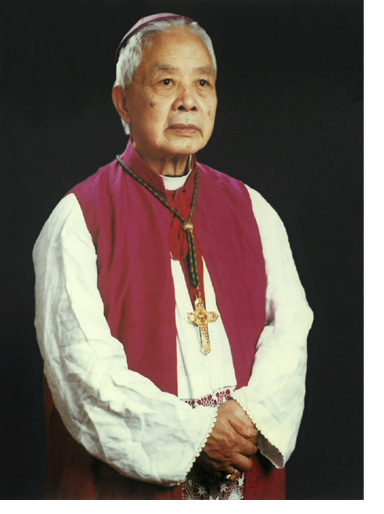
Postulate (PS2): There existed a one, Ngô Đình Thục, who was a signatory to the documents of the Second Vatican Council, including Lumen Gentium.

Proof (PR2): Given that the teachings of the Second Vatican Council are heresy (T1), and that Ngô Đình Thục was a signatory of the documents of the same (PS2), Ngô Đình Thục was a heretic, according to (A2), because he did not believe all that God has taught, but on the contrary believed the contrary. 

Theorem (T2): Ngô Đình Thục was a heretic.  

From here it is not difficult to see that anyone who traces his episcopal lineage back to Thuc is not Catholic, but derives his holy orders from a heretic. To maintain anything to the contrary is simply acting according to a non-Catholic OS. The Sedevacantists have their own OS, because they have tampered with the software, manipulating the axioms which inform the OS’s algorithms. Is it any wonder their systems crash so often? Is it any wonder Sedevacantists are often up late watching cat videos?   

It will be noted that I have borrowed Euclidean concepts of geometry to help write our Catholic operating system. Geometry is a useful science. It helps with the building of architecture. The Church is an intelligible, spiritual architecture constructied out of living stones. Sedevacantists do not use the same measure as Catholics, which is why their church is so ugly and irregular. They do not even use the same measure among themselves. But God would have us know His Church by the rule and measure which He set and determined. Think of your catechism as that reed of gold the Angel used to measure the Church by, which St. John recorded in his Book of Revelation, his vision of the Apocalypse, his vision, that is, of our present day.       

Faith Like a Bottle of Mustard

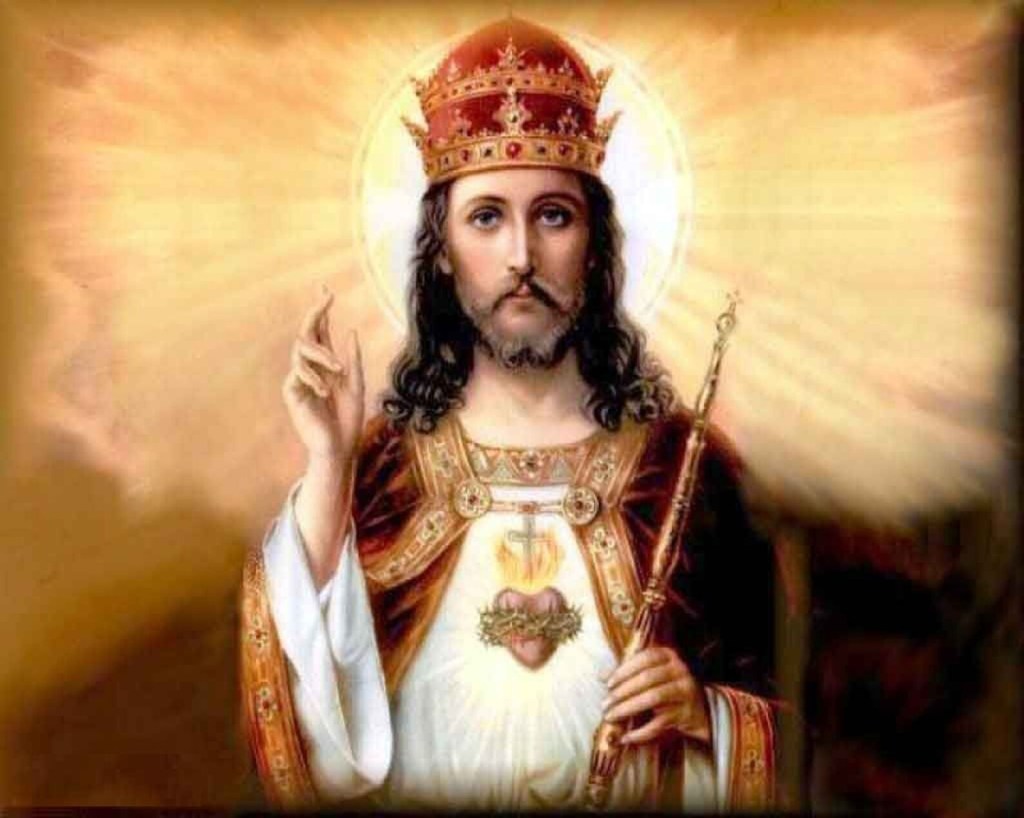
My family will be celebrating our third anniversary with the upcoming Solemnity of the Most Sacred Heart of Jesus, and we will be renewing the enthronement of the Sacred Heart in our home. Now, I am not one of those good and faithful Catholics who devours devotions like Fig Newtons. My family’s prayer life tends to be very simple—the consequence, perhaps of being a homeschooling family of six children. Our daily religious practices are: Acts (Faith, Hope, Love, Contrition), Angelus, Rosary, rinse and repeat. But, in addition to our special devotion to the Immaculate Heart of Mary, our wearing of the Brown Scapular, and being slaves to Jesus through Mary (St. Louis DeMontfort, True Devotion), Christ is quite literally King in our home. He reigns and presides over our quaint open-floor plan realm like the sovereign Lord that He is, golden scepter in hand—right next to the thermostat. 

The Catholic faith of a family is nitty and gritty. It is hardworking and sweaty like a bake-day mom in late July or a greasy and knuckle-wracked dad under the hood of a 67’ red Corvette. Faith is supposed to get down into the hard-to-reach of your life like the crevices of a highchair. Let your faith be a PB&J and stick there until the Crack of Doom. If your Faith is as pristine as a porcelain doll on a shelf, chances are it is just as fragile. Let your faith work along side you, at the kitchen sink, in the garage, or at the table doing your umpteenth math fact. If you confine your faith, like a precious jewel (or, maybe a light under a bushel) in your pocket, it will never gleam out, shine out the reality of your hope, that this transitory existence full of tears is only so while it lasts. Soon a new dawn will break upon the universe and God will reign in all His glory and be hailed by every creature in a New Heavens and a New Earth. The Enthronement of the Sacred Heart is a foretaste of this blessed event, where all creation is brought under His rule in a manifest way.  

The first enthronement ceremony we did, following Fr. Mateo’s instructional booklet, we drew up a document (to be registered with the Angels in Heaven because, alas, the official congregation and registry having as of late apostatized) on which my family signed, or made their mark as in the case of the little tots who hadn’t received their writing lessons yet. The ceremony specifies that all members of the family ought to be included, and of those who could not be present, an Our Father, Hail Mary, and Glory Be, should be said on their behalf. I distinctly remember praying these for my own father who had passed away a heathen when I was sixteen, and for my mother who was lost in another episode of manic depression, yet still attending the Novus Ordo Missae when she could. We also prayed for my in-laws, who were not manic depressive but still attended the Novus Ordo Missae anyway, only they did so every Sunday and Holy Day of Obligation. They were, and are, faithful to the false Church in Rome. 

At the time of the first enthronement, we were estranged from my wife’s parents. We acted quite literally when the Holy Scriptures spoke of avoiding the heretic and not wishing them Godspeed. We didn’t allow them in our home, and we didn’t visit them. Looking back on that decision, I confess I am at a loss to say if it was right or wrong. Perhaps you could help me judge that aright, but why I bring it up is that the second anniversary of the enthronement of the Sacred Heart, while praying the last prayers of the ceremony, just as we were about to sign the Angelic document a second time, who do you think knocks on our door? That’s right, my in-laws. 

They were welcomed into our home, of course. I wasn’t going to argue with Providence or my King. If He wanted them at my home (His home, that is) during that second anniversary, I wasn’t going to protest. On the contrary, my heart was bursting inside my chest because I knew God Almighty brought them there at that time and place, because He wanted them to sign that Angelic document, because He wanted to be enthroned in their hearts and home as well. They signed it. And, though we had our difficulties explaining some points of dogma, namely that outside the Catholic Church there is no salvation, we had a very pleasant visit with them, playing cards and eating too much crackers and cheese.

Since then we have had a couple cordial visits but they are still attending the new mass at the Freemason Cult of Man church in their hometown. They have yet to transition even to the Tridentine, as so many who have come before tend to do. But I remember my King, and how, when He willed that they should be where He wanted them to, they were. That is the nitty-gritty Faith I speak of. It sometimes feels like a punch in the stomach, a betrayal and let down, when you see someone so close to Christ yet so far. But, then again, Christ was betrayed even by a kiss. The divine drama is played out in our families. We are not saved at the grocery store, or the bank, or the office, but at home. The people we love, our family, even when they are heathens, are the ones first we should consider when evangelizing and hoping to convert. I entrust my father’s soul to my Heavenly Mother. As for my earthly mother, she is doing very well emotionally, stabilized now by proper medication and a less stressful environment. I have been talking with her about reading the Baltimore Catechism, and she sounds enthusiastic to learn. As for my mother- and father-in-law, my heart is full of hope for their conversion. Perhaps my King will work another miracle in their life, and bring them home for more crackers and cheese and true doctrine. Perhaps this time they will find Extra Ecclesiam nulla salus as tasty and digestible as the extra sharp cheddar.  

No Thanks to a Millstone Necklace

In a Loud Color Anyway

To avoid scandal, let me make a few corrections.

Pope Benedict XV, in Ad Beatissimi Apostolorum, wrote:

“…let each one subject his own opinion to the authority of him who is his superior, and obey him as a matter of conscience. Again, let no private individual, whether in books or in the press, or in public speeches, take upon himself the position of an authoritative teacher in the Church.” 

When one puts forth an opinion contrary to the magisterium of the Church, to the unanimity of theological opinion of actual theologians, to councils and popes and doctors of the Church, then one is no longer “subjecting his own opinion to the authority” but rather positioning himself as an “authoritative teacher in the Church” in opposition to that teaching authority.

I am not a teacher in the Church. I am a humble blogger whose only aspiration is to entertain you while informing you of the Apocalypse and its consequences. Mr. Eric Hoyle, my guest for Catholic Conversations–which I hope you watch in full–is not a teacher with authority in the Church either. To the extent that Mr. Hoyle demonstrates his claims based upon sound logical principles, canonical law, and adhering to the magisterium in his conclusions, he may be a trustworthy source for information and understanding during these very difficult times. But to the extent and degree that he overstep his own premises in his conclusions, that is to say, if he say something contrary to reason or to the magisterium, such conclusions are not to be trusted, but must be shunned and proven erroneous.

During the hour-long conversation with Mr. Hoyle, I was pleased to follow along as he explained the basics of supplied jurisdiction and its canonical requirements. However, he did overstep his premises and spoke in error when he gave an opinion contrary to the magisterium of the Church. He spoke of how Anthony Cekada was able to translate sacred canons of the Council of Trent, and to arrive at his own opinion of them, in light of the current state of affairs in the Church. (I hope I have represented his comments correctly!) But this is an error. No private interpretation or translation of sacred canons of an ecumenical council is permitted under pain of anathema–which I mention in the video.

To wit, within the “BULL OF OUR MOST HOLY LORD PIUS IV., BY PROVIDENCE OF GOD, POPE, TOUCHING THE CONFIRMATION OF THE OECUMENICAL (AND) GENERAL COUNCIL OF TRENT,” we read the following: 

Furthermore, in order to avoid the perversion and confusion which might arise, if each one were allowed, as he might think fit, to publish his own commentaries and interpretations on the decrees of the Council ; We, by apostolic authority, forbid all men, as well ecclesiastics, of whatsoever order, condition, and rank they may be, as also laymen, with whatsoever honor and power invested ; prelates, to wit, under pain of being interdicted from entering the church, and all others whomsoever they be, under pain of excommunication incurred by the fact, to presume, without our authority to publish, in any form, any commentaries, glosses, annotations, scholia, or any kind of interpretation whatsoever of the decrees of the said Council ; or to settle anything in regard thereof, under any plea whatsoever, even under pretext of greater corroboration of the decrees, or the more perfect execution thereof, or under any other colour whatsoever. But if anything therein shall seem to any one to have been expressed and ordained in an obscure manner, and it shall appear to stand in need on that account of an interpretation or decision, let him Go up to the place which the Lord hath chosen; to wit, to the Apostolic See, the mistress of all the faithful, whose authority the holy Synod also has so reverently acknowledged.

Pius IV goes on to say that His Holiness’s Bull ought to be promulgated far and wide, read by all, including the laity, and indeed to be proclaimed in the churches “with a loud voice” even for the illiterate, that no one may plead ignorance. Anthony Cekada violated this Bull when he re-translated and made comment on the meaning of the sacred canon concerning ministers of the word and sacraments. And this Bull is not subject to time and place, as Mr. Hoyle erroneously asserts. What is true yesterday is true tomorrow. It was true then that sacred canons ought only to be translated and interpreted by a teaching authority. Cekada is no authority in the Church (I don’t even think he was in the Church, but that’s for another article), and so ought not to translate or interpret anything. It is a universally valid law, promulgated to the whole Church, and has never been abrogated.

What Cekada should have done was consult approved translations and commentaries of the canon, and then made his case. He didn’t. He polluted the well water of Church teaching by his own hand with his perverse and confused opinions–all to justify himself and his cronies usurping the prerogatives of the Primacy of Peter to establish mass centers without jurisdiction. That cannot stand. And I shall call out such conduct as un-Catholic and condemnable until Doomsday, even at the expense of a gentleman’s acquaintance and friendship.

The Safer Course

At the very end of the video, Mr. Hoyle made another regrettable slip in orthodox praxis concerning the reception of the sacraments of Penance and the Holy Eucharist. He said that, if one believe that he is receiving a valid sacramental confession, and provided he have the proper contrition, he would not be committing sacrilege upon receiving Holy Communion. What Mr. Hoyle fails to mention is that, without jurisdiction, the absolution would be null and void anyway, and, further, that the reception of the sacraments from non-Catholics is a sacrilegious act in itself! According to the canonist Rev. Charles Augustine, Communicatio in sacris, is committed whenever one joins:

“A sect [or] religious society established in opposition to the Catholic Church, whether it consists of infidels, pagans, Jews, Moslems, non-Catholics or schismatics.”

It simply defies understanding as to why Mr. Hoyle would give an endorsement to receive Sede sacraments after he just spent an hour showing how they are not valid or lawful, because they lack jurisdiction. It is the unanimous opinion of theologians that, as it pertains to the validity of the Sacraments, the safer course must always be followed. Since Mr. Hoyle did such a deft job of showing how, in the very least, Sede sacraments are doubtfully valid, and absolutely certainly illicit, the safest course is to avoid them like the Hell-plague they are, and pray at home, performing spiritual acts of penance and communion.

A final word. I was not going to stop the interview and start arguing with my guest. Certain rules of common decency and hospitality must be observed. But I was compelled by conscience and a dear friend’s gentle remonstration for publishing Mr. Hoyle’s remarks without comment to write this article as a public correction of the errors I allowed to air on Catholic Conversations. I hope that this article may serve to undo any harm done. I hope I have avoided scandal, or undone the scandal I may have caused. After all, it were better for me, that a millstone were hanged about my neck, and I cast into the sea, than that I should scandalize one of these little ones.

The Church is an Aircraft Carrier

We who keep the Faith, who keep to the laws of the Church and believe everything that the popes have taught, the councils have promulgated, we who do not solicit sacraments from dubitable priests, labor under a terrible burden. We do not have holy orders. We are not members of the hierarchy. We are not teachers and preachers with authority or jurisdiction. What are we, then? What is our place in the Church? How do we exist as members of the Church at all, if, by all accounts and reasoning, the hierarchy is no more? To answer these questions, I propose an ancient metaphor, which at a certain space in the intervals of time was much more than a metaphor. 

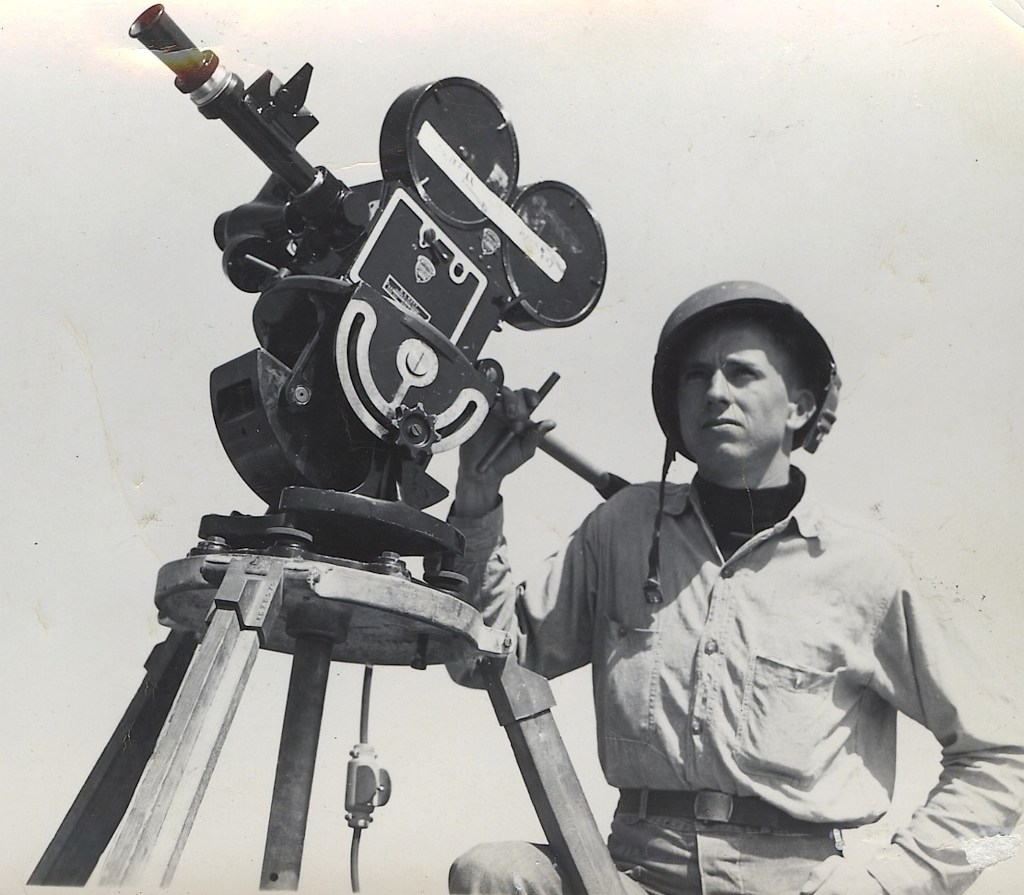
As you all may know, I am a veteran of the United States Navy. I served aboard the aircraft carrier USS Abraham Lincoln as a photographer and journalist. An aircraft carrier is a floating city. There is a post office, chapel, library, gas station, grocery and convenient store, coffee shop, gyms, even an airport (of course!), a police station and jail, and a newspaper office—which yours truly worked at. Now these places of business are all manned by enlisted sailors, and overseen by commissioned officers—let me say that again, commissioned officers! The metaphor is becoming apparent, no? Okay, well let’s continue. 

The head of the ship is the captain. His word is law, and his command is the natural forces directing the energies and activities aboard ship. All the wills of the crew and officers are directed by the captain’s will. From the flight-deck officer directing a helicopter landing to a lowly deck-swabbing petty officer like myself, our wills were that of the captain’s. True, the captain’s will is directed by higher forces still, but that only emphasizes the parallel and metaphor. What metaphor? Oh, yes. I haven’t quite stated it, have I? Well, here we go. 

The captain is the pope. The officers are the hierarchy. The enlisted are the laity. What happens, you think, if there were no captain, or, better yet, if the officers mutinied and the captain was killed? What would happen to all the activity aboard ship? What would the enlisted do? Follow the orders of mutineers? Go along to get along? I cannot answer for the moral compass of a boatload of sailors, but I can tell you what I would do. I would do what I am doing now: cry “Mutiny!” and patiently await my execution. 

All metaphors limp. I’d say mine hobbles in one important respect. The officers who mutinied would not be on the ship anymore. They would be deep-sixed by their apostasy. Were I to perfect the metaphor, I would have you imagine that all the officers on board were thrown in the brig by the faithful crew who wanted to uphold their oath. Without officers, the operations of the ship would come to a stand still, and the only thing to do would be to cast anchor and await rescue, all the while conducting life-preserving operations, such as cooking, cleaning, and writing newspaper articles.


What you wouldn’t do, if you were a good sailor, is pretend that you could direct flight operations, or pilot jets, or navigate the vessel to safer waters. These are activities proper to officers. Likewise, if you were a good Catholic, you wouldn’t get yourself consecrated, open seminaries, ordain priests, or offer sacraments. These are the proper activities of the hierarchical Church militant, or the commissioned officers. These operations are vital to the mission of the aircraft carrier as well as the Church, but they are not vital to the survival of either! It is not necessary for an enlisted man to pilot a jet, just as it isn’t required of a layman to pretend to be a priest. 

So, what exactly is required of us enlisted laymen? Though militaristic operations utilizing the weapons of the sacraments is altogether out of the question, I think God would have us bring aboard the aircraft carrier as many as may be floating about in the waters who are willing to be saved. The warship that is the Church has become a lifeboat as in the time of Noah, and no one needs a commission to throw a life-saver into the sea.             

Out of the Mouth of Babes

Children are the most mysterious creatures in existence. Walking, talking monuments of morality, children at once can teach us everything we could possibly need to know and yet not be able to tie their own shoes. They have within themselves that perfect balance of wisdom and humility which is so characteristic of the holy, which shakes the very foundations of the Earth with a simple question…

Is it any wonder, then, that our Lord tells us, “Amen I say to you, unless you be converted, and become as little children, you shall not enter into the kingdom of heaven. Whosoever therefore shall humble himself as this little child, he is the greater in the kingdom of heaven”? The humility of a child is essential to faith, to that disposition of the soul to trust in God alone as Father, and to wait with palms up to receive His blessing. 

But, if this is the image of the Christian soul faithful to Christ and His Church, what would the image be of one who did not have the faith of a child? The quickest and most reasonable image that comes to my mind is the image of a grownup, which is characterized by the very opposite qualities than that of a child. 

For starters, the grownup doesn’t ask “why”—ever. He knows why. He lectures and lectures until the child, or anyone else in earshot, falls asleep or dies from boredom. He does not have wisdom so much as knowledge. He knows the rubrics, the laws, the teachings, the feast days and abstinence days, and so much and many other things that bewilder the brain just pondering them. But he doesn’t have wisdom. That is the gift only given to the child of the Faith. 

Whereas the child waits upon his Father to receive, the grownup is impatient. He doesn’t wait for anything, but insists upon his own time-table and priorities. He’s a go-getter, and so he goes and gets himself ordained a priest and consecrated a bishop. He’s grownup, and the salvation of souls is his top priority—as if that weren’t the top priority of God when he wrote the Divine law in the stars. He’ll feed the sheepfold with the Eucharist. He’ll heal the sickly lamb with Penance. “God, just sit back in the folds of eternity. I got this,” he seems to say. “No need to rush the culmination of the world. There’s still some soul-saving to do here. Speaking of which, is my flight to Phoenix booked?”

Catholic Twitter and the Sedevacantist blogosphere has been buzzing with the recent episcopal consecration of Charles McGuire, which took place in Cincinnati, at the Saint Gertrude the Great mass center. This just followed Daniel Dolan’s unexpected passing (requiescat in pace). The principle consecrator—actually, the only consecrator—Rodrigo da Silva, was just recently consecrated himself by Dolan. All this consecrating got me thinking, though, and, when I start thinking, I usually start tweeting. I tweeted a few quotes from Church authorities on the matter of mission. 

“…Let all who, being prohibited or not sent, without having received authority from the Apostolic See, or from the Catholic bishop of the place, shall presume publically or privately to usurp the duty of preaching be marked by the bond of excommunication…” (Denzinger, 434). 

Needless to say, that tweet didn’t get much love. So I set to work on the woodworm itself which has been eating away at the Barque of Peter for several decades now. I am speaking, of course, of epikeia, which apparently like a magic word enchants anything it touches with divine powers. Well, I was having nothing of that hocus-pocus. I found some sources which stated that epikeia cannot be invoked in matters of divine law, because the Divine Lawgiver foresaw all contingencies and accordingly provided for them. And, since canonical mission is a matter of divine law, which no one disputes, epikeia cannot be invoked. 

Then someone posted a wonderfully clear excerpt on mission from Abbot Dom Guéranger, an imminent theologian of his day (1800s) which I quote in full:

“We, then, both priests and people, have a right to know whence our pastors have received their power. From whose hand have they received the keys? If their mission come from the apostolic see, let us honour and obey them, for they are sent to us by Jesus Christ, who has invested them, through Peter, with His own authority. If they claim our obedience without having been sent by the bishop of Rome, we must refuse to receive them, for they are not acknowledged by Christ as His ministers. The holy anointing may have conferred on the the sacred character of the episcopate: it matters not; they must be as aliens to us, for they have not been sent, they are not pastors.” 

Well, apparently, it wasn’t clear enough for the grownup Sedevacantists. Not one received the Abbot’s teaching (which is the teaching of the Catholic Church!) with a child-like faith and trust. What they did, those who actually engaged in the discussion, was try to turn the conversation to validity of Holy Orders and supplied jurisdiction, instead of simply accepting the Church’s teaching on the matter, and letting themselves be guided and governed by it. 

You see, God did not leave us abandoned. He gave us simple rules to follow and to trust, that we might not be led astray, even during the Apocalypse and reign of the Antichrist. One does not need to know anything about supplied jurisdiction, colored titles, conditions for consecration validity, sacramental theology, etc. These things are important in their way, but for the simple, obedient and humble child of the Faith, all that is required is to know and to ask that man in black with the white collar standing at your door, “Did Papa send you?”    

Catholic™

“I’m Catholic.” This simple sentence a hundred million people say every day. Those who worship Satan say it. Those who bash the one they believe to be the Vicar of Christ say it. Now there is a group of “Catholics” who also say it, but these are somewhat different than the obviously non-Catholic members of the Novus Ordo sect or the Recognize and Resist sect. Sedevacantist say it, too. 

What is a “sedevacantist”? Well, to answer that question as simply as I can, at the basic level a sedevacantist is one who believes the Holy See to be empty. But the term is more charged than that. Associations are tied up with what it means to be a sedevacantist. Thus, you have the Congregation of the Immaculate Queen (CMRI), who have their own bishop. You have folks in the Most Holy Trinity Seminary (MHT), and then there’s the Saint Gertrude the Great mass center (SGG). And who could forget the Saint Pope Pius V society (SPPV)? 

Now, what binds all these groups together under the name of sedevacantist is that each group believes that the Chair of Peter is vacant. This would seem to be a prerequisite to what it means to be a Catholic, but it could hardly be considered a sufficient condition. Let me explain. 

Francis the Heresiarch

If Francis is a heretic (and he is; so manifestly so that it actually physically hurts to look at him for more than a minute; the phrase “Offensive to pious eyes” comes to mind), then one who claims to be Catholic cannot submit to him, or have any communion with him. This Catholic truth is so obvious, and yet many “Catholics” don’t even grasp it. Thankfully, though, sedevacantists understand this much. 

But denying that a particular person in Rome is the pope is not what defines a Catholic. So what is the sufficient condition of being a Catholic? To be a member of Christ’s Body, of course, to be a member of the Catholic Church. To belong to something presupposes that I know what that thing is to which I belong. So the next logical question to ask is, what is the Catholic Church? Put another way, how do we know that this group or that is the Catholic Church? 

Happily, the Baltimore Catechism tells us how the Catholic Church is to be known. The four marks of One, Holy, Catholic, and Apostolic, tells us that this entity, if it has these marks, is the Catholic Church. A mark here means, “a given and known sign by which a thing can be distinguished from all others of its kind. Thus a trademark is used to distinguish the article bearing it from all imitations of the same article,” (A.518).  

So, where’s the trademark “Catholic” to be found on the sedevacantist clergy, laity, buildings, or books? I’ve never located it. Have you? I very much doubt it. Why? Because, as the Baltimore Catechism also teaches us children of the Faith, “The Church cannot have the four marks without the three attributes, because the three attributes necessarily come with the marks and without them the marks could not exist,” (A.520). The three attributes are, wait for it, 1. Authority; 2 Infallibility; and 3. Indefectibility. I’m going to let that sit on your mind and simmer for a few. 

These attributes are not merely suggestive of being Catholic, or, worse, a mere idealized form of Catholicism, which cannot be realized today because of the Apocalypse. The attributes are those by which the Catholic Church exists, and without which we do not know where the Catholic Church is. 

Now you cease to wonder why the sedevacantist groups say different things (no mark of unity); or how one group believes Francis has an election in hand, though he cannot exercise it, while another group says he cannot; or all the highly questionable episcopal consecrations, or the fact that these “bishops” do not act like apostolic delegates of God, insofar as they claim no authority. The sedevacantist groups all lack the three necessary and sufficient conditions to be Catholic: they all lack the three attributes of authority, infallibility, and indefectibility. 

So what’s the takeaway here, that there is no Catholic Church today, that She has disappeared? In a very real sense, this is true. This is the consequence of an extended interregnum. “I shall strike the shepherd, etc.” We are the “scattered flock” as one friend put it. We are not a sheepfold. To act like it, to be corralled into this group or that calling itself Catholic is not only doctrinally unsound, it is also spiritually dangerous! Without the attributes that safeguard us, we are not unlike little sheep who happily bleat our belonging to a sedevacantist fold, when all the while the shepherds of these could be wild wolves in miters.      

“But what about you, CatholicEclipsed! You’re a Home-Aloner! You have your group, too! Why can’t we?” Well, for starters, because this isn’t about groups, it is about desiring to be a Catholic, and belonging to the mystical body of Christ. And there is not a “Home-Alone” group. We who have chosen, through painful sacrifice and research and prayer, not to solicit sacraments from these sedevacantist groups, are individual and not a collective body at all. We are scattered sheep! I’m down here in the swamps of southern Illinois with my family, praying at home. There are those up near Chicago or in the westward landscapes of South Dakota. There are those who live in Arizona, New York, California, Canada, England, Germany, and any number of places. 

Just as I cannot say that the sedevacantist groups and their members are Catholic, so I cannot say that those who stay at home to pray are Catholic. I don’t know about you, but I don’t claim any authority or infallibility or indefectibility. I cling only to those teachings and disciplines which have come from such, namely from Pius XII and before, but that just proves the point! I do so imperfectly and am liable to err. Thus there are even pray-at-homers who don’t believe Pius XII was pope or that there aren’t hundred-year-old bishops somewhere in hiding, because carrying on the “visibility” of the Church is a dogmatic must, you know! 

In brief, pray-at-homers are just as multifarious in their opinions and how they live out what they think is Catholic as any other sedevacantist group. Though not a collective body or group themselves, each household is a kind of off-brand Catholic, I won’t say counterfeit, because that implies deceit, but an honest albeit imperfect attempt at being the real McCoy. So, the next time you say, “I’m Catholic,” mean it like the sky is falling, but don’t believe it too much; because your brand of Catholic might just be a knock-off.