In this new episode of the Chromocast, I discuss the real threat lurking behind replacing Columbus Day with the Indigenous Peoples of America. It is about light and darkness, as it always has been. Tune in. You won’t regret it.
Every episode of the Chromocast I will take a moment to answer your questions or reply to your comments about the previous week’s podcast. If you have any, leave them in this week’s comment section.
Subscribe to the Chromocast, the Podcast of CatholicEclipsed!
As I have shown through a silly little production of mine below, the Recognize and Resist position is inherently non-Catholic. Check it out if you like dogmatically dead-serious coupled with cheekily humorous.
The Recognize and Resist theology is simple: if you don’t like what the current pope is saying, resist him. If you do like what he is saying, then give him your lay-approbation. The position is so very strikingly not Catholic, that I could probably end my days in writing on nothing else, making videos and talking into a microphone about nothing else but how absurd Recognize and Resist is.
Oftentimes I find myself producing content on CatholicEclipsed which focuses too much on Sedevacantists, in part because it is so reasonable to be a Sedevacantist, and the arguments against it are oftentimes difficult to understand–but even more difficult to refute, which is why they haven’t been at the time of this writing.
But I perhaps act imprudently, for there is a great number of very good people, very good would-be Catholics, who are taken in by the traditionalist Recognize and Resist position. The reasons for which have little to do with theology, but a lot to do with religious aesthetics, social value, networking, art and culture, and the veneer of everything Catholic. People are lulled into a doctrinal stupor and spiritual slumber by all those glittery vestments and gilded vessels, sacred polyphony, and beautified everything, that the thought just doesn’t occur that they are praying in communion with a heretic, which makes them heretics, or else complicit in the sin of communicatioin sacris.
I know, because I was one such Recognize and Resister. I attended a church in St. Louis which was venerable and gorgeous and magnificent. I listened to Michael Matt’s “Remnant Underground,” back when he actual believed that he was in the catacombs–remember the skulls and torches? I have been there and done that, which is why I speak with some authority on the position. I held the Recognize and Resist position for about a year or so, but then I started to learn what the Church actually teaches about the Roman Pontiff, and then and there I realized that I was resisting Catholicism.
The Copernican Revolution in the Church
The Recognize and Resist position is a trap which at once makes an individual either a heretic or a schismatic, but in either case not a Catholic. The R&R position says that we must recognize the man claiming to be pope to be pope, because the Church hasn’t deposed him–which itself is a heresy called conciliarism, but that we must also resist him when he teaches error. Now, the curious thing about R&R is that it is the exact reversal of the truth.
The papacy is the beginning point, the principle or rule of faith, whereas Recognize and Resist makes one’s own understanding and conscience the rule of faith. This is nothing else than the Copernican Revolution in the Catholic Church. Whereas in times past (say, prior to 1958 with the death of Pius XII), it was understood that the Ecclesia Docens was the active principle in the transmission of the faith. After the takeover of the Church’s hierarchy, however, that all changed. The laity took on a new role because the hierarchy, for all intents and purposes, was not Catholic anymore.
This change should have signaled to the players involved that the Church was in eclipse, and it did to a certain degree. A general falling away occurred during this “springtime” of the Church post-Second Vatican Council, a mass immigration away from the Church and into the world. The only problem was that those who thought they stayed within the Church were actually staying within the false church of Satan and the Antichrist.
Naturally, the people who did remain in what they believed to be the Church, had to come up with solutions to the inherent contradictions they were facing. Enter stage left the Traditionalists. These characters, from the pseudo-Catholic Archbishop Lefebvre to the pseudo-catholic lay-theologian Michael Davies, to the latter generation of Michael Matt and Co., each sought to redefine and rethink the papacy, not from a doctrinal perspective, necessarily, but from their actions and insinuations which would eventually undermine the very meaning of the papacy.
The end result of this gradual process was that the Catholic conscience was no longer formed by the Church but was formed by the individual in the pew. He had it within himself to determine what was and was not Catholic, because the ones who were supposed to do that for him, no longer existed. That is the plain fact and brief history of the Recognize and Resist phenomenon. The Catholic Church was unknown and unknowable, just as the phenomenal world of Kant. Man, like the sun, revolved around the earth or the Church. Now, the earth revolved around the sun. The Church revolved and was defined by the layman in the pew with the high school diploma or journalism degree.
The Rule of Faith as the Antithesis of the Copernican Revolution
To get back to sanity, to the ways of the world and how things actually work, we must first recognize that the man claiming to be pope is not. To fail in this first step will lead to the invariable loss of faith, because recognizing a man who is not the pope, who is not Catholic, but who must be our rule of faith, destroys the very principle or rule of our faith, and so our faith as well:
“If faith is necessary for all men at all times and in all places, and if a true saving faith demands a clear knowledge of what we have to believe, it is clear that an infallible teaching Church is an absolute necessity. Such a Church alone can speak to men of all classes and at all times; it alone can, by reason of its perpetuity and ageless character, meet every new difficulty by a declaration of the sound form of doctrine which is to be held. If the teaching of Christ and His Apostles is distorted, none but the Church can say ‘This is its true meaning, and not that; I know that it is as I say because the Spirit which assists me is One with the Spirit which rested on Him and on them’; the Church alone can say, ‘Christ truly rose from the tomb, and I know it, because I was there, and saw the stone rolled back’. The Church alone can tell us how we are to interpret the words ‘This is My Body’, for she alone can say, ‘He Who spoke those words speaks through me, He promised to be with me all days, He pledged Himself to safeguard me from error at all times,'” (Catholic Encyclopedia, “Rule of Faith”).
The Recognize and Resist position rejects the whole idea of the Church as a Rule of Faith, insofar as it rejects the notion of a proximate rule of faith, which is absolutely necessary as well:
“The word rule (Latin regula, Gr. kanon) means a standard by which something can be tested, and the rule of faith means something extrinsic to our faith, and serving as its norm or measure. Since faith is Divine and infallible, the rule of faith must be also Divine and infallible; and since faith is supernatural assent to Divine truths upon Divine authority, the ultimate or remote rule of faith must be the truthfulness of God in revealing Himself. But since Divine revelation is contained in the written books and unwritten traditions (Vatican Council, I, ii), the Bible and Divine tradition must be the rule of our faith; since, however, these are only silent witnesses and cannot interpret themselves, they are commonly termed “proximate but inanimate rules of faith”. Unless, then, the Bible and tradition are to be profitless, we must look for some proximate rule which shall be animate or living,” (Ibid).
Recognize and Resist adherents do not call themselves R&R but Traditionalists. They give their position away immediately, for as the the above teaches us, tradition is a silent or inanimate rule of faith and cannot be in itself the means by which our faith is formed. For that, we must rely on a living voice, a preaching and teaching voice. The traditionalists simply do not have this. What they have are teachers, yes, but such who claim that their spiritual superiors are at once heretics and yet hold offices in the Church–like Lefebvre, who denounced time and again the hierarchy of the Novus Ordo and yet recognized them as his superiors.
Does Home Alone Fall into the Same Fallacy as R&R?
Since, then, the faith requires a proximate and animate rule of faith by which it is to be regulated, how exactly does the Home Alone position not succumb to the same error as traditionalists in denying this absolute necessity? That is a very good question and counter-argument to the Home Alone position. The answer lies, however, in a distinction that I would like to borrow from our good friends, the adherents of the Cassiciacum thesis, or the Material-Formal Thesis–which I refute here.
The proximate and animate rule of faith is indeed necessary, but the question is in what sense is it necessary. The answer is that it is necessary according to the formal principle, that is, to the Magisterial Teaching Church, the hierarchy as such. In order for the hierarchy to be what it actually is, it must have a proximate and living rule of faith. The Teaching Church becomes for the Learning Church the efficient cause of the faith in the laity and this happens through the formal cause of the hierarchy, and principally through the Roman Pontiff:
“The term Church, in this connection, can only denote the teaching Church, as is clear from the passages already quoted from the New Testament and the Fathers. But the teaching Church may be regarded either as the whole body of the episcopate, whether scattered throughout the world or collected in an ecumenical council, or it may be synonymous with the successor of St. Peter, the Vicar of Christ. Now the teaching Church is the Apostolic body continuing to the end of time (Matthew 28:19-20); but only one of the bishops, viz., the Bishop of Rome, is the successor of St. Peter; he alone can be regarded as the living Apostle and Vicar of Christ, and it is only by union with him that the rest of the episcopate can be said to possess the Apostolic character (Vatican Council, Sess. IV, Prooemium). Hence, unless they be united with the Vicar of Christ, it is futile to appeal to the episcopate in general as the rule of faith,” (Ibid).
The hierarchy is formed by the Roman Pontiff, which also forms the faith of the laity as a rule of faith. Now the Home Alone position, like the Recognize and Resist position, does not believe that the hierarchy as such is a proximate and living rule of faith. The difference is, the R&R believe that Tradition is the means by which the faith of the individual is formed, whereas the Home Alone advocate must abandoned this idea altogether, because Tradition, being inanimate, cannot form the faith of the individual, because it is silent. Ultimately, for the R&R, it is not Tradition which is the rule of faith, but the individual’s own conscience, intellectual processing, and preference.
If Home Alone is to escape from this Copernican Revolution in the Church, whereby the rule of faith becomes something within the individual, instead of from the Church Herself, there must be an acknowledgment of the Home Alone position’s limitation. That limitation is that there is no longer a formal and efficient cause of the rule of faith left in the world. But hope is not lost, for there remains a material cause. Let me explain.
The material cause of a thing is that from which it comes to be what it is. The tired analogy of a potter’s clay is ready at hand, but let’s give a more applicable example. The Church is a Body, which exists as an amalgamation of believers in Christ, partaking of the same sacraments, and governed by their lawful pastors under one head the Roman Pontiff. As has been said, the Teaching Church is the formal cause of the rule of faith by which the faith of the laity is formed. Now the rule of faith, and the faith as such, is a discipline of belief and action, to which obedience is owed so as to be effective. Just so, is there the same relationship in a vessel, which analogy I bring out fully here.
The idea there was that the crew represent the laity. They are willing to serve, but they themselves are not commissioned officers (the hierarchy). They cannot issue orders or assign duties to carry out the mission of the vessel. Likewise, neither can the laity today. The commands of the officers are the formal and efficient causes of the crew’s obedience and discipline. But, insofar as the crew have shown up and are willing to subject themselves to an actually commissioned officer, it can be said that they have the material cause of obedience and discipline but not the formal or efficient. As a point in fact, the willing seaman also has the final cause within him which moves him to be on deck to await orders, whenever that may happen.
Conversely, the Recognize and Resist crowd have neither the formal and efficient causes of discipline and obedience (which is the rule of faith), nor do they have the material cause of obedience, because, as their name suggests, they disobey or resist the man they claim to be their captain. Were they on a real wartime vessel–which is what the Ark of the Church is–they would be given 33 lashings, and jettisoned overboard for the mutineers they are.
All that Home Alone Catholics–the only remaining real Catholics–must do is be willing to submit to the hierarchy when once it shows itself, or is reconstituted by a Divine act of God. Our standing orders are to be found in approved catechisms of our region, which we have no doubts as to their authenticity. We may not have officers to direct our actions or to explain our situation and guide us on the mission, but we have general directives by which we may know, in a general way, what we are to believe and do to arrive at a safe harbor.
I am very excited to publish my first podcast of what I hope will be a media mainstay in your living room, car, or workplace. The Chromocast is so structured as to promote piety and thoughtful reflection on the crisis in the Church, as well as (hopefully) entertain you. As an auditory addition to the CE Log: Opinion on the Apocalypse, I hope you will enjoy the new media. To ensure that you do not miss another episode, please consider subscribing to the CE Log below.
This week we discuss “Martyrs of the Apocalypse,” in particular, those “witnesses” to the Gospel of Christ who are true to the true faith under the reign and persecution of the Antichrist. Many there are who have fallen away from the Faith, or who, keeping the faith at least materially, choose to attend sectarian chapels for sacraments, thereby breaking the Divine law which constitutes the Church as a Divine society, ordered according the hierarchical structure designed by God.
Home Alone Catholics are the only ones who hold both to the truths of the Faith as well as the laws of God in their entirety. Thus, it is not a stretch of the imagination to see that Home Alone Catholics are the Martyrs of the Apocalypse, since they alone are the ones who suffer the most under the persecution of the Antichrist.
I discuss this and more in this podcast. Come and tune in to the Chromocast, and let your hearts be enkindled with the love of God!
Every episode of the Chromocast I will take a moment to answer your questions or reply to your comments about the previous week’s podcast. If you have any, leave them in this week’s comment section.
Subscribe to the Chromocast, the Podcast of CatholicEclipsed!
It is estimated that at least 100,000 dolphins and whales are tragically caught in fishing nets in a given year. I would estimate that BetrayedCatholics receives at least 100,000 views every year, which means that there are 100,000 chances of being trapped in a net of ignorance. The inhumanity is unreal.
In her BetrayedCatholics article, “Traditionalists were incapable of receiving valid consecration,” Teresa Benns has again demonstrated to the world that she simply does not comprehend the difference between sacramental and jurisdictional power of the holy orders. Benns says:
“Pope Pius XII did not nullify anyone’s Orders, as Traditionalists sneeringly allege against those questioning the validity of their pseudo-clergy: he withdrew the power of those attempting to confer them without the papal mandate during an interregnum, so that whatever they did had no effect. And this is assuming they ever validly received any Orders in the first place which only a true pope could determine! The ACT of episcopal consecration (or ordination) is not nullified — the ones attempting to convey Orders and those attempting to receive them are declared incapable of ACTING and receiving. This is a very important distinction. You can scarcely nullify something that could never take place to begin with,” (Original emphasis).
BetrayedCatholics, Not Pius XII
Let us first get one thing straight, Pope Pius XII is dead, so not only did he not nullify any sacraments (which is a thing impossible), neither did Pius XII declare anyone incapable of acting and receiving orders. That was and is Teresa Benns, who has been saying the same thing–against fraternal correction–for over a decade if not longer.
If anything, it is the law of Pius XII which limits the powers of individuals in the Church from acting or receiving, not the man himself. THIS is a very important distinction, because it really makes plain and obvious that the only person adjudicating anything here is Teresa Benns, who has gotten it into her head that she is some kind of canon lawyer. It is a really sad thing.
Now, let us return to the quote above. Benns claims that Pius XII (but in reality his law) withdrew the power of those attempting to confer holy orders, but that this is not a nullification of the orders as such. She says, “The act of episcopal consecration (or ordination) is not nullified…” I may forgive the readers of BetrayedCatholics for being confused on this whole affair of whether the Sedevacantist holy orders are valid or not, when they have to wade through such doctrinally-devoid drivel in order to make heads or tails of the question. If, according to Benns, Pius XII withdrew the power to confer holy orders, then he nullified the holy orders the conferrer had. What power was being withdrawn but for the power of the conferrer!?
The so-called important distinction that Benns is trying to make is a complete figment of her imagination, and not a product of any activity of ratiocination, or, what is more likely, the distinction Benns is trying to make is a product of her will instead of her intellect. She wants the Sedevacantist clergy to be invalid. She needs the Sedevacantist clergy to be invalid. Why? Because if they are not, she will have been wrong for over a decade. That’s why. It really is a sad thing.
So, what does the Church teach concerning the conferring of holy orders by heretics, schismatics, and the excommunicated? As usual, let us turn to the Angelic Doctor, who is not animated by any personal interest in being right, but, guided by truth and charity, and is a true master and teacher of Catholic doctrine. The Theologian teaches in the article, “Whether heretics, schismatics, and excommunicated persons can consecrate?” that, yes, even those outside the Church can confer the sacraments:
“Augustine says (Contra Parmen. ii): “Just as Baptism remains in them,” i.e. in heretics, schismatics, and those who are excommunicate, “so do their orders remain intact.” Now, by the power of his ordination, a priest can consecrate the Eucharist. Therefore, it seems that heretics, schismatics, and those who are excommunicate, can consecrate the Eucharist, since their orders remain entire.
“I answer that, Some have contended that heretics, schismatics, and the excommunicate, who are outside the pale of the Church, cannot perform this sacrament [like Teresa Benns of BetrayedCatholics]. But herein they are deceived, because, as Augustine says (Contra Parmen. ii), “it is one thing to lack something utterly, and another to have it improperly”; and in like fashion, “it is one thing not to bestow, and quite another to bestow, but not rightly.”
“Accordingly, such as, being within the Church, received the power of consecrating the Eucharist through being ordained to the priesthood, have such power rightly indeed; but they use it improperly if afterwards they be separated from the Church by heresy, schism, or excommunication. But such as are ordained while separated from the Church, have neither the power rightly, nor do they use it rightly.
“But that in both cases they have the power, is clear from what Augustine says (Contra Parmen. ii), that when they return to the unity of the Church, they are not re-ordained, but are received in their orders. And since the consecration of the Eucharist is an act which follows the power of order, such persons as are separated from the Church by heresy, schism, or excommunication, can indeed consecrate the Eucharist, which on being consecrated by them contains Christ’s true body and blood; but they act wrongly, and sin by doing so; and in consequence they do not receive the fruit of the sacrifice, which is a spiritual sacrifice,” (Summa Theologica, III.82.7).
The distinction between sacramental power conferred in holy orders and jurisdictional power received in holy orders but through the Church, has been hashed out here before. The teaching of the Church on this matter is so well established and so beyond dispute, that to doubt it seems at the very least to smack of heresy. I am not inclined to believe Teresa Benns is a formal heretic, but I do believe she is so woefully inept at making proper distinctions, that those who feel the need to read her, should be made aware of how really unreliable she is.
And that is why I speak out against Benns. It is not because she is a bad woman. On the contrary, she is very nice, and a good Catholic. But she is not a good teacher, because she does not know what she does not know, and that really is a really sad thing.
The Ignorance of Teresa Benns
It is taken as almost de fide among Home Alone Catholics that Teresa Benns knows what she is talking about. This is such a dangerous thing, because it sets up the cult with the cult leader. Now, as one friend of mind has told me, it is common that people flock to leaders, because it is a matter of human nature. And I agree with him. No man is an island, and we all, even the most individual and independent among us require authorities and teachers and leaders. And I am not convinced that these can be sought for in the past. Rather, I think it is human nature to reach out to the living for a living voice to be guided by.
Since the take over of the hierarchy and authoritative offices in the Church by infidels, we Catholics must find substitutes of the Teaching Church which will do at least the job of instructing the ignorant. But the ignorant cannot instruct the ignorant. I have tried, as well as others, to instruct Teresa Benns’s ignorance, but her sense of self-importance is so inflated, that nothing gets through to her. The ignorance of Teresa Benns is not in her intellect. She is very smart, and probably borderline genius in memory capacity. She recalls very well, and is very keen intellectually, especially if one considers that she is well past her prime.
But there are two powers of the soul, the intellect and the will, which move and are moved. The intellect can move the will, but the will can also move the intellect, and indeed blind it by desiring that which it should not. I believe this is what is happening with Benns in this whole business about validity of holy orders. She desires that which she should not, and so her intellect is blinded by her desire.
If we are ever going to see an end to the outright error and possible heresy of BetrayedCatholics on the score of holy orders being invalidly conferred, Teresa Benns must first right her inordinate desire. She must put truth and authentic Catholic doctrine ahead of her own pet ideas she so desperately desires to be true. Until that happens, I am afraid she will forever be a blot on the Home Alone Catholic community, that is, until such a time that she is no longer looked upon as a leader of Home Alone Catholics. Then she may quietly recite her silly little arguments in the corner of the web where they are safely ignored and not heard.
Answering an Obvious Objection
“You’re just bad-mouthing Benns because YOU want to be that leader of Home Alone Catholics!” I can hear BetrayedCatholics loyalists shouting at their computer monitors. How to answer such an objection? Well, first, I would answer the objection by saying it is utterly true. That’s right. I do want to be a leader of the Home Alone Catholics because I believe I can offer instruction for the ignorant in lieu of the Catholic hierarchy. Of course, I only claim the ability and aptitude to be a kind of catechist, and make no pretension to anything more.
But the objection is incorrect if it means that that was my motive for correcting Benns. I desire to be helpful to my fellow Home Alone Catholics quite independent of Benns, and, as you may recall, at one time I was contented and happy to serve right next to her. We collaborated on a number of things together, and we were happy of the mutual support. But all that changed when she could not be instructed in her ignorance, and built a wall between us.
For those who will allow themselves to be helped along and guided by straightforward instruction on the Catholic Faith, and encouragement on the road to Heaven, I am here. For those who would rather give their attention and follow the ramblings of one Teresa Benns, on account of some affinity to her, then I leave you alone. I have noticed a considerable drop-off in comments and interaction and traffic since I parted ways with BetrayedCatholics. This was to be expected, but that doesn’t make it right.
For those who love the truth in its entirety, for those who love the faith undimmed by the spot of pride, for those who yearn for fellowship, if only online, CatholicEclipsed is here. I have hopefully proven myself to be a trusted guide and friend you can learn from and talk with, and even fraternally correct when proven wrong, unlike Benns, who is not trustworthy as a guide, blacklists her friends, and couldn’t be corrected to free all the dolphins in the sea from tuna nets.
Star Wars Andor, a new television series, just released episode 4, which, I must say, I found to be incredibly boring. I even warned my children about how boring it would be, and advised that if they watch it, then should have some Legos handy to offset their boredom.
But this got me thinking; why should a show like Star Wars be so boring? It was not intuitive, until I starting to work out the cause. What follows is my attempt to do that, though in a circuitous way, hinting at things rather than demonstrating them.
Propaganda as a Weapon
When I was a student of military journalism at the Defense Information School, I learned that the agenda and image of the branch of service for which I served was of paramount importance. The truth was not. The ethics of military journalism are far different from the ethics of civil journalism, and well, they should be. It was our job to inform the world of catastrophic causalities or deployment operations, the divulgement of which at the wrong time and with too much truth could jeopardize the mission.
My mission as a Navy journalist was simply to be a propagandist and report the favorable image of the Navy, to promote morale, and release only as much information as the public needed to know, or the crew for that matter. When doing journalism, the agenda, the mission, was first, never truth.
You see, propaganda is a weapon, and as a military journalist, I know first-hand how strategic it can be. There is such a thing as “display of dominance of power,” which is why you oftentimes hear of a bunch of Navy ships in the Pacific somewhere doing seemingly nothing more than launching aircraft and turning in circles at high speed. To the enemy of America, the Navy is asserting its maritime dominance, but my point is that our enemy wouldn’t even know about such dominance were it not for yourself truly and shipmates like myself photographing and writing stories about how awesome the Navy is.
You are probably wondering what any of this has to do with Star Wars Andor, the new American television series streaming on Disney+. Well, after watching the first few episodes, and the most recent fourth episode in particular, I am convinced that the writers of the show are military propagandists and not cinematic artists.
Andor as Political, Commercial, and Religious Propaganda
The virtue of art, as opposed to military journalism, which is propaganda, is beauty and truth. Insofar as art represents life and does so beautifully (an essential), it is art. If art only aims at truth, it is little more than journalism. If it only aims at beauty, or that which pleases when seen (Thomistic definition), it may be art, but it is very superficial and low art.
Propaganda, on the other hand, neither aims to be truthful or beautiful, but merely to persuade. What is propaganda? The definition in the Encyclopedia Britannica, as found on the Wikipedia page, is as follows:
“Propaganda is communication that is primarily used to influence or persuade an audience to further an agenda, which may not be objective and may be selectively presenting facts to encourage a particular synthesis or perception, or using loaded language to produce an emotional rather than a rational response to the information that is being presented.”
Andor is heavy on the aim to persuade people to a particular agenda, which is that corporations are evil and political power is corrupt, or corrupts. I am not going to bother you with mentioning names in the show, in part because I can never remember myself what the characters are called, which is perhaps a consequence of my bad memory or my lack of interest in the characters–which is itself a consequence of the show being propaganda and not art.
False Dichotomy
I wanted to talk briefly about Andor as propaganda in order to get us thinking about why it is propaganda and not art, something that seemingly almost everything made today is after. Episode 4 of the show slowly develops a plot of characters after either domination or revolution. There is no third way, that of all seeking the common good of each and all, which is Christian solidarity.
Andor presents a world that is super-charged with either one of two characters, that of the rebel or that of the overlord. Either you are revolting against an order of domination or else you are suppressing an antagonist to that dominating order. This is a false dichotomy, and so a falsity of reality. The world is not separated by those who dominate and those who are dominated. Well, perhaps it is now, but my point is that it need not always be because it wasn’t in the past. A typical counter-example could be Saint King Louis IX, who helped to rebuild France, which was (fittingly) being plummeted into darkness by the rebellious noble class.
The false dichotomy dynamic is mostly seen in the relationship between the Empire and the little brigand band of rebels who, in this episode anyway, have adopted the identity of a people very much fashioned after the Scotts of the Highlands–who, interestingly enough, opposed Catholic conversion on the whole, preferring Calvinism.
So, you have these oppressed people the leader of which is painfully Irish in appearance, who are ready to execute an insurrection against the Empire stationed there. The show harps on the idyllic lands visually, and harps (pun intended, we are Irish for the moment!) on the sob story of how the indigenous tribes or clans were moved on by the Empire to make way for an outpost and staging area for the Empire. And we are made to feel that this is bad somehow, but if pressed to articulate in theoretical language why, I am sure no one could possibly say.
The show attempts to persuade the viewer of the opinion that the Empire is bad for being orderly and structured and the band of rebels is good for, well, rebelling against that order. Now, one knows why exactly it is bad to be big and strong and ordered, and no one really knows why it is good to be a part of the rebellion.
The costuming also charmingly underscores this mindless mind-shaping show. The Empire characters are always seen, and the Military Corporation, too, as neatly groomed, with ironed uniforms, and professional comportment, what in the Navy we would have called “squared away,” which was always complimentary.
Now, compare that to what the Rebels look like, in particular the main character, Andor, and you see what I mean. They are never really groomed, their clothes look like something out of a hipster catalogue or else something a bum would wear, and they slouch or lack good posture. They are lazy and lack discipline, unless we are talking about what seems to be a boss character of the Rebels. Then you have a character who shifts from a traveling salesman-like character to a flamboyant art dealer in the twinkling of an eye.
What the show cares little if anything about is developing interesting characters and moving the plot along. What the show does very well is develop this narrative that order, power, discipline are vices, and decentralization, weakness, and loafing are virtues. It is clear that the show is aiming neither at truth nor beauty but something else, an undercurrent and agenda which is, in the finally analysis a detriment to the American mind and culture.
Hence, propaganda as a weapon. Andor is a piece of propaganda which was made presumably to undermine civilization as such. Too far? Consider that before the issue was between the Republic and the Monarchy. The socialists have all but killed or hollowed out monarchy today, and so what is left is democratic republicanism, which the show Star Wars champions. The Empire is always evil, the Republic is always good. But the problem remains to change an Empire into a Republic.
Lest the reader think these are just imaginary musing on a television show with no practical application, I will remind him or her that our last sitting president who was attempting to make America great again was defrauded his re-election, and when the rebels came, they were not party to the republican president but to the democratic overthrow of that president through a farce of an election in which there was more fraud than could be adequately documented or presented. Anyone who doubts that needs to consult the history books.
The same rebels of Andor, and consequently, the same group of people the show is targeting to influence, were the ones with the fire bombs in the streets igniting cars when Donald Trump was elected president the first time, and who crowded the streets and did violence against Trump supporters on January 6, 2021.
The hero of Andor is quite literally the enemy of America. Andor was uprooted from his homeland, in which he had to fight the Empire and Corporations at a young age. This is the same type and character in the narrative currently influencing contemporary American culture, the African American, and South and Central American, or the non-White American, really.
(I should probably have mentioned that the uniforms of the Empire in this show are interestingly white, except for the individual Empire dissenter helping the pretender Irish Highlanders who have a shocking resemblance to the irredentism of the IRA, who is not white. He is black, and his uniform is black, too.)
Anyway, the show depicts the hero Andor as a rebel fighter really for his people. He is the rebel without a cause, even though the show talks a lot about “the cause.” We are not really sure what that is, if it isn’t to displace all order in the galaxy with a bunch of loafers in sheepskin and blasters, which seems to be the same agenda of the hidden Globalist Elite pulling the strings on these rebels in the American streets.
Wrap-up
I write this post in anticipation of Columbus Day, which is October 10. I plan to do a Chromocast for it, which should be very interesting. Let me just conclude by saying that we need to be on our guard against propagandist media. The forces of darkness have been trying to upset the order in the galaxy for a while now, and have been very successful in doing so, because God wills it. Make no mistake, Satan is at the back of all this, and the Antichrist in the Vatican (in other words, Francis) is doing his part in it all.
The move is to make Western civilization feel remorse for its past, just as the Second Vatican Council wanted to make the Catholic Church feel remorse for its past. This is because Western civilization is the Catholic Church. We see, then, that ultimately the political and commercial propaganda of Andor is at its roots religious propaganda.
Just as the superstitious pagans of England worshiped at Stonehenge, which was itself an astrological and religious site, so the show Andor has their raid and insurrection happening at the precise time of an astronomically significant event–which (we hope) the writers will get to in episode 5–at an astrological and religious site. The people from all over the land will be there to witness the phenomenon, and will do so as they gather at some kind of monolithic structure reminiscent of Stonehenge. Coincidence, or propaganda. You decide.
Shameless Advertising
If you enjoy reading the CE Log, perhaps you could tell a friend about it. Perhaps, if you really enjoy reading it, you could subscribe to it below. All you need do is enter your email and, BAM! you have the newest content wired directly to your inbox. Just think about it.
Laying impious hands on the quasi-sacred text of a literary genius by proffering a senseless and sacrilegious translation from English to English was apparently deemed necessary by the flightless dodo bird over at the Society of G.K. Chesterton. I am speaking, of course, of Dale Ahlquist, who is the president of that nefarious organization supposing itself to be anything like Chestertonian intellectual tradition—the simple proof that it is not is that Chesterton was Catholic whereas Ahlquist is not.
Anyway, the story was broke by another impious and non-Catholic organization, Word on Fire, which interviewed Ahlquist about his new brainchild (more on this idea in a bit), the book Orthodoxy: An American Translation. Forgive me if I seem to rant for the next few hundred words, but first of all, at even a basic level, is not any American offended by such a title? Since when did standard English of the educated class of England become a foreign language to Americans? What was the motive behind such a literary enterprise to translate English into English? When did the oftentimes simple sentences, proverbial and prosaic prose of Chesterton become something like gigantic Egyptian hieroglyphs needing a Rosetta Stone to decipher?
Well, apparently Ahlquist & Co. thought that Chesterton is too difficult to read for today’s readers. I would say that the thought never occurred to Ahlquist just to increase literacy instead of decreasing words, but that did occur to him when he set up a Chesterton Academy for High Schoolers. Ahlquist admits, though, that his attempts to teach Chesterton have proven difficult:
“What helped convince us was that we’ve been teaching Orthodoxy to our freshmen and sophomores at Chesterton Academy, a classical high school in Minnesota, and I had to admit, they were having real problems reading the text,” (Source).
I will let the irony of a secondary school Academy dedicated to the thought of a single man for which it is named being unable to teach its students how to read the man sink in. And it is a matter of teaching, is it not? I mean, surely young men and women were reading and enjoying Chesterton in his time, no? Or are we to believe that the journalist who had world-reknown, who toured even “illiterate” America, giving lectures to stadia packed full of hapless Yankees, was passed over by this ignorant race when it came time to read one of his seminal early works, namely, Orthodoxy?
So, granting that Americans were able to read Chesterton then, but are not able to now, what changed? Ahlquist unwittingly alludes to the cause:
“Chesterton was a giant of English literature in the early twentieth century who went into a strange eclipse after his death, but now is experiencing a deserved revival. Most importantly, he was in every way a bulwark against what we call modernism, which includes relativism, materialism, progressivism, and deconstruction.”
Is it strange that Chesterton, who indeed was a bulwark against modernism should be eclipsed? Of course it isn’t, if we consider that the whole world was deprived of the light of the Church of Christ, which itself was eclipsed! The same dark forces, the agents of darkness as they have been called on this website, have worked to eclipse Chesterton just as they have worked to eclipse everything Catholic. The eclipse of one of the greatest literary minds of the twentieth century began with his death:
“Shortly after Chesterton’s death in 1936, Pope Pius XI sent a telegram, which was read to the vast crowd gathered for Chesterton’s requiem Mass at Westminster Cathedral. In the telegram, the Pope described Chesterton as a “gifted Defender of the Catholic Faith.” Ironically the secular press in England refused to publish the Pope’s telegram on the grounds that “the Pope had bestowed on a British subject a title held by the King.” That the title of Fidei Defensor was originally bestowed upon the King by the Pope was either overlooked or forgotten. It was, in any event, singularly apt that Chesterton should be the first Englishman honored by the Pope with the title of Defender of the Faith since Henry VIII had dishonored the title four hundred years earlier,” (Source).
Chesterton was more than a mere journalist. He was a prophet, and the people knew it. It is only that the press knew it, too, and they fought against his influence, which was Catholic to its core.
Now, how then is Chesterton being censored today, you may ask? Do we not have freedom of the press and freedom of speech? Ahlquist himself has planted so many seeds of Chestertonian societies across this land that one would be silly to say the man is being censored in anyway. And yet, I do say it. I say Ahlquist is censoring Chesterton! Bizarre claim? Let me explain.
It was the modus operandi of the Freemasonic infiltration and takeover of the Catholic Church’s infrastructure to be embedded in the Body of Christ as like a virus, and act the part of an amicable body until the time was ripe to take over the host organism, which happened at the Second Vatican Council. The Catholic Faith was undermined in every possible way, from its liturgy and worship in the mass and the rosary being renovated—even worship spaces, with sacred art and music being replaced by their counterfeits—to its law and catechisms. True, the changes were progressive and subtle, and as a rule always easy and not intimidating, unless your particular parish was set for demolition for no apparent reason. Then it was admittedly violent. But the enemy of the Church and the human race is nothing if not wily. The Church was soon taken over almost without a peep from people in the pews. No significant counterreformation, no large scale revolt against the imposition of a new religion. And why? Why no revolt against the Great Apostasy? The answer to that question lies in the tactics of the enemy still underway, epitomized by Ahlquist in rewriting Chesterton, as his Protestant and Freemasonic predecessors did a generation earlier in rewriting and dumbing down our religion, our eduction, and our culture.
To get an idea of how this rewriting takes place, Ahlquist provides us with a sample:
“Okay, here’s a passage from the original:
“Poets do not go mad; but chess-players do. Mathematicians go mad, and cashiers; but creative artists very seldom. I am not, as will be seen, in any sense attacking logic: I only say that this danger does lie in logic, not in imagination. Artistic paternity is as wholesome as physical paternity.
“Now, here’s the American translation:
“Poets do not go mad; but chess-players do. Mathematicians go mad, and cashiers; but creative artists very seldom. I am not, as will be seen, in any sense attacking logic: I only say that this danger does lie in logic, not in imagination. Giving birth to a work of art is as wholesome as giving birth to a baby.”
Does it not strike you that this passage in Chesterton is terribly easy to read? Very simple syntax, word choice and subject matter. Ahlquist thought so, too, since the only thing he rewrote was the very Catholic idea in the last sentence, and changed it to the the very modernist idea, if we maintain as an assumption that Ahlquist was trying to interpret Chesterton’s thought and translate it in contemporary American English. Only, that is not what Ahlquist does. Rather he essentially changed the meaning of Chesterton. Paternity has nothing to do with giving birth to a baby! What on Earth would make Ahlquist think that paternity had to do with giving birth? Paternity is the state of fatherhood, which is the art of crafting and molding the minds and wills of a child into virtue and holiness. This is a very fitting analogy with art, for that is exactly what the artist does with his imagination, will and intellect: he molds preexistent matter into the form of something beautiful, which beauty is caused by the thing’s goodness and truth. The rewrite would not have been any more startling or unsettling had Ahlquist written:
“Artistic maternity is as wholesome as physical maternity.” That is because, that is exactly what he did, because maternity means giving birth to a baby. The maternal act is about the matter of the child. The paternal act is about the form. Artistic acts are always about the form and never about the matter. Mothers are closest to God, because through their bodies they help create life, but fathers help form that life like artists form clay into pots or words into sonnets.
Ahlquist completely destroys this distinction and likens paternity to maternity as if there were no difference. And isn’t that the whole ugly, black notion behind modernism? The destruction of distinction? We are told there is no distinction in art or learning or religion, that equality among us must reign. The impetus to this leveling is obvious enough: if everyone is equal, or all tolerably stupid, uncultured, illiterate and superstitious instead of religious, then the mass of mankind may be molded into a new image, not that of God but that of Man. This is a topic for an entirely new post. What concerns me here is how Ahlquist, in rewriting Chesterton, destroying distinctions, mixing up paternal and maternal, is either playing into the hand of the enemy, or else he is himself the dealer. I tend to think the latter. Let me explain.
About a decade or so ago, I made my first sortie into the Catholic Combox. I was defending a thought of Chesterton which he expressed—in all places—in the book Orthodoxy in the combox—in all places—on the Chesterton Society website. The controversy broke out over the editor of the Chesterton Society writing a piece about how great Harry Potter was, and how much Chesterton would approve. I demurred and offered as a proof, that Chesterton emphatically would not like Harry Potter, the following text from the first chapter of Orthodoxy:
“The old fairy tale makes the hero a normal human boy; it is his adventures that are startling; they startle him because he is normal. But in the modern psychological novel the hero is abnormal; the centre is not central. Hence the fiercest adventures fail to affect him adequately, and the book is monotonous. You can make a story out of a hero among dragons; but not out of a dragon among dragons. The fairy tale discusses what a sane man will do in a mad world. The sober realistic novel of to-day discusses what an essential lunatic will do in a dull world.”
Whatever good can be said of the wildly successful Harry Potter book series and movies, this much is certain, Harry Potter is not an ordinary boy. The whole point of the story of Harry Potter—though I confess I never read it—is that he is not ordinary. Had he been ordinary, the author would have found something more interesting to be name the title after. Harry Potter is the star. Harry Potter is oddity. Harry Potter is the magical boy. The world is not. That is directly and diametrically opposite Chesteton’s view of what makes for a good book. Chesterton may be wrong, and but that doesn’t make the editor of the Chesterton Society right. He was wrong in Chesterton then just as Ahlquist is wrong in Chesterton now.
In addition to advancing the notion that Chesterton would be on friendly terms with a sorcerer boy, which idea is flatly contradicted not only on the textual analysis above but also on the fact that the few places Chesterton does mention magic, he says it is black magic and worked by the powers of Hell, I know that Ahlquist believes in a proposition which was condemned by Pius IX in his Syllabus of Errors:
“17. Good hope at least is to be entertained of the eternal salvation of all those who are not at all in the true Church of Christ. — Encyclical Quanto conficiamur, Aug. 10, 1863, etc.”
This asinine proposition was defended by Ahlquist on the Argument of the Month event and show, which debate was entitled, “Do we have a reasonable hope most non-Catholics will be saved?” Actually Catholics would have simply known that such a proposition was already solemnly and infallibly condemned by a Roman Pontiff, and so, of course one couldn’t hold to such a belief. But that is just how modernists operate. With the airs of piety and compassion, they undermine dogmatic authority and destroy what foundation Christ Himself has laid for the building up of the Church. This is necessary to do away with the old Church of God and build up the new Church of Man.
The Church has been replaced by the Modernist sect which is the cult of Man. This was accomplished over years of reeducation in education, art, culture, and religion. The process is ever ongoing until the Race of Imbeciles is materialized. Perhaps the best way to achieve this end in education, art, and culture, is the same way it was and is being achieved in religion–by taking away the Spiritual Paternity of the Papacy and the Priest, and the domestic Headship, by suppressing any notion of the Fatherhood of Form, in exchange for a mere material-maternal principle which is able to be shaped according to the whims and fancies of man’s imagination instead of God’s truth.
This evening in the northern hemisphere will mark the autumn equinox and the beginning of the fall season. Soon, pumpkins will multiply on front stoops, corn stalks will emerge as if miraculously from the ground, and black cats, unseen in the shadows, will now start to be observed as if they had only just then popped into existence.
For my family, and apparently for all Catholic families in the Roman Rite churches, almost since the time of the Apostles, autumn is marked off as beginning with the Michaelmas Embertide, where thanks for the bounty of the previous season were given to God, and a blessing was asked to be on the vintage.
Now this puts me in a curious position physically. The Ember days may be understood in a spiritual sense, of course, but the historical application and origin is very much in the physical, since the Catholic Church adopted the practice directly from the agrarian culture of Pagan Rome. Whereas before the conversion of the Roman people, the heathens would give thanks to their gods they believed governed the seeding and harvesting, now Catholics, who recognize but one God in Heaven, give thanks for the same but in a manner befitting the truth of the cosmos, as opposed to the superstitions of an ignorant race. So, what work am I to ask God’s blessing on, since I am a medically retired Navy veteran? I ask for God’s blessings on this website, of course! But what is the vintage, the harvest I pray for? That has two parts, both spiritual and physical. As to the spiritual vintage I pray for, it is the conversion of those who do not know the true Catholic Faith, because it has been obscured by the forces of the Antichrist, enthroned on the See of Peter, which Antichrist has usurped. I pray that, by means of the work I do, in writing popular articles and writing scholarly articles, making videos, making graphics, and recording podcasts, I am able to be a productive laborer in the vineyard of the Lord, helping to harvest souls for Heaven. The spiritual remuneration I receive for my labor is significant though unquantifiable. It is to the physical remuneration which I now would like to speak on.
Since launching the website back in 2021, I have had only a handful of donors. This is not unexpected, since any venture must begin somewhere. This year, on account of having taken a hardline in a disputed question concerning whether one is a heretic simply because he does not believe a teaching from a Roman Pontiff to be ex cathedra, I have lost the one donor I had heretofore called a CatholicEclipsed benefactor, insofar as this individual recurrently donated to CatholicEclipsed. It was on account of this generous benefactor that I have been able to expand my operations into podcasting, with the acquisition of the necessary media equipment. Yet, such necessary purchases have reduced the CatholicEclipsed fund to almost zero. Consequently, without donors or benefactors in the foreseeable future, CatholicEclipsed will be operating on a loss, because it isn’t free to run a website. Domain costs, hosting fees, and updates and maintenance of technology, are all expenses taken into account. And that does not even take into account the wages a labor ought to receive for his work.
It is often said, on such popular websites like OnePeterFive, the RemnantNewspaper, NovusOrdoWatch, etc., that one does not like to ask for money. I have no problem asking for money, when it is demanded by justice, which I think it is. Of course, no one should pay for what he does not like. My readership has been steadily increasing ever since I launched CatholicEclipsed, which means that people are reading and watching and (presumably) enjoying it. My contention, and plea to justice is, if you enjoy what you read and watch on CatholicEclipsed, then you should show your gratitude for the benefit you received, and offer a donation for that benefit received, in proportion to the pleasure you received from it. Were I a street performer with a gigantic harp, playing at a Metro station entrance (as one young lady was want to do on my commute to DC for school), and you passed by, stopped to listen to the enchanting harmonies and soft, angelic melodies I was plucking, and were moved to tears by the unearthly music, seemingly echoing the celestial spheres, but couldn’t be bothered to throw a quarter into my cup, I would say you had done me an injury, or injustice. Yet, had you stood and listened but were unmoved, and subsequently did not give even two cents, I would not blame you, because you did not benefit from my performance.
So, the question is, do you benefit from the performances on CatholicEclipsed? If not, then that would justify the zilch donations I have received in the past month or two. Do you benefit in any way from the content on this website? If so, to what extent? Is it a benefit equal to the beneficial quality of a hot beverage from Starbucks ($5) or a burger and fries and a drink from Applebees ($10-15) or a steak dinner with a glass of wine from Olive Garden ($20) or perhaps a caviar dinner from the Heritage Restaurant and Caviar Bar of Chicago ($75+)? The point is, to whatever extent that you do in fact benefit from this website, it is a principle of justice that you should offset that benefit by an act of gratitude. I would be pleased if you simply offered a gratuity based upon the benefit you received from the content you consume on this website, which is to say, a gift or tip of money based upon a percentage (20%) of the principle value on the item consumed. Thus, if you liken CatholicEclipsed in value to the food stuffs above, your gratuity would be $1, $2, $4, or $15. That is not so very much, is it?
GKC has said, “I would maintain that thanks are the highest form of thought, and that gratitude is happiness doubled by wonder.” I would add that giving thanks is not only the highest form of the intellect, it is also the highest form of the will, because it brings us nearer to the principle of God, Who created the world out of nothing by a free act of His will. The world need not exist, we need not exist, caviar need not exist, yet it does because God is gratuitous. Likewise, CatholicEclipsed need not exist, but it does through a generous act of its author and sub-creator, yours truly.
So, this Ember Day of Autumn, while you consider the benefits you have received from God and give thanks for these, don’t forget the benefits you’ve received from CatholicEclipsed, and give a tip as well. At least that way we’ll be able to keep the lights on.
The secret of life is death. Life as such is no mystery. We are born according to set laws by which the universe is governed, both physical and metaphysical. Of course, the soul is a mystery, since it is caused directly by God, and partakes of His eternality, but even this is proven by natural reason, that is, that there must be such a thing in man as an eternal soul.
So, as I was saying, life is no secret, but death is a huge secret in the most perfect sense, for no one save One has ever come back to tell its secrets, and He was rather mum about the affairs of the underworld, save that we ought to avoid Hell as a place of unending torment.
But this brings up an interesting point: what does it mean when we say and believe that “He descended into Hell”? Does it mean that our Lord dwelt in a place of torture and defilement for the time His Body lay in the tomb? By no means, as the BC teaches us:
65. The word “hell” was sometimes used to signify the grave or a low place. In the Apostles’ Creed it means Limbo.
Now that is interesting, don’t you think? Limbo. I recall in my childhood a debate which broke out between my Dad’s friend and my stepmother, and it was over this idea of Purgatory and also Limbo, both ideas I seem to recall were abhorrent to my Dad’s friend, who was Protestant (of course) yet dogmatically certain to my stepmother, who was Catholic.
Protestants labor under the bewildering delusion that our Lord died and descended into Hell, which, I suppose must mean that He went down into the abyss of despair, because a Protestant—at least my Dad’s friend—didn’t believe in Limbo. I don’t know, but that seems to me to smack of blasphemy, but perhaps I am reading too much into it. Anyway, what concerns us here is the secret of life, which is death, and what, as Shakespeare says, is the “undiscovered country,” in particular as it relates to the question of Limbo.
What is Limbo, and is it still a place one may find himself in after death? To answer these questions and others, one would do no better than to take fifteen minutes and read the entry in the Catholic Encyclopedia on Limbo. I’ll wait.
You didn’t read it, did you. Oh, well, I’ll summarize it for you now.
The answer to the first question, according to the article, is that Limbo is understood in two senses, one, according to the old dispensation (Old Law), under which the just were awaiting the Redeemer to open the Gates of Heaven, and lead them into life eternal and into the Beatific Vision, which is precisely what He did when He descended into Hell. The other sense is according to the New Law of Grace, whereby man is redeemed according to baptism into the Passion, Death, and Resurrection of Christ. Hence, those who die without baptism, or without the desire thereof, yet without personal sin, enter into what is called in English, the Borderland of the Children, Limbus Puerorum, which, to my mind, sounds a lot like Candyland.
Now, in what this life exactly consists there has been considerable dispute, with the Greek fathers teaching that Limbo was not a place of punishment on account of original sin, to Saint Augustine teaching otherwise, and persuading the Church in his time to view it accordingly, to Saint Thomas Aquinas arguing to the contrary, upholding the Greek Fathers, yet seeking to reconcile (however imperfectly) them with Saint Augustine. Then, in the modern period, a kind of revival of the Augustinian view held sway with prominent theologians, yet the conclusion to be drawn from the back and forth, is that whether Limbo was a state of everlasting natural bliss or not, it is undeniable that, as a natural state, it could never compare with the eternal bliss of grace in beholding God Himself, the mere instantaneous act of which would out measure all the the ages of ages of a purely natural existence.
I am no fan of C.S. Lewis on account of his heresy, but, as a man of considerable literary genius, he gave is an wonderful little image of the joys of Heaven compared with those of the earth:
“It would seem that Our Lord finds our desires not too strong, but too weak. We are half-hearted creatures, fooling about with drink and sex and ambition when infinite joy is offered us, like an ignorant child who wants to go on making mud pies in a slum because he cannot imagine what is meant by the offer of a holiday at the sea. We are far too easily pleased.”
Speaking of the sea, I remember that the Greek psgans also had a name for such a place where the souls of the just would go: Elysium, which comes from a verb meaning to be deeply stirred by joy. This is how Hesiod describes it:
“And they live untouched by sorrow in the islands of the blessed along the shore of deep-swirling Ocean, happy heroes for whom the grain-giving earth bears honey-sweet fruit flourishing thrice a year, far from the deathless gods, and Cronos rules over them.”
To dig a bit deeper, let’s listen to Lewis again. Here he remembers a time when his brother showed him a diorama garden while he was a tender youth, which experience and stirred him deeply by joy:
“I call it Joy. ‘Animal-Land’ was not imaginative. But certain other experiences were…The first is itself the memory of a memory. As I stood beside a flowering currant bush on a summer day there suddenly arose in me without warning, and as if from a depth not of years but of centuries, the memory of that earlier morning at the Old House when my brother had brought his toy garden into the nursery. It is difficult or find words strong enough for the sensation which came over me; Milton’s ‘enormous bliss’ of Eden (giving the full, ancient meaning to ‘enormous’) comes somewhere near it. It was a sensation, of course, of desire; but desire for what?…Before I knew what I desired, the desire itself was gone, the whole glimpse… withdrawn, the world turned commonplace again, or only stirred by a longing for the longing that had just ceased…In a sense the central story of my life is about nothing else… The quality common to the three experiences… is that of an unsatisfied desire which is itself more desirable than any other satisfaction. I call it Joy, which is here a technical term and must be sharply distinguished both from Happiness and Pleasure. Joy (in my sense) has indeed one characteristic, and one only, in common with them; the fact that anyone who has experienced it will want it again… I doubt whether anyone who has tasted it would ever, if both were in his power, exchange it for all the pleasures in the world. But then Joy is never in our power and Pleasure often is.”
I have had such experiences of joy, as I hope you have, too. It is as Lewis describes, a desire that arises out of an experience of beauty but lasts only so briefly, and which desire, if I can even say this, is itself desirable, because it is a longing which is tinted by love but the object of which is not present, just as a lover loves to long for his beloved when away—something I myself was very fond of when underway at sea. But what is it that is desired? For me, it is never associated with person but place, because the emotional movement of my being begins in solitude and ends in solitude, and which arises through a landscape, be it the vast vista of the ocean (which I have ever loved) or a grassy hill I can never see the other side of. Is it a memory of my childhood? Is it a memory of paradise?
The joy of heaven is incomparably more joyful than any earthly paradise, hence the belief that the denizens of Limbo do not know that there is a heaven, and this by a miraculous and merciful act of God. But this discussion about a blessed realm for the just does put me in a fanciful frame of mind. What would such a world be like? In what way would these children live? Would they grow up? Is there generation in this natural existence? Would they give and be taken in marriage? Is sin possible in Limbo? Is grace required to live such a blissful existence? Whatever the answers we may devise by our imaginations, it is certain that such are reasonable and considerate of those children who have gone before us, not marked by baptism or faith, into the oblivion of time and place. And therein lies the secret of life, which we find in the mediation on the secret of death. Many there are who perhaps would pine for the unborn-unbaptized, yet I see a profound beauty and order and justice and mercy, which is the secret and mystery of God’s own justice: The one consolation, the one thing that makes the mass murder of so many infants in the womb bearable (if so great an evil can be borne with in the heart of man), the cutting of so many lives short, snuffed out even before beholding the light of day, is that the babes unborn will never know the evils of this world, apart from their own death, but will wake to a life eternally blissful as like on the first day in the Garden of Paradise.
There is a growing sense of the tension between holding the view that there will always be a Church hierarchy until the end of time, based upon a teaching from the Vatican Council, as well as numerous doctors and theologians, and the fact that we are faced with from day to day, namely, that there is no shepherd and teacher to whom we can look or by whom to be governed and sanctified. There are those who argue that it is dogmatic to believe this, that there will always be shepherds until the end of time, but I question, not only that it is dogmatic so stated, but that it is true so understood.
The only dogmatic source for the teaching that I can find, is found in the fourth session of the Vatican Council, which Steve Speray happily quotes ad infinitum:
“So then, just as he sent apostles, whom he chose out of the world , even as he had been sent by the Father, in like manner it was his will that in his church there should be shepherds and teachers until the end of time.”
This, as the story goes, solidifies the teaching that there will always be shepherds and teachers until the end of time, which, in practice means that there will always be bishops. There are a number of issues with concluding that this is a dogmatic teaching. For starters, the text doesn’t say that. Rather, what it does dogmatically teach is that God willed that there should be shepherds and teachers until the end of time, not that there in fact would be.
To this idea of God’s will I will return momentarily, but I want to briefly discuss the text above, but quote it in its full context:
FIRST DOGMATIC CONSTITUTION ON THE CHURCH OF CHRIST – July 18th, 1870
“Pius, bishop, servant of the servants of God, with the approval of the sacred council, for an everlasting record. The eternal shepherd and guardian of our souls [37], in order to render permanent the saving work of redemption, determined to build a church in which, as in the house of the living God, all the faithful should be linked by the bond of one faith and charity. Therefore, before he was glorified, he besought his Father, not for the apostles only, but also for those who were to believe in him through their word, that they all might be one as the Son himself and the Father are one [38]. So then, just as he sent apostles, whom he chose out of the world [39], even as he had been sent by the Father [40], in like manner it was his will that in his church there should be shepherds and teachers until the end of time. In order, then, that the episcopal office should be one and undivided and that, by the union of the clergy, the whole multitude of believers should be held together in the unity of faith and communion, he set blessed Peter over the rest of the apostles and instituted in him the permanent principle of both unities and their visible foundation.
Upon the strength of this foundation was to be built the eternal temple, and the church whose topmost part reaches heaven was to rise upon the firmness of this foundation [41]. And since the gates of hell trying, if they can, to overthrow the church, make their assault with a hatred that increases day by day against its divinely laid foundation, we judge it necessary, with the approbation of the sacred council, and for the protection, defence and growth of the catholic flock, to propound the doctrine concerning the institution, permanence and nature of the sacred and apostolic primacy, upon which the strength and coherence of the whole church depends.
This doctrine is to be believed and held by all the faithful in accordance with the ancient and unchanging faith of the whole church. Furthermore, we shall proscribe and condemn the contrary errors which are so harmful to the Lord’s flock.”
The strength and foundation of the Church is, of course, the Rock of Peter. The Pope is the principle of unity of the episcopal office, and through the unity of the bishops in communion with the pope, the faithful are united and one as well, which also results in the visibility of the Church–because oneness is a mark by which the Church is known. As the BC teaches us:
547. These attributes are found in their fullness in the Pope, the visible Head of the Church, whose infallible authority to teach bishops, priests, and people in matters of faith or morals will last to the end of the world.
550. It is evident that the Church is one in government, for the faithful in a parish are subject to their pastors, the pastors are subject to the bishops of their dioceses, and the bishops of the world are subject to the Pope.
It is the foundation of the Church in the Pope which will last to the end of the world. Teachers and Shepherds will not always be until the end of the world without the Pope. The clear teaching above in the dogmatic constitution of the Church of Christ is that Peter constitutes the unity we are to look for in the Church by which it is known. It is false to say that we must seek for the bishop in the woods to know where the Church is, unless that bishop is the Bishop of Rome, though he be in exile: “Ubi Petrus, ibi ergo ecclesia,” that is, where Peter is, there must be the Church, as St. Ambrose says, not, “Where the bishops are, there is the Church.”
But Sedevacantists, or those Traditionalists who are leaning that way–like those in views espoused at the WM Review–do not seem to be overly concerned with finding where Peter is, only where the bishops are. As John Lane writes:
“We do not believe that the Church has a hierarchy because we have read about this or that “good bishop;” nor do we base our theories on what might appear to be far-fetched theories about unknown bishops. Rather, we think that the Church’s hierarchy must always exist in act, because this is what we are taught in the Church’s theology. Possible solutions are posited after we have grasped this necessity of faith. This possibility of such solutions shows that we have no need to deny the existence of the hierarchy; and even if one or more of these solutions are proved to be false or impossible, then the situation has not changed one iota, in dogmatic and logical terms.”
In order for the hierarchy to exist in act, there must be a pope to actualize it. I am not sure of the possible solutions Mr. Lane is referring to here, but those solutions which I know of, namely, the Material-Formal thesis (which you can read the refutation of here), which says that the hierarchy does exist but only materially (that is the hierarchy are designated but have no authority) does not exist by definition in act, because it lacks the form of authority to bring it into act–I apologize for the philosophical terminology, but Mr. Lane used it and so I have to, as well. All act means is being really what it is.)
Then there is the bishop in the woods (or behind the Iron Curtain) theory. Yet this theory is also contradictory for the reason that, insofar as the bishop is in hiding–even if he be the Bishop of Rome in exile and so able to constitute the Church in his own power and office–it is obvious that he isn’t shepherding or teaching anyone, since he is hidden. Thus, we are back to the problem of an invisible Church, even assuming the existence of a bishop in the woods.
Then there’s the theory that Steve Speray espouses, which I have already addressed elsewhere. But it is to this statement of his that I would like to speak:
“The home-aloner has to appeal to a theory with no evidence to maintain the existence of the Church. The problem is that if the Church exists only in the hope that some bishops exist somewhere even though no one knows where or how, the devil has ultimately won anyway. The gates of hell have prevailed, because the will of Christ and His purpose in having shepherds and teachers are ultimately thwarted. Christ left us shepherds and teachers for the benefit of the whole Church only to be incapacitated and our benefit effectively lost. The Church is effectively incapacitated throughout the whole world, which is exactly opposite to the will of Christ and His promise.”
I agree with Steve that, if we maintain that the Vatican Council teaches that there must always be shepherds and teachers in the world, then we appeal to a theory with no evidence. But, that is why I never believed that there must always be shepherds and teachers in the Church, not because (as Mr. Lane would say) I do not see them, but because the Church never taught this dogmatically. What it did teach was that:
1. God willed that there should be shepherds and teachers until the end of time.
2. The shepherds and teachers would be unified by the Roman Pontiff.
3. The faithful would be one with their shepherds and teachers under the Roman Pontiff.
The curious thing is, that Sedevacantists get their name, not from sede vacante of episcopal sees but from the Apostolic See itself. And yet, they insist upon the teaching of the Vatican Council, when this teaching completely destroys any of their claims to be shepherds and teachers, precisely because the Chair of Peter is empty.
So, here we are. We have no pope to unify or even confirm bishops. No one knows either where a true bishop is or, what’s more important, where the true Vicar of Christ is. Yet there is this teaching from an ecumenical council (dogmatic and infallible) which teaches that God wills that there should be shepherds and teachers until the end of time. Where might we look for a solution to the question and seeming contradiction between the evidence of our experience and Church teaching? Perhaps the answer lies in what the Council means by “willed.”
In the Summa Theologiae, Part I, Question 19, Article 6. “Whether the will of God is always fulfilled,” St. Thomas Aquinas answers the question in the positive, but not without making distinctions. The first distinction to be made is between the universal will and the particular will:
“The will of God must needs always be fulfilled. In proof of which we must consider that since an effect is conformed to the agent according to its form, the rule is the same with active causes as with formal causes. The rule in forms is this: that although a thing may fall short of any particular form, it cannot fall short of the universal form. For though a thing may fail to be, for example, a man or a living being, yet it cannot fail to be a being. Hence the same must happen in active causes. Something may fall outside the order of any particular active cause, but not outside the order of the universal cause; under which all particular causes are included: and if any particular cause fails of its effect, this is because of the hindrance of some other particular cause, which is included in the order of the universal cause. Therefore an effect cannot possibly escape the order of the universal cause. Even in corporeal things this is clearly seen. For it may happen that a star is hindered from producing its effects; yet whatever effect does result, in corporeal things, from this hindrance of a corporeal cause, must be referred through intermediate causes to the universal influence of the first heaven. Since, then, the will of God is the universal cause of all things, it is impossible that the divine will should not produce its effect. Hence that which seems to depart from the divine will in one order, returns into it in another order; as does the sinner, who by sin falls away from the divine will as much as lies in him, yet falls back into the order of that will, when by its justice he is punished” (Emphasis added).
I draw your attention to the celestial image, because it is very much instructive and apropos to our question and the crisis in the Church. What is the Sun but a star, and an eclipse but a hindrance? To bring it home, God wills that there shall be a Sun which gives off its light until the end of time (the Shepherds and Teachers in the Church), and yet an eclipse happens which hinders the light. But the eclipse (the Great Apostasy and Reign of the Antichrist) is cause of the universal influence of the first heaven (God). Therefore, God both wills that the Sun should shine but also that it should be in eclipse, just as God wills that there should be Shepherds and Teachers in the world until the end of time, but that these are hindered from showing forth their light.
Next, St. Thomas makes an argument for the will, not according to itself, but in relation to antecedent and consequent conditions to it:
Objection 1. It seems that the will of God is not always fulfilled. For the Apostle says (1 Timothy 2:4): “God will have all men to be saved, and to come to the knowledge of the truth.” But this does not happen. Therefore the will of God is not always fulfilled.
Reply to Objection 1. The words of the Apostle, “God will have all men to be saved,” etc. can be understood in three ways.
…
Thirdly, according to Damascene (De Fide Orth. ii, 29), they are understood of the antecedent will of God; not of the consequent will. This distinction must not be taken as applying to the divine will itself, in which there is nothing antecedent nor consequent, but to the things willed.
“To understand this we must consider that everything, in so far as it is good, is willed by God. A thing taken in its primary sense, and absolutely considered, may be good or evil, and yet when some additional circumstances are taken into account, by a consequent consideration may be changed into the contrary. Thus that a man should live is good; and that a man should be killed is evil, absolutely considered. But if in a particular case we add that a man is a murderer or dangerous to society, to kill him is a good; that he live is an evil. Hence it may be said of a just judge, that antecedently he wills all men to live; but consequently wills the murderer to be hanged. In the same way God antecedently wills all men to be saved, but consequently wills some to be damned, as His justice exacts. Nor do we will simply, what we will antecedently, but rather we will it in a qualified manner; for the will is directed to things as they are in themselves, and in themselves they exist under particular qualifications. Hence we will a thing simply inasmuch as we will it when all particular circumstances are considered; and this is what is meant by willing consequently. Thus it may be said that a just judge wills simply the hanging of a murderer, but in a qualified manner he would will him to live, to wit, inasmuch as he is a man. Such a qualified will may be called a willingness rather than an absolute will. Thus it is clear that whatever God simply wills takes place; although what He wills antecedently may not take place.”
Thus we see that, if the teaching of the Vatican Council is taken according to its antecedent conditions, what God wills may not take place, because the conditions which are consequent to His will are not considered as restricting the application of the act of His will. Further, the argument that is made based upon the necessary and volatile modes of speech in my recent post is vindicated, insofar as we understand that an antecedent will is a kind of desire or wish and not an absolute willing with all things considered. As St. Thomas says, “Such a qualified will may be called a willingness rather than an absolute will.”
So, the question is, is the teaching from the Vatican Council that God willed that there always be Shepherds and Teachers until the end of time an antecedent willing or a consequent willing? Is it a willing with qualification or a simple willing? What justifies the interpretation that God is willing here simply and consequently (taking into account everything that would unfold in the course of time) and not willing antecedently to any condition in time? I believe that we have ample evidence that the teaching of the Vatican Council is of God’s willing that there should always be Shepherds and Teachers according to His willingness rather than to His absolute will.
This would solve the apparent aporia–logical or theoretical impasse–of the CatholicEclipsed position, and, actually quite fortuitously, give the very name of this website substantial ground upon which to stand. The Church is indeed in eclipse. God so wills that the Church should shine out its divine light, and yet we know that, just as there are solar eclipses which hinder the light, so the Great Apostasy and reign of the Antichrist has obscured the Church. As akaCatholic even acknowledges:
It is often said, and for very good reason, that the Holy Roman Catholic Church, she who “enjoys perfect and perpetual immunity from error and heresy” (cf QuasPrimas 22) is somehow ineclipse.
As analogies go, this one has an impeccable pedigree. In the gospels, Our Lord says:
And immediately after the tribulation of those days, the sun shall be darkened and the moon shall not give her light and the stars shall fall from heaven and the powers of heaven shall be moved. (Matthew 24:29)
In his commentary on Sacred Scripture, the eminent biblical scholar Fr. George Haydock cites St. Austin (d. 604) who taught: “By the sun is meant Jesus Christ, by the moon, the Church, which will appear as involved in darkness.”
I am not interested in trying to have the best theory to solve the crisis. All I care about is satisfying my sanity and my Catholic conscience. I believe that the explanations reached thus far on CatholicEclipsed do both, that is, keep us reasonable and faithful. The theories thus far provided: 1. The Pope, Non-Pope Thesis of Sanborn; 2. The Redefined Pastors Theory of Speray; and 3. The Shepherds and Teachers in the Woods idea by nameless Home Alone Catholics, have all been proven false and violate either faith or reason or both. The CatholicEclipsed theory may be called the Denying the Consequent Will Theory, which means that I deny God willed consequently that there should be Shepherds and Teachers until the end of time. The name has the added benefit that if someone where to disagree and say, “I affirm consequently that God willed…” I could stop them there and shout, “Fallacy!” And have my laugh.
I have completed my critique of the Material-Formal Thesis of Bishop Sanborn, and have published it over on the QUASI STELLAE page. I reproduce it below with the CE Log signature colorizing which you have come to know and love–or else merely tolerate.
By way of comment on the overall conclusion of the article “On the Form and the Matter of the Papacy,” I would say this: Sanborn’s thesis, that there is a material-formal distinction of the papacy, is not wrong, as there really is a material-formal distinction of the papacy. What is wrong with the thesis, is that it confuses what the material and formal principles of the papacy really are. I argue that the formal principles of the papacy are designation and jurisdiction, as these really are formal with respect to the subject, which is a material principle. Further, I argue that the matter of the papacy is not merely a man of sound mind but a man of faith.
The material-formal thesis offends both faith and reason, which is nothing other than our Catholic sense. It has stood for too long without the metaphysical grounds upon which it is based being challenged. I do not claim to have done a perfect job in challenging those metaphysical grounds, but I do believe I have shown adequately that the material-formal thesis cannot stand as argued, because it violates both metaphysical principles, which are known by reason, and theological principles, which are known by faith.
Another objection to the material-formal thesis, besides the ones already articulated in the following articles, is that it is not understandable by the vast majority of those who desire to be members of the Catholic Church. This is a consequence, not of its density and difficulty of subject-matter, which is metaphysics, and which difficulty is real and to be expected, but rather because the material-formal thesis owes its near incomprehensibility to its contrariety to Catholic sense, which is to say, to its absurdity. Even those most elaborate truths, when the terms are explained, become intelligible. Indeed, those truths which are complex, i.e. admitting of a multiplicity of principles whereby an essence of a thing comes to be and is known, are more intelligible in themselves, though with difficulty is the total of their truth understood. But, incomprehensibility may be through a complexity of principles or through a confusion of principles, the latter of which, I would argue, is what makes the material-formal thesis difficult to understand. Simply put, the Cassiciacum Thesis disturbs the heart because it does not rest in the truth but rather rests in falsehood.
Cor nostrum inquietum est donec requiescat in Te.
Saint Augustine
On the Form and Matter of the Papacy
(In Three Articles)
As all things which are exist either on account of themselves, or through another, and, insofar as things do exist in the concrete of our experience, these must exist as a composition of two principles, namely, form and matter, and, since the subject matter under investigation in the present is of the papacy as it is understood in the concrete, that is, as to its formal principles found in matter, in order to know under what conditions a man is said to be in possession of the papacy, and indeed, to be the pope, the following points of inquiry are here undertaken:—
(1) Whether the form of the papacy is the conjunction of the accidental forms of designation and jurisdiction? (2) Whether the material part of the papacy consists of a man of faith? (3) Whether a pope is a designated man of faith with authority to govern the Church?
FIRST ARTICLE
Whether the form of the papacy is the conjunction of the accidental forms of designation and jurisdiction?
We proceed thus to the First Article:—
Objection 1. It seems that the formal principle of the papacy does not consist in both designation and jurisdiction, since the proper object of designation is to select a lawmaker, whereas the proper object of jurisdiction is to make laws. Hence, designation is not fittingly ascribed as the formal principle of an authority, but rather should be considered as the material principle, that is, as that which receives power or act, just as matter receives form which is its proper act.
Objection 2. Further, designation, being a potency principle in relation to jurisdiction, seems to be unfittingly described as a formal principle in relation to a subject, insofar as potency does not perfect potency, since a subject is in potency as it relates to the act of a formal accident which perfects it. Therefore, designation is a potency principle, not a principle of act, and so not a form of the papacy.
On the contrary, It is written, (Matt. 16: 18-19): And I say to thee: That thou art Peter; and upon this rock I will build my church, and the gates of hell shall not prevail against it. And I will give to thee the keys of the kingdom of heaven. And whatsoever thou shalt bind upon earth, it shall be bound also in heaven: and whatsoever thou shalt loose upon earth, it shall be loosed also in heaven. Now designation and jurisdiction are formal principles of the papacy, as is evident by the fact that God both designates and gives jurisdiction, as is clear from the above. That thou art Peter, is an act of designation, or a naming, which comes from the Incarnate Word of God, and that jurisdiction presupposes and depends upon a designation, which jurisdiction is granted by the words, And I will give to thee the keys of the kingdom of heaven, etc. Therefore, both designation and jurisdiction are formal principles of the papacy, both by virtue of their cause, which is God, and with respect to their necessary composition and order to each other in a subsistent subject.
I answer that, the form of the papacy is the conjunction of the accidental forms of designation and jurisdiction in the subject of the power of the papacy. With respect to the subject of the papacy, these accidental forms are both formal principles and material principles, the formal principle being jurisdiction, the material designation. But, just as these accidental forms are ordered to the subject, they are ordered also to each other, as designation is prior to jurisdiction and without which jurisdiction cannot be. The papacy as far as its formal cause is concerned is the conjunction of the act of designation with the accompanying perfection of jurisdiction. Yet, even in a sense, the act of designation presupposes the act of jurisdiction. For example, the power of designation belongs to a cardinal to elect a pope by virtue of his membership to the Body of Christ and by virtue of his designation as a cardinal-elector, yet which designation required a prior act of jurisdiction by one who could so designate, which alone is the pope. Hence, it is clear that the accidental form of the papacy, or any authority, such as a cardinal-elector, presupposes both designation and jurisdiction, just as St. Peter and the rest of the Apostles were designated and given the power of jurisdiction symbolized by the Keys of the Kingdom of Heaven.
Reply Obj 1. The proper end of the act of designation is not the making of a lawmaker, which is but the intermediate end of his action, but rather the making of law which is the final end of his action. Consider an example: a voter in the United States has the power of designation by virtue of his citizenship. He casts his vote for a representative, one which will serve his community well by drafting and voting on laws which will increase the common good of his community. The voter does not only act to elect a lawmaker, which is proven by the fact that he would not vote if there were no one in whom he had confidence to work for the common good of his community. Rather, he votes for a lawmaker for the potentially good laws that lawmaker will make. Thus, the voter, as an agent of designation, acts according to the end of making law, which is properly called authority or jurisdiction. Therefore, the formal power of designation is not separable from the act of jurisdiction with respect to its final cause, that is, the purpose for which it exists.
Reply to Obj. 2. Designation as an accidental form with relation to the subject of the papacy is not a potency principle but the first act whereby a man of sound mind and faith becomes a pope, and as such should be considered as a formal principle. With respect to the accidental form of jurisdiction in the subject of the papacy, designation is a potency, or material principle in relation to jurisdiction, whereby the man designated pope so acts.
SECOND ARTICLE
Whether the material part of the papacy consists of a man of faith?
We proceed thus to the Second Article:—
Object 1. It seems that the material part of the papacy does not consist of a man of faith, for even St. Ambrose while he was yet a catechumen and so not counted among the faithful was designated to the episcopacy of Milan. But the papacy is nothing else but the episcopacy of Rome. Hence, since a man need not have faith to be designated a bishop of Milan, neither then does a man need faith to be designated bishop of Rome.
On the contrary, the Theologian teaches, “One should say that Christ is the foundation through himself, but Peter insofar as he holds the confession of Christ, insofar as he is his vicar,” (Commentary on Matthew, 1384).
I answer that, faith is that upon which Christ builds His church, as is evident by the words, And I say to you that you are Peter; and upon this rock I will build my Church, and the gates of hell will not prevail against it, (Matthew 16:18). Now, a foundation is a kind of matter, and, since not the man himself, Peter, but his confession or faith in Christ is that upon which Christ builds His Church, that is, the foundation or matter, so then does the matter of the papacy essentially consist in the faith of Peter and his successors with the same, and not merely a man.
Reply to objection 1. Though St. Ambrose was designated to the episcopacy of Milan without baptism, and so not counted among the faithful, this in no way implies that the saintly man was without faith. On the contrary, that the people of Milan desired Ambrose to be their bishop even while he was a catechumen demonstrates his faith. For, inasmuch as Ambrose loved God, and desired baptism, he was sanctified without baptism by his faith. For no one can love what one does not believe in. As the Theologian teaches, “Secondly, the sacrament of Baptism may be wanting to anyone in reality but not in desire: for instance, when a man wishes to be baptized, but by some ill-chance he is forestalled by death before receiving Baptism. And such a man can obtain salvation without being actually baptized, on account of his desire for Baptism, which desire is the outcome of “faith that worketh by charity,” whereby God, Whose power is not tied to visible sacraments, sanctifies man inwardly. Hence Ambrose says of Valentinian, who died while yet a catechumen: “I lost him whom I was to regenerate: but he did not lose the grace he prayed for,” (Summa Theologiae, III.68.2).
THIRD ARTICLE
Whether a pope is a designated man of faith with authority to govern the Church?
We proceed thus to the Third Article:—
Objection 1. It seems that a pope is not a man of faith designated with authority to govern the Church, for a man without faith only posits an impediment to the reception of the form of authority as such, and not to the form of designation, which is the right to exercise authority but not the power to exercise authority. Authority as such comes directly from God, whereas the right of the use of authority, which is designation, comes from the Church. Hence, it is possible that a man who does not have faith may be designated pope by the Church, for designation does not require faith, even while a man so designated does posit an impediment to receiving the power of authority from God. Therefore, a man without faith may be designated pope without authority, which man would be called pope materially but not formally.
Objection 2. Further, insofar as designation, or the right of electing, is not jurisdiction as such, on account of the different objects, viz., the object of designation is the continuation of the hierarchy, whereas the object of jurisdiction is the making of laws, it follows that he who has only a designation to elect electors, but not the power to make laws, nevertheless is able to designate electors to elect a pope, even if these same electors have not the faith, just as a man without faith may receive the right of designation, for he who has is able to give, according to the contrapositive of the axiom, nemo dat quod non habet. Therefore, he is designated pope by those who have a right of designation.
On the contrary, It is written (Luke 21:31-32) “And the Lord said: Simon, Simon, behold Satan hath desired to have you, that he may sift you as wheat: But I have prayed for thee, that thy faith fail not: and thou, being once converted, confirm thy brethren.”
I answer that, it is altogether impossible for a man without faith to be designated pope without the form of authority, for designation stands in potency to the act of authority, which perfects it, as was shown in the preceding article (Article 1. Reply to Object. 2.). The pope, designated and with jurisdiction, is in act in relation to men he decides to designate as cardinals. There must be a proportion between this act of designation by the pope, which act is exercised through the power of jurisdiction—thus proving the dependency of designational acts on jurisdictional acts—by the pope on the men just as God acts on a man to be pope, both with respect to the act of designation, and jurisdiction, as was proved by the words, thou art Peter, etc. The difference being however that the act of designation is mediated by a long succession of popes acting on men in designating them cardinals who in turn designate popes, whereas the power of jurisdiction is given to the man designated to be pope immediately by God but dependent upon a designation which is dependent on God also, but through the succession of designated designators. Thus the source of both jurisdictional power, which is not mediated by men, and designation, which is mediated by men, is the same, namely, God. A man who is disposed to receive the designation of the papacy is by that very act able to receive the perfection of that designation, which is the power of jurisdiction. The distinction between the two powers is as form is to matter, not a distinction of essence. To be designated to an office is to be in the possession of the right to exercise the power of that office. The right of designation is the matter from which but not by which a man exercises authority of jurisdiction. But the power itself of ruling is given concomitantly with the power of designation, yet the right precedes the use of the power as matter precedes form and potency precedes act—yet act precedes potency, as all matter is in act, without which act matter cannot be. The authority, exercised as a power, gives form to the right of the power, whereby it comes into act in a subject. Therefore, he who has an impediment to the reception of the use of authority necessarily also has an impediment to the right of authority, for right is prior to use, and use is dependent upon right. But the right to the power of the authority depends upon faith, as was shown above (Article 2), as form depends upon matter, since faith is the necessary matter which the form of designation perfects. Therefore, a pope is a designated man of faith with authority to govern the Church.
Reply to objection 1. As was shown in the body of the article, designation, or the right to use the power of authority, indeed comes from the Church as through a succession of designated designators, yet not ultimately, as to the first cause of the right of designation, which is God. Hence, the right of designation depends upon authority which grants the right, for nemo dat quod non habet. But this right of the use of authority is granted on the grounds of faith. It follows, then, that he who is without faith does not receive the right of designation. Therefore, a pope cannot exist materially only, if he lack faith, which is the matter of the papacy, for then he would be and not be at the same time in the same respect, that is, in respect to the matter of the papacy, which is the faith—which is absurd.
Reply to objection 2. Though designation is not in the proper sense jurisdiction, as there exists a distinction between right and use, nevertheless, right depends upon use, as matter depends upon form, as designation depends upon authority to be designated, for all acts of designation are acts of jurisdiction, just as all acts of jurisdiction are acts of designation, insofar as use presupposes right also, as form presupposes matter. Therefore, he is not designated pope by those who do not have authority to designate.

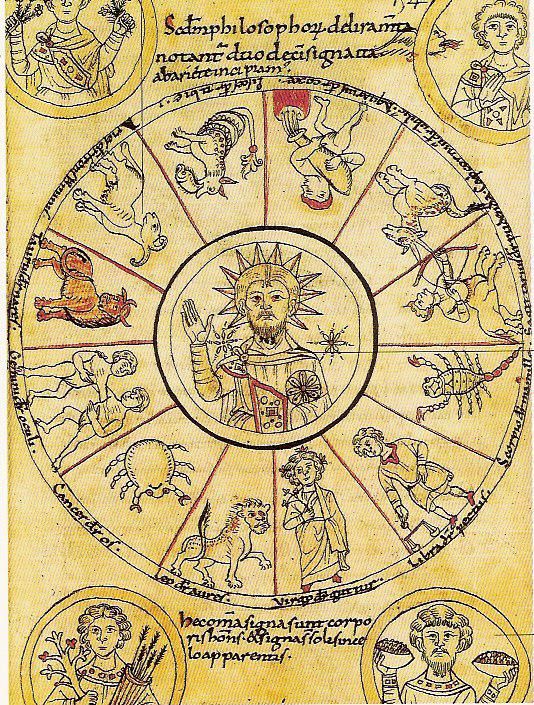
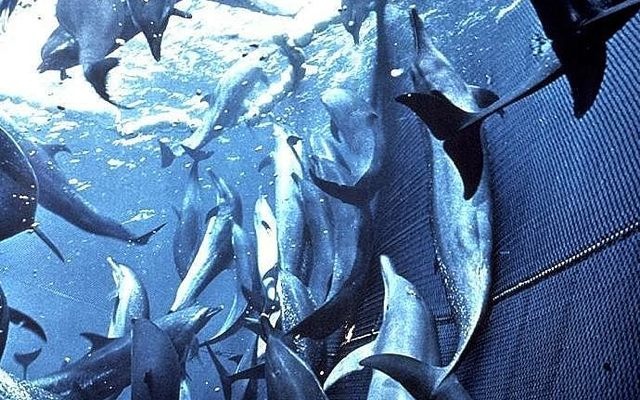
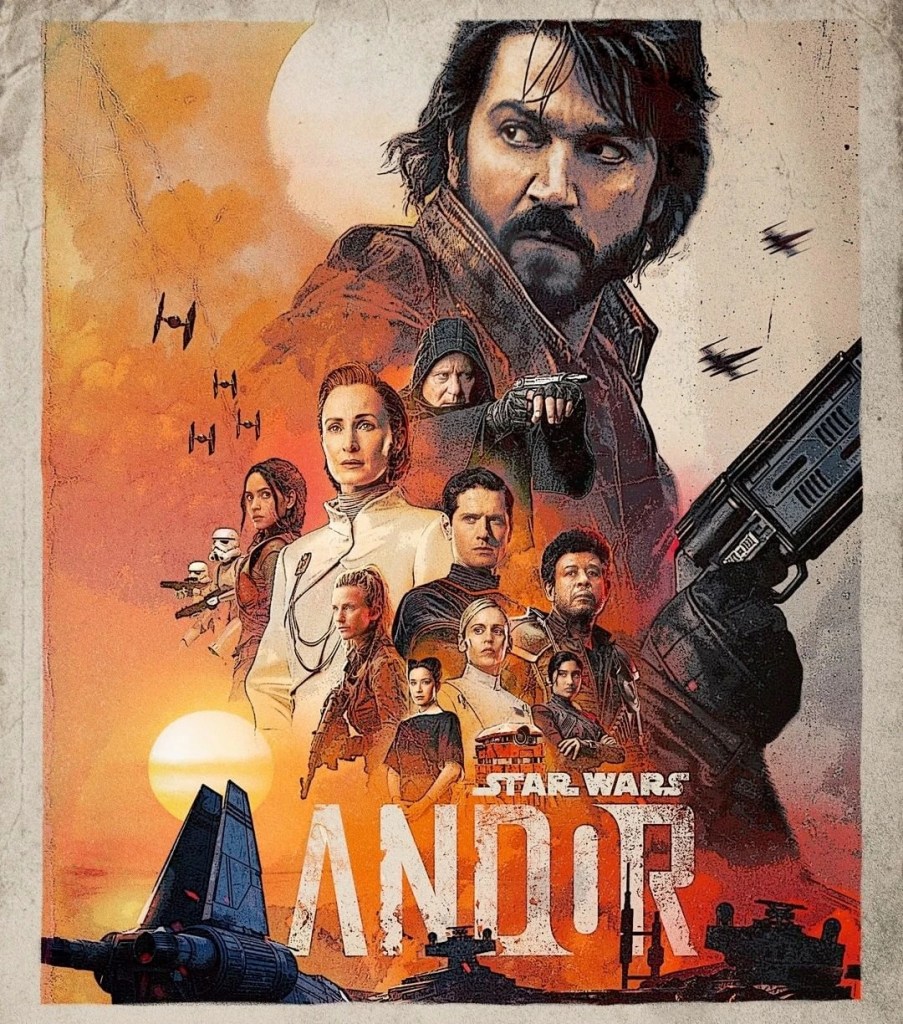


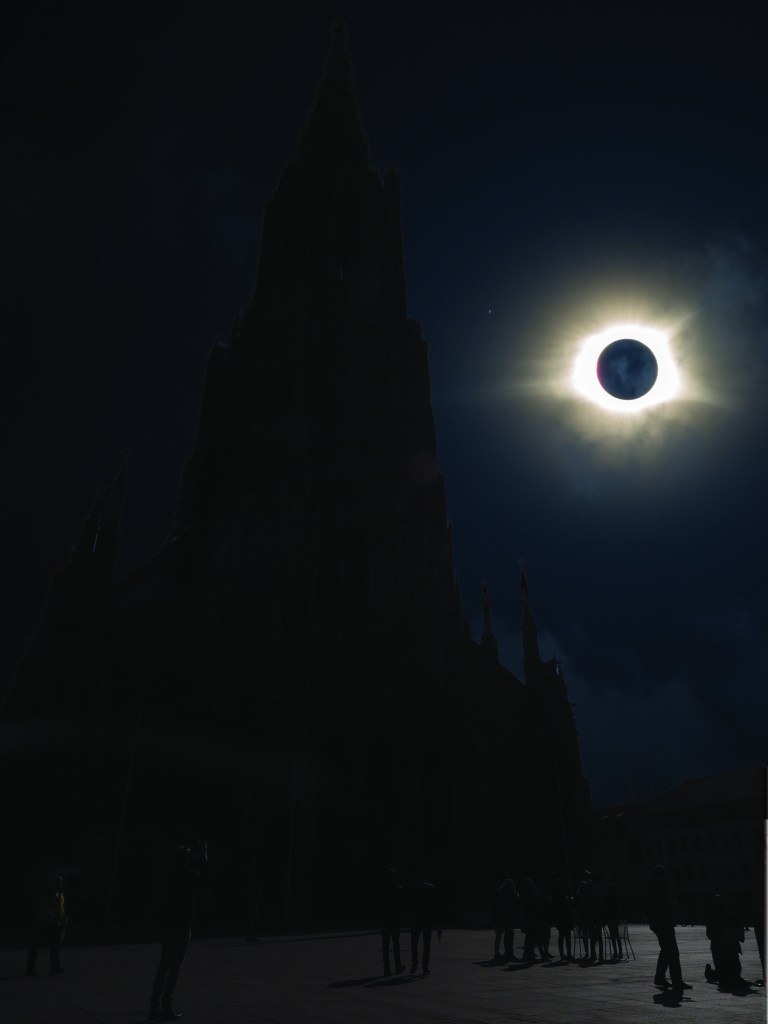
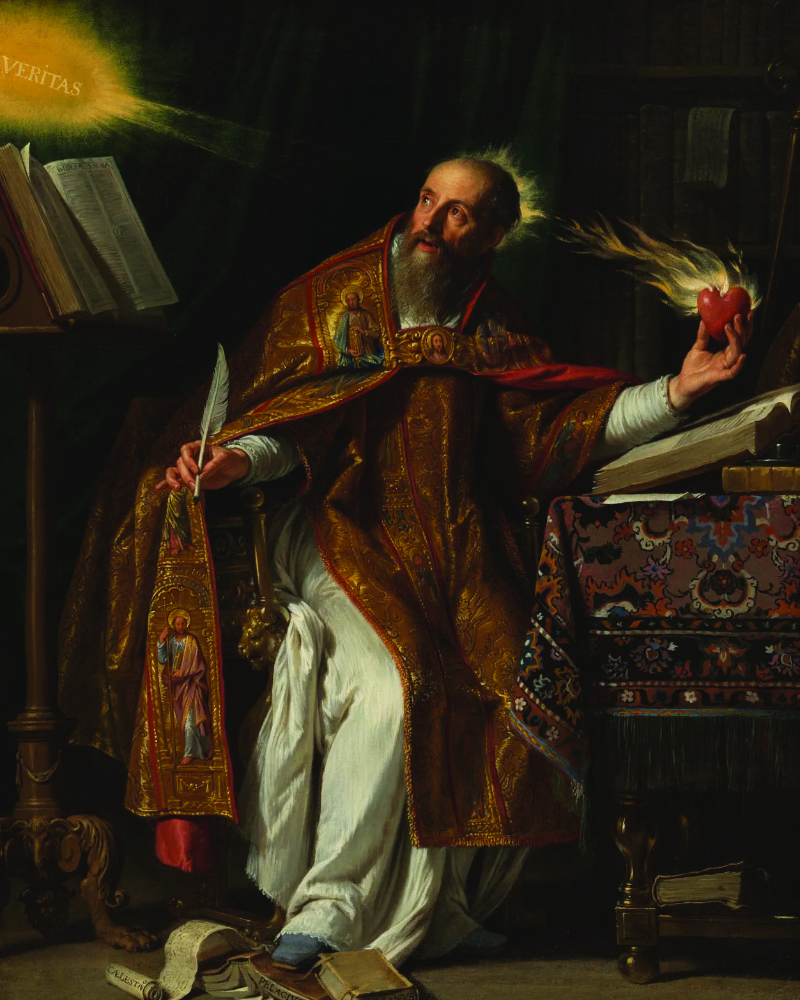
 Catholic Eclipsed